
China Taiwan Relations 2026: What’s Happening Now
China Taiwan Relations are one of the most closely watched geopolitical situations in the world right now. And in 2026, they have reached a new level of complexity. From military activity in the Taiwan Strait to high-stakes diplomacy at the Trump-Xi summit, a lot has shifted in just the past few months.
Here is a clear breakdown of where things stand today, and why it matters to everyone.
The Trump-Xi Summit and China Taiwan Relations
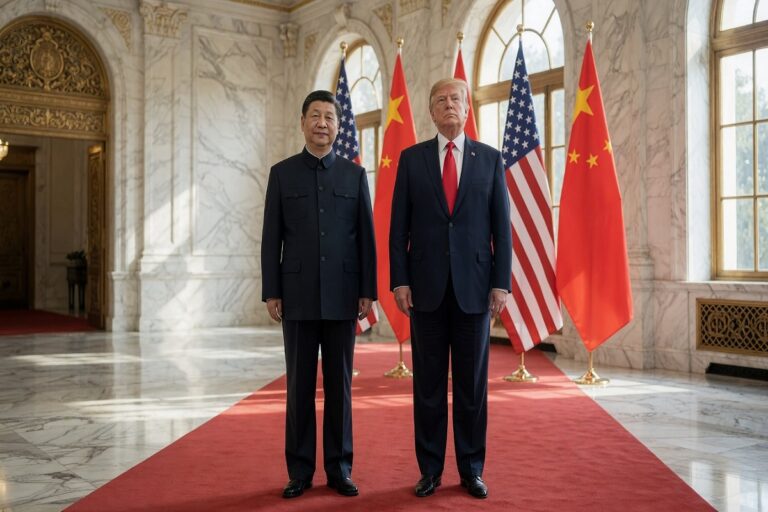
In May 2026, President Trump made a two-day state visit to Beijing. It was one of the most closely watched diplomatic events of the year, and China Taiwan Relations were right at the center of it.
During the summit, Xi placed Taiwan at the top of the agenda, calling it “the most important issue” between China and the United States. He warned that if the Taiwan question is not handled carefully, the two countries could face “clashes and even conflicts.”
Trump, returning to the US, said Taiwan was the “most important” issue for Xi during their talks. When asked whether Taiwanese people should feel more or less secure after the summit, Trump said simply: “Neutral.”
What did that actually mean for China Taiwan Relations? No major changes were announced. But the uncertainty itself was telling.
The Trump-Xi summit did not result in official changes to cross-strait policies. The US version of the official readout did not mention Taiwan at all, while Trump administration officials emphasized that US policy had not changed.
That said, there is one unresolved issue everyone is watching. The more consequential test will come when Trump decides whether to proceed with $14 billion in US arms sales to Taiwan. That decision will reveal whether Washington’s strategic ambiguity still includes meaningful military support for Taipei.
If you want to understand how global leadership decisions like this reshape business and geopolitical risk, check out how AI skills are redefining priorities at the executive level in 2026.
How China Taiwan Relations Look on the Water
Words at a summit are one thing. Military activity is another. And when it comes to China Taiwan Relations, the Taiwan Strait tells a very different story.
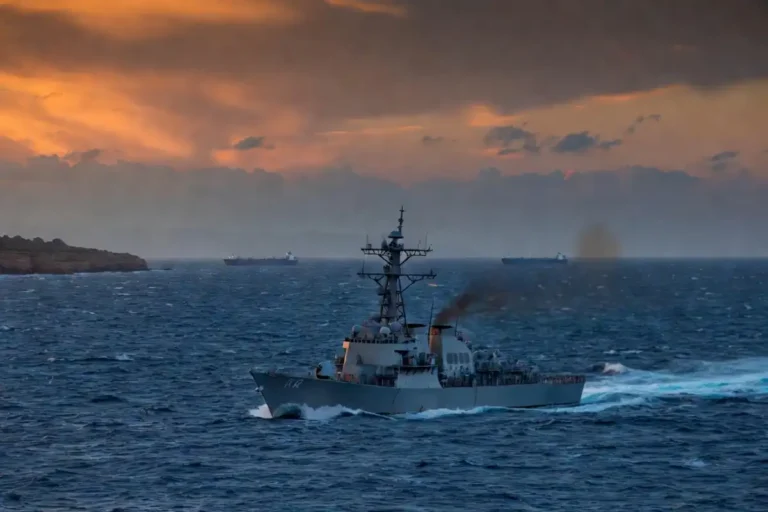
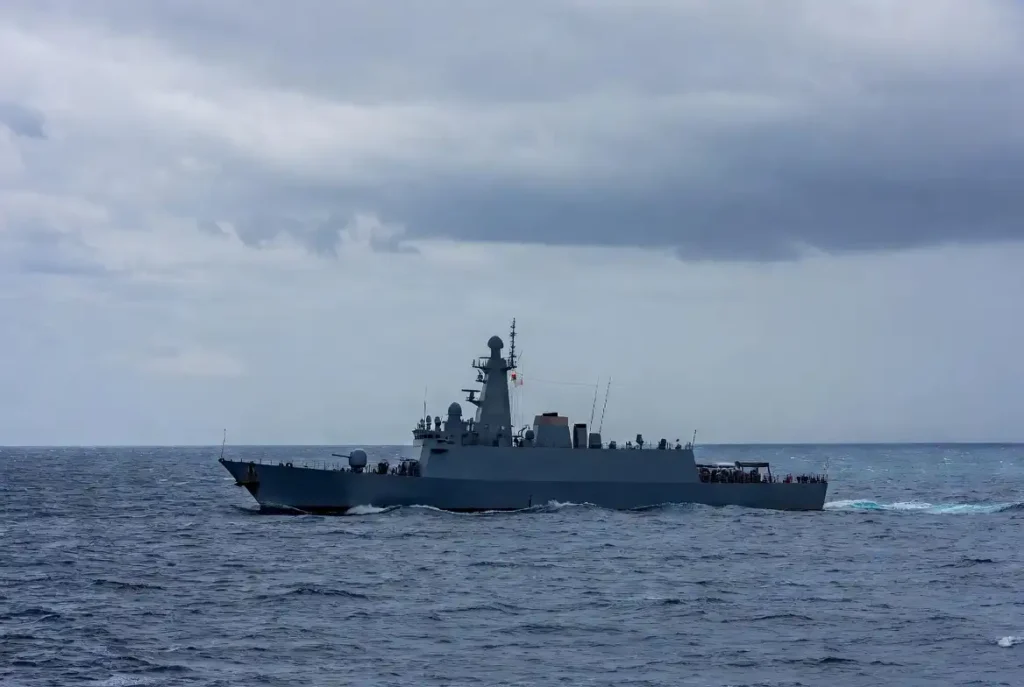
Taiwan Strait tensions have reached a critical point in 2026 following the tracking of a Dutch frigate by Chinese naval and air forces. The PLA Eastern Theater Command confirmed it mobilized assets to monitor the vessel during its transit through the strait.
This is not an isolated incident. China has steadily increased its military presence near Taiwan’s waters over the past two years.
China’s large-scale military drills have disrupted civilian air routes in the region. The steady normalization of People’s Liberation Army activity within Taiwan’s contiguous zone marks a subtle but consequential shift, one that lowers thresholds and increases the risk of miscalculation.
The United States and allied countries have conducted Freedom of Navigation Operations through the Taiwan Strait multiple times per year to challenge China’s maritime claims. China claims the entire Taiwan Strait, including its territorial waters and exclusive economic zone, though international law does not support that position.
This kind of rivalry between global powers is creating ripple effects that go well beyond the strait itself.
Taiwan’s Defense Spending and the State of China Taiwan Relations
China Taiwan Relations are deeply unequal when you look at raw military power. Taiwan is actively building up its defenses, but the gap is wide.
China’s defense budget in 2025 was $247 billion. Taiwan’s defense budget in 2026, after a 16 percent increase, is still only $31 billion. Taiwan passed an additional $40 billion special defense budget in 2025 to cover the eight years between 2026 and 2033.
Taiwan is also working on new technology to reduce its vulnerabilities. Taiwan’s Aerospace Industrial Development Corporation announced on June 1 that it has developed a drone navigation system not reliant on GPS signals. This matters because GPS jamming is one of the tactics China could use during any conflict.
However, there are gaps. A reduced version of Taiwan’s Special Defense Budget, passed on May 8, removed funding for domestic drone procurement and US-Taiwan joint drone development. A lack of alternative funding will likely harm Taiwan’s military preparedness for a drone-heavy conflict with China.
How China Taiwan Relations Are Shaped by Taiwan’s Own Politics
China Taiwan Relations are not just about Beijing and Washington. Taiwan’s own internal politics play a major role too.
KMT politician Cheng Li-wun expressed support for the “1992 consensus” as a means of promoting cross-strait peace. The 1992 consensus is an alleged verbal agreement that says Taiwan is part of “China,” though the two sides disagree on what “China” means.
The ruling Democratic Progressive Party, led by President Lai Ching-te, takes a very different approach. It does not endorse the 1992 consensus and has been vocal about Taiwan’s distinct identity.
The Chinese Communist Party appears to be watching Taiwan’s internal political developments closely, particularly within the KMT, as it looks for factions more sympathetic to Beijing’s preferred framework for cross-strait engagement.
These internal divisions matter. They affect how Taiwan negotiates with both the US and China, and how unified the island can be under pressure. Understanding China Taiwan Relations fully means understanding this domestic layer too.
Why China Taiwan Relations Matter to the Whole World
If you think China Taiwan Relations are a faraway problem, think again. Taiwan produces the majority of the world’s advanced semiconductors. Any disruption in the Taiwan Strait would immediately impact global supply chains for electronics, cars, medical devices, and defense systems.
The presence of advanced manufacturing hubs in Taiwan, most notably in the semiconductor sector, means that any disruption to the current situation carries immediate global economic consequences.
Global news readers tracking trade and economics should keep a close eye on how US-China tensions develop over the next six months, especially with Xi reportedly planning to visit the US in the fall of 2026.
What Analysts Are Saying About China Taiwan Relations Right Now
The big question heading into late 2026 is whether the current uneasy calm holds. Most analysts say China Taiwan Relations are stable on the surface but fragile underneath.
Analysts say the Trump-Xi summit reduced near-term escalation risk, but it does not remove the structural risks that matter most, including tariffs, export controls, technology restrictions, and the Taiwan issue. The relationship is being stabilized temporarily, but it is not being repaired.
The Chinese policy community is increasingly convinced that an effort to assert control of Taiwan will happen at some point. The fundamental driver of this assessment is the perception that President Trump has little interest in defending Taiwan militarily.
At the same time, military action remains costly and risky for Beijing.
A major conflict with the United States could result in economic devastation on the order of trillions of dollars, domestic instability that could threaten the regime, and deep international isolation. As long as Beijing is confident about its ability to win in the long term, near-term risks may not be worth the gamble.
For readers tracking tech and geopolitics together, the Google and Blackstone $5 billion AI infrastructure deal is one example of how the US is investing in positioning itself ahead of a more contested global landscape.
Final Takeaway
China Taiwan Relations in 2026 are more active and more unpredictable than they have been in years. The Trump-Xi summit did not resolve the core tensions. China’s military is increasing pressure near Taiwan’s waters. And Taiwan is trying to close a massive defense gap against a much larger adversary.
For now, both sides appear to want stability. But how long that lasts is still very much an open question. Staying informed on China Taiwan Relations is no longer just for diplomats and analysts. It affects all of us.