USDA’s First 2026 Crop Condition Ratings Come In Soft
The first 2026 crop condition ratings dropped on June 1, and the numbers came in soft. USDA rated corn and soybeans below what traders wanted to see. Here is what the report says, why it matters for prices, and what farmers are watching next.
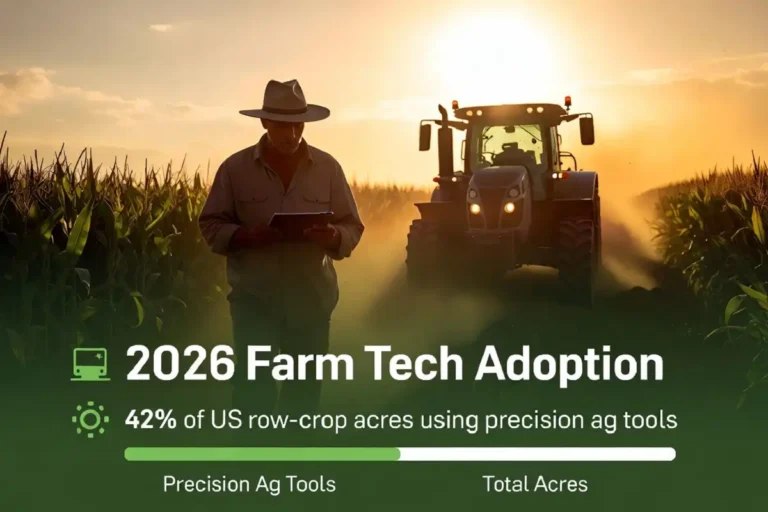
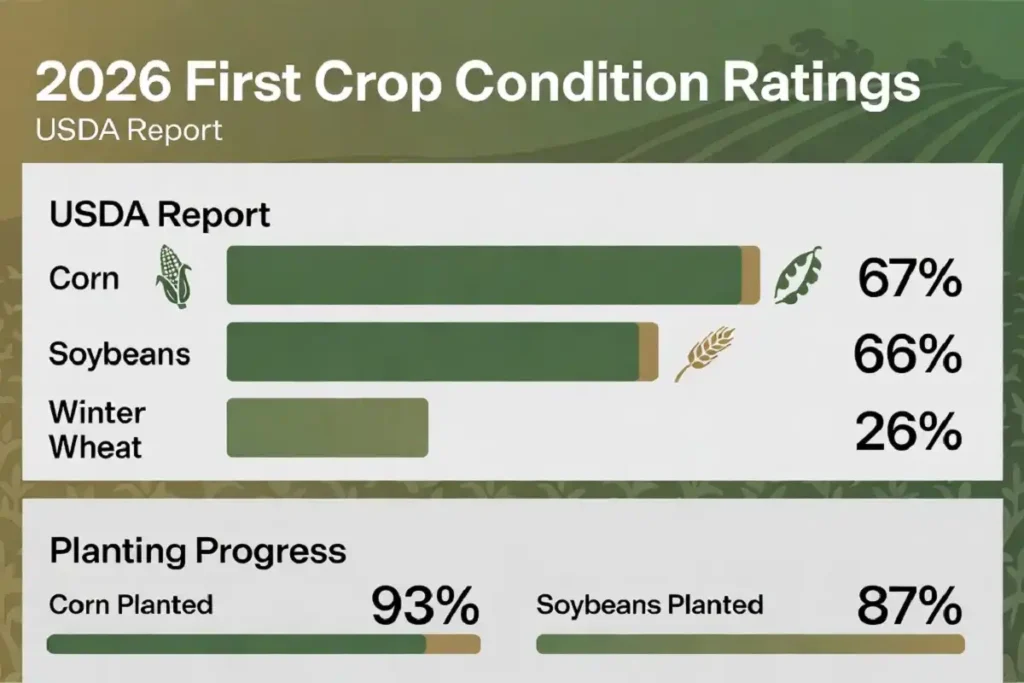
USDA’s June 1 report rated the corn crop 67% good to excellent and soybeans 66%. Both came in a few points under trade estimates. Planting is nearly finished and slightly ahead of the five-year pace.
Inside the 2026 Crop Condition Ratings
USDA released its first corn and soybean condition ratings of the season on June 1. The corn crop landed at 67% good to excellent. Soybeans came in at 66%. Both readings sat a few points under what the grain trade expected.
Analysts polled by Reuters had looked for corn near 70% and soybeans around 68%. So the report read a touch bearish at first glance. These are still healthy early marks. A two-thirds good-to-excellent rating in the first week of June is a solid place to start a season.
The full corn breakdown showed 5% very poor to poor, 28% fair, and 67% good to excellent. Soybeans came in at 5% very poor to poor, 29% fair, and 66% good to excellent. That tracks closely with how the May planting season caught up after wet fields earlier in the spring.
Why Did the Ratings Come In Below Trade Estimates?
The crop is not in trouble. Ratings landed light mostly because expectations ran high after a fast, clean planting season, not because the corn and soybeans look bad in the field.
Dry pockets explain part of the gap. Parts of the Corn Belt went into June needing rain. Crops are still small, so they are not burning through much moisture yet. The next few weeks matter more, because that is when both crops hit a growth spurt and start pulling water hard.
USDA’s read is also a survey, not a yield. The agency canvasses roughly 3,600 trained observers across the country. They score conditions at the county level, and those scores roll up into the state and national numbers you see each Monday.
Planting Is Nearly Finished and Running Ahead
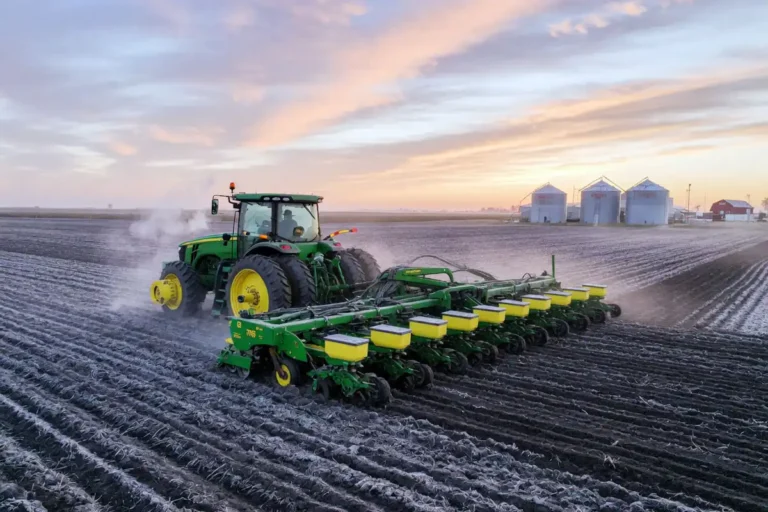
Corn planting reached 93% complete through May 31, up from 86% a week earlier. That edged just under the trade guess of 94%. It still runs slightly ahead of last year’s 92% and the five-year average of 92%.
Corn emergence jumped to 76%, up from 60% the prior week. Soybean planting hit 87%, ahead of last year’s 83% and the five-year average of 80%. Soybean emergence reached 65% against a five-year average of 57%. Growers who raced to finish corn before the May rains bought themselves a real cushion.
Two states lagged. Pennsylvania sat at 59% planted and Ohio at 73%. Wet fields held them back. The rest of the top 18 corn states cleared at least 85%.
How the States Stack Up
Iowa set the pace. The state had 82% of its corn rated good to excellent, the best mark in the country. Texas sat at the other end, with 11% of its corn rated very poor to poor, the highest in that group.
Illinois landed near the national line. Its corn came in at 9% excellent, 56% good, 30% fair, 4% poor, and 1% very poor. Soybeans in the state looked almost identical. One Illinois grower in Lee County summed up the mood plainly: the area is on the dry end and waiting on rain before the crop takes off.
The Pro Farmer Crop Condition Index
The weighted Crop Condition Index put corn at 371.33 on a 500-point scale, where 500 is perfect. That trailed last year’s 374.60 at the same week. Soybeans scored 368.10 against 369.74 a year ago.
The index compresses the whole report into one number, weighted by each state’s production. It is an easier way to track the crop week to week than reading five rating buckets across dozens of states. Both crops opened a hair under last year, which fits the wider story of strong supplies and tight margins heading into harvest.
Wheat Ratings and the Start of Harvest
USDA gave spring wheat its first score of the year: 6% very poor to poor, 47% fair, and 47% good to excellent. A lack of drought in North Dakota helped lift the national number above last year’s opening mark.
Winter wheat told a tougher story. Only 26% of that crop rated good to excellent, and harvest has begun, with early cutting concentrated in the Southern Plains. That weakness lines up with how winter wheat slipped this spring as the crop split north and south.
What Lower Ratings Mean for Grain Prices
Soft ratings can give futures a small lift, because traders read them as a hint of tighter supply down the road. But one week does not set a trend. Weather across June and July will move prices far more than any single Monday report.
Demand is the other half of the picture. Strong soybean crush, the renewable fuel mandate, and the on-and-off China ag deal that keeps grain traders waiting all sit underneath these numbers. A healthy start to the crop is good for yield but caps the upside for prices, which keeps pressure on margins. That tension shows up again in the latest farm income outlook for 2026.
You can track the weekly numbers yourself through the USDA NASS crop progress and condition charts, and Pro Farmer publishes the full Crop Condition Index breakdown by state.
Bottom Line
The first 2026 crop condition ratings opened a touch under trade hopes, but the crop looks fine. Corn at 67% and soybeans at 66% good to excellent, with planting nearly wrapped and emergence ahead of average, is a strong launch. From here, June rain decides the rest. Keep one eye on the dry Midwest pockets and the other on weekly conditions, because the next month writes the real yield story.