Smallest US Wheat Crop Since 1972 Hits Plains as Drought Guts Harvest
I’ve covered farm markets for years, and the May 12 USDA report still landed hard. The smallest US wheat crop since 1972 is now the official forecast. Drought wrecked the Plains, fertilizer costs spiked, and growers are abandoning fields. Here’s what happened and why it matters.
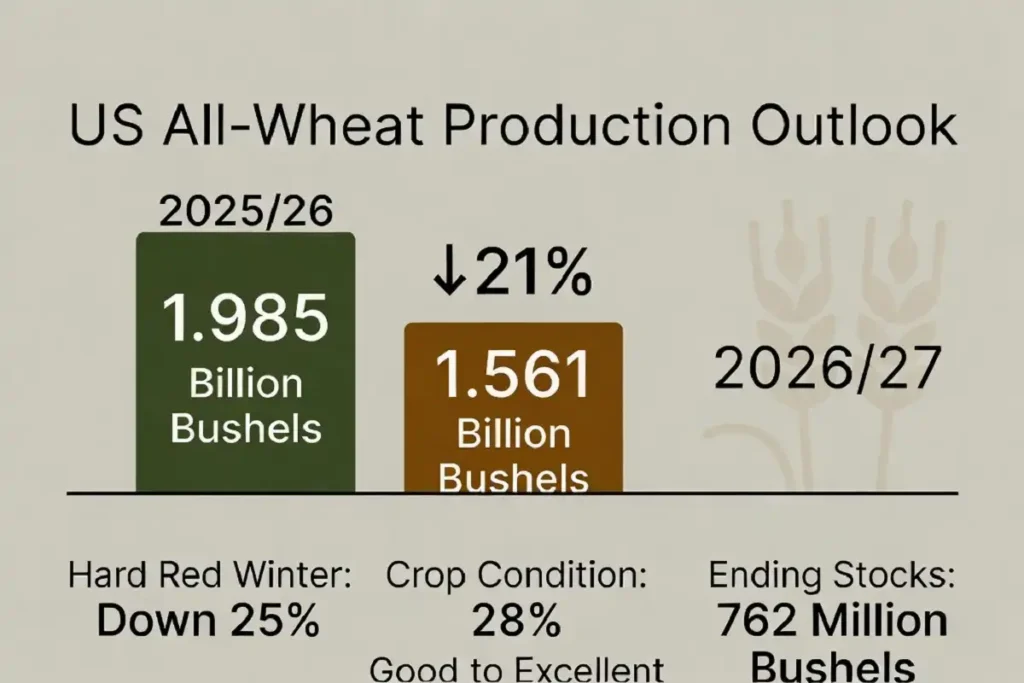
USDA forecasts the 2026/27 US wheat crop at 1.561 billion bushels, down from 1.985 billion last year. That’s the smallest harvest since 1972, driven by severe Plains drought and a 25% drop in hard red winter wheat, the main bread variety.
What the May 12 USDA Report Actually Said
USDA pegged 2026/27 all-wheat production at 1.561 billion bushels. That compares with 1.985 billion bushels the year before, making it the smallest US wheat crop in more than 50 years. The number came in well under what traders expected, which was closer to 1.74 billion.
The damage concentrates in one variety. The steepest decline is in hard red winter wheat, the most widely grown type in the US, with production projected to fall 25% from last year after severe drought weakened fields. That class fills most of the country’s bread flour, so the cut carries weight far past the farm gate.
USDA also trimmed yield sharply. The department lowered wheat yield by 5.8 bushels per acre to 47.5 bushels and cut total winter wheat production to 1.048 billion bushels, down 25% from 2025. Ending stocks took a hit too. The projected 2026-27 wheat ending stocks estimate dropped to 762 million bushels, down from 935 million this year.
The market reaction was immediate. Benchmark hard red winter wheat futures and soft red winter wheat futures on the Chicago Board of Trade rallied by their daily 45-cent-per-bushel trading limits. Wheat hit two-year highs.
Why Is the Wheat Crop So Small This Year?
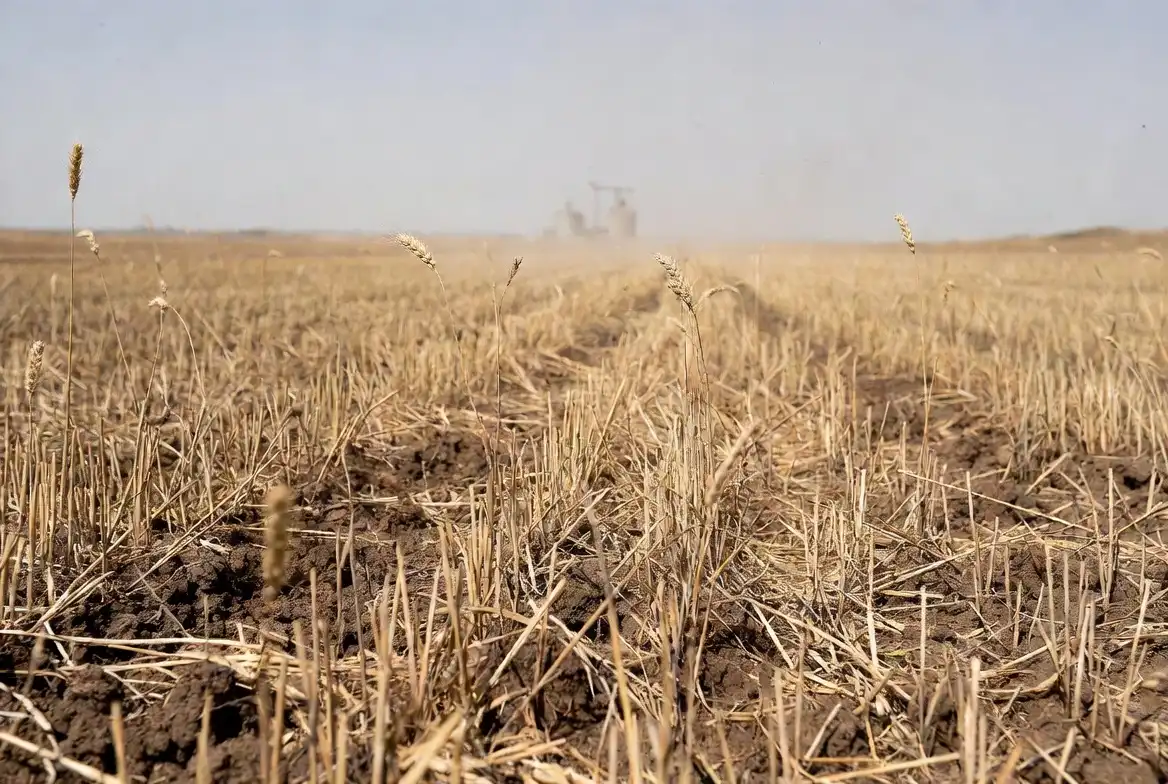
Drought is the main reason, paired with brutal input costs. A megadrought parked itself over the Southern Plains and never lifted. Production stress across the breadbasket converged with drought and mounting fertilizer constraints, all pushing prices higher.
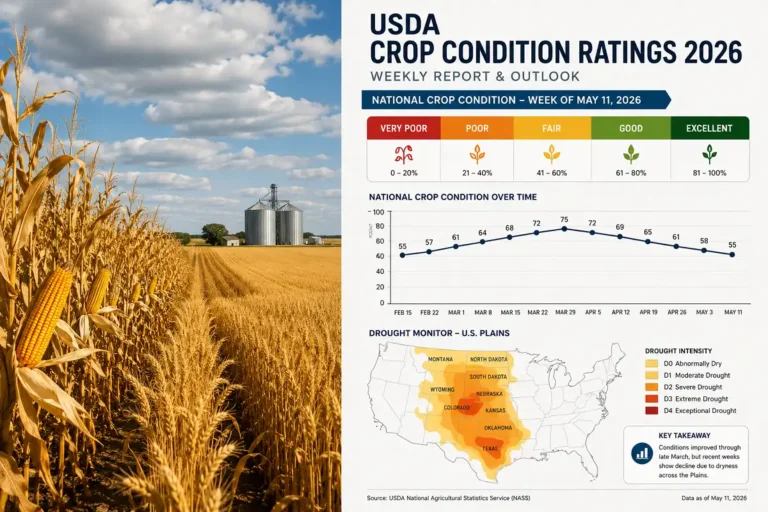
The crop ratings tell the story plainly. Just 28% of winter wheat was rated good to excellent nationwide in the May 11 crop progress report, which tied for the second-worst rating for the week since USDA began the estimates. State-level numbers are worse. USDA data shows 54% of Texas wheat, 48% of Oklahoma wheat, 47% of Nebraska wheat, and 44% of Colorado wheat in poor or very poor condition.
Then there’s cost. Rising fuel and fertilizer prices tied to the closure of the Strait of Hormuz sent grain production costs sharply higher, adding stress to a farm economy already hurt by trade disruptions. Winter wheat was already in the ground when costs spiked, so growers couldn’t pull back on acres, only on nutrient applications, which capped yield potential further. The squeeze shows up in shifting acreage too, a pattern I dug into when I looked at how the smaller wheat crop is splitting decisions across the northern and southern Plains, since growers chase crops that cost less to raise.
Farmers Are Walking Away From Fields
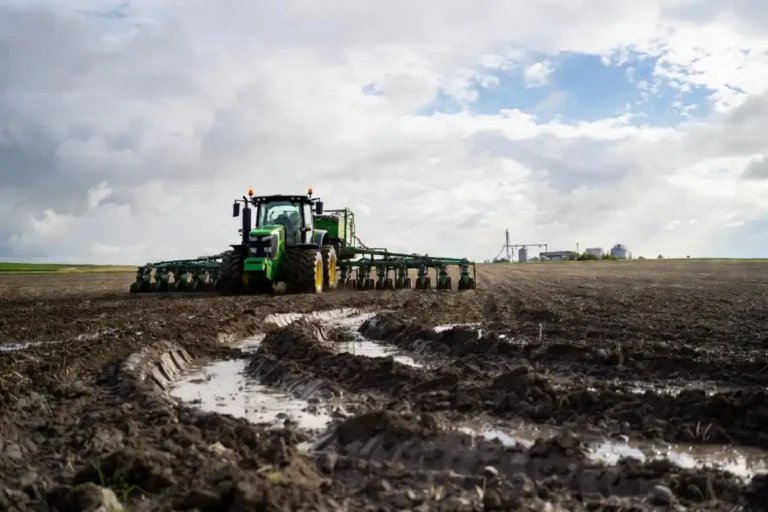
Abandonment is the part that should worry everyone. More than 10.5 million acres of US wheat were abandoned, with hard red winter the worst hit and futures trading limit up. In the hardest-hit states, the math stopped working. In Texas and Oklahoma, growers are walking away from their fields, with roughly a third of planted acres being abandoned.
The reason is simple. Drought plus skyrocketing diesel prices made harvest uneconomical on millions of acres. When the grain check won’t cover the fuel and labor to cut it, farmers leave it standing. I’ve talked to enough operators over the years to know that decision isn’t made lightly.
Heat also rushed the calendar. Warm winter and early spring temperatures combined with drought pushed the crop to mature rapidly, especially in southern Kansas where some wheat ran two weeks ahead of schedule. One Kansas Wheat board member said he might start cutting on May 22, weeks ahead of the usual mid-June kickoff.
What This Means for Bread and Grocery Prices
A historically small wheat crop pushes upward on food costs, though not overnight. Wheat is a key ingredient in bread, pasta, cereal, and many other foods, so a major drop in production can ripple through supply chains and raise price pressure.
The timing is rough. Food inflation fears returned to Wall Street’s radar after USDA slashed the wheat estimate just as the April consumer price index showed inflation running at a three-year high, driven by surging energy costs and higher grocery prices. Wheat alone won’t double your bread bill, but it’s one more upward nudge stacked on top of energy and trade pressures.
There’s a small offset on quality. What does get harvested likely will have good protein potential, even as cracked soil and fast-maturing wheat define the 2026 crop in Oklahoma, Kansas, Colorado, and Nebraska. High-protein hard red winter is exactly what bakers want, so the wheat that survives should mill well.
The China Deal Adds Another Wild Card
Trade headlines are tugging the market in both directions. A White House framework released this month put a number on Chinese buying. Grain futures popped to begin the week after a White House fact sheet said China committed to $17 billion in ag purchases per year on top of previous soybean commitments.
The catch is follow-through. Beijing offered neither confirming purchases nor affirmation of the figures, leaving markets to consolidate amid a lack of fresh bullish news. I’ve watched enough of these announcements to stay skeptical until the export sales actually print. The $17 billion ag deal is real on paper, but paper and bushels aren’t the same thing.
For the global picture, the US isn’t alone. Major exporters including Australia, Argentina, and Canada are all down at once, tightening world supply and raising food shortage concerns. A simultaneous shortfall across big producers is what turns a regional drought into a global price story
My Read on This
The smallest US wheat crop since 1972 isn’t a one-off weather headline. It’s drought, fuel, fertilizer, and trade hitting at the same moment. Hard red winter wheat got hammered, abandonment topped 10 million acres, and the global supply cushion thinned right alongside it. Watch three things from here: whether China actually buys, whether the Plains get rain in the next few weeks, and where energy prices settle. Those move the next leg far more than any single report. For farmers, 2026 became a survival year. For shoppers, the pressure is real but gradual. Either way, this is the farm story of the spring.