Winter Wheat Slips to 30% Good as 2026 Planting Splits North and South
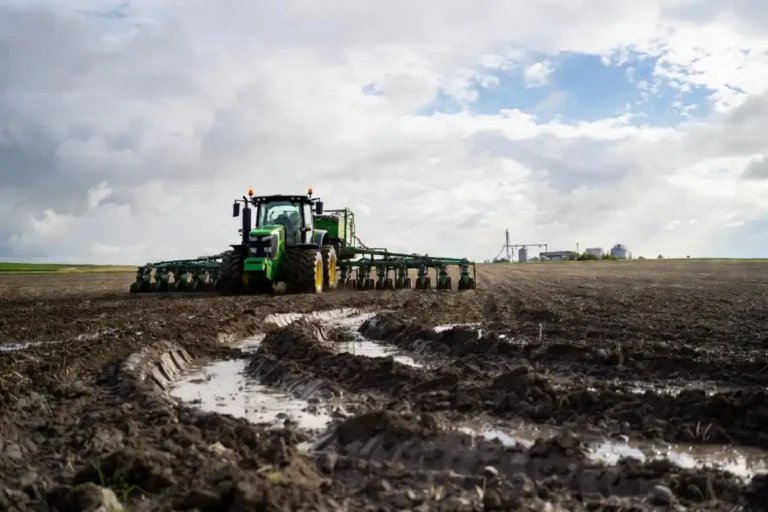
The 2026 U.S. row crop season opened at a sprint, then hit a wall. After corn and soybean planting ran well ahead of historic averages through April, a stubborn cold pattern across the northern Corn Belt has stalled fieldwork, while the winter wheat belt to the south continues to struggle with drought that started long before spring arrived.
“This year’s split is the most unusual I’ve seen in a decade,” said Norman Harris, a Topeka, Kansas farmer who publishes daily field reports at cropfarming.org. “The crop progress numbers say one thing. The thermometer says another. And the winter wheat belt to my south is dealing with a problem that has nothing to do with cool soil.” His read matches what USDA, university extension agronomists, and meteorologists are reporting from the field this week.
A Fast Start in April, Then a Cool May
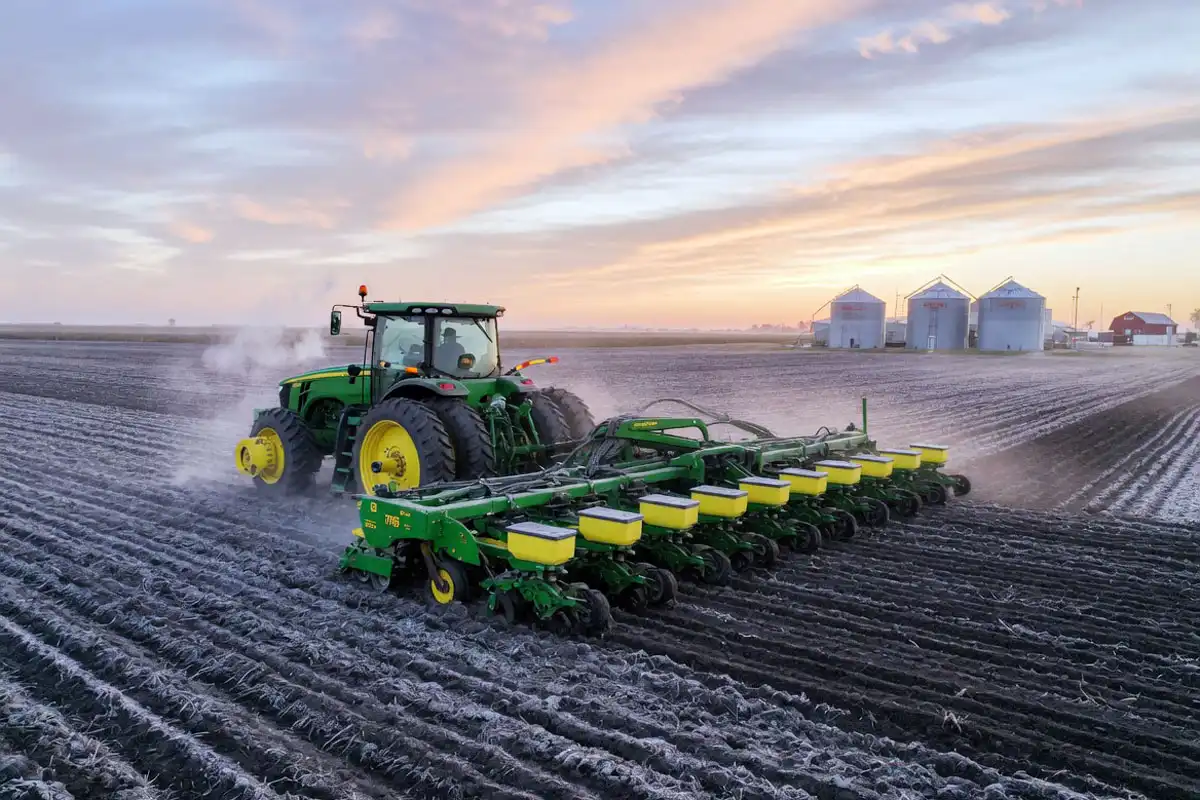
USDA’s April 19 Crop Progress report showed corn at 11 percent planted across the top 18 producing states, against a five-year average of 9 percent. Soybeans hit 12 percent, more than double the five-year average of 5 percent. Activity was reported in 17 corn states and 15 soybean states. Early corn emergence reached 4 percent, also double the historical pace.
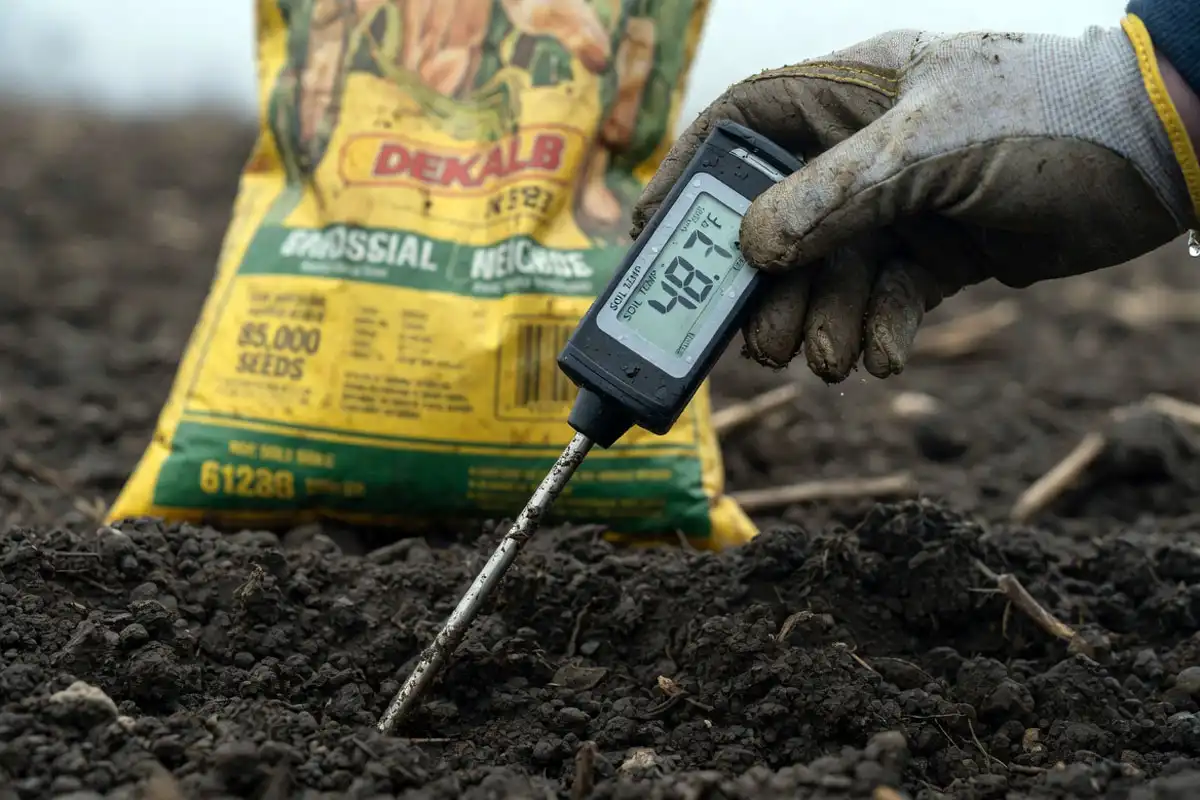
Then the weather turned. By the first week of May, cold mornings and frosty nights moved into the upper Midwest. Soil temperatures across northern Minnesota, the Dakotas, and parts of Wisconsin held below the 50°F threshold that corn and soybeans need to germinate cleanly. Kevin Capistran, a Crookston, Minnesota farmer, told Red River Farm Network this week that growers up there are doing a lot of head scratching about when it’s safe to put corn and beans in the ground, and that seed already planted in cold soil could face problems.
That worry is grounded in basic agronomy. Cold, wet soils slow germination, raise the risk of damping-off, and reduce stand uniformity. A weak stand at emergence sets the ceiling on yield for the rest of the season.
Winter Wheat Tells a Different Story
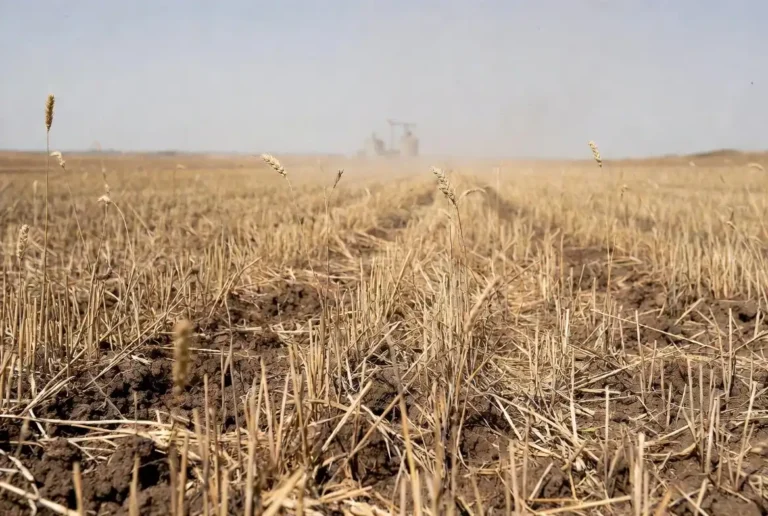
The Southern Plains are dealing with the opposite problem. Only 30 percent of the U.S. winter wheat crop was rated good or excellent in the April 19 report, a 15-point drop from 45 percent a year earlier. A third of the crop sits in the poor or very poor category. Heading had reached 20 percent.
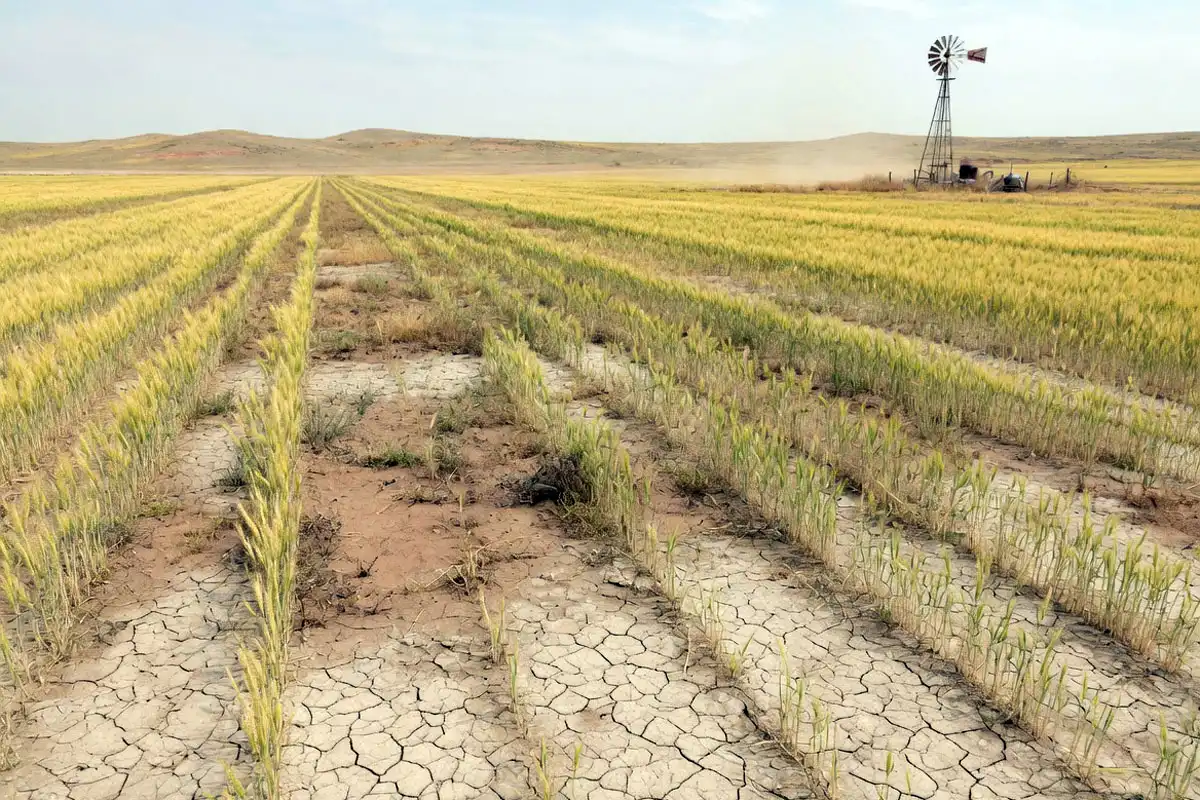
West Texas, western Oklahoma, and southwest Kansas have been hit hardest. Subsoil moisture never recovered from the dry winter, and the rains that finally moved through the Corn Belt in late March missed most of the wheat country. K-State Research and Extension has been advising producers in the worst-affected counties to evaluate stands carefully before applying additional inputs, since the economics on damaged wheat shift quickly when yield potential is capped.
Spring wheat is closer to normal. Twelve percent was planted across the top six states as of April 19, in line with the five-year average. Oats were tracking on schedule at 36 percent planted, though emergence was running slightly behind because of the same cool-soil issue affecting corn.
USDA’s 2026 Outlook
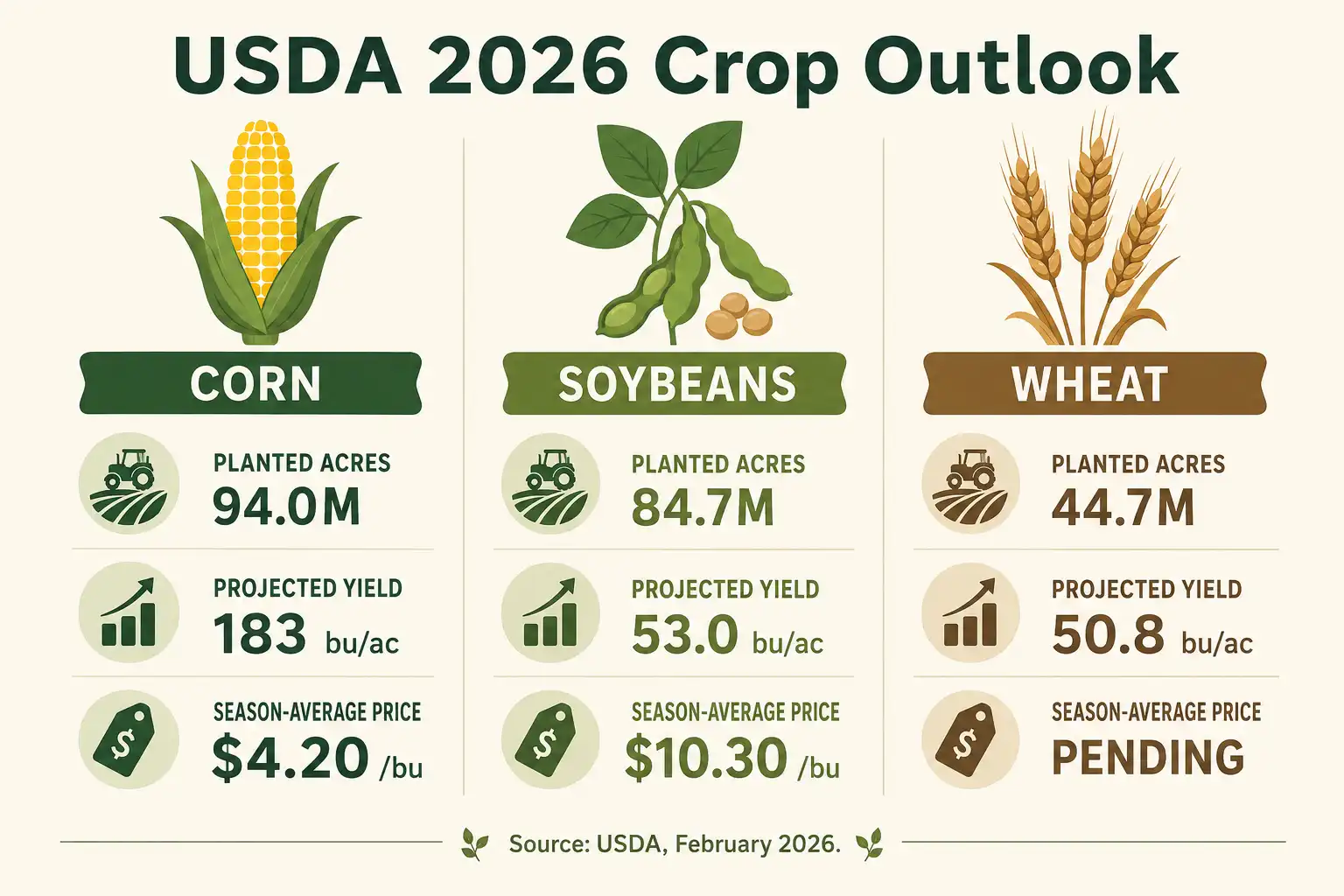
USDA’s Grain and Oilseeds Outlook, released at the February Ag Outlook Forum, set the table for the season. The agency forecast 94.0 million acres of corn for 2026, down 4.8 million acres from 2025, and 84.7 million soybean acres, up nearly 4 million. Wheat was projected at 44.7 million acres total.
The acreage shift toward soybeans was driven by three things. Corn returns weakened heading into spring. Fertilizer prices spiked after the March closure of the Strait of Hormuz. And soybean rotation made sense after the record corn plantings of 2025.
Price projections from USDA put corn at $4.20 per bushel for the 2026/27 marketing year, up 10 cents from the prior year. Soybeans came in at $10.30 per bushel, marginally higher than the previous year. Corn yield was projected at 183 bushels per acre and soybean yield at 53.0, both assuming normal weather.
That normal-weather assumption is the part to watch.
Weather Pattern Shift: La Niña to El Niño
DTN ag meteorologist John Baranick laid out the broader pattern earlier this winter. A La Niña peaked in December 2025, then began fading into neutral conditions through spring, with models pointing toward El Niño development by autumn. The transition phase is what’s driving the choppy planting weather farmers are seeing now.
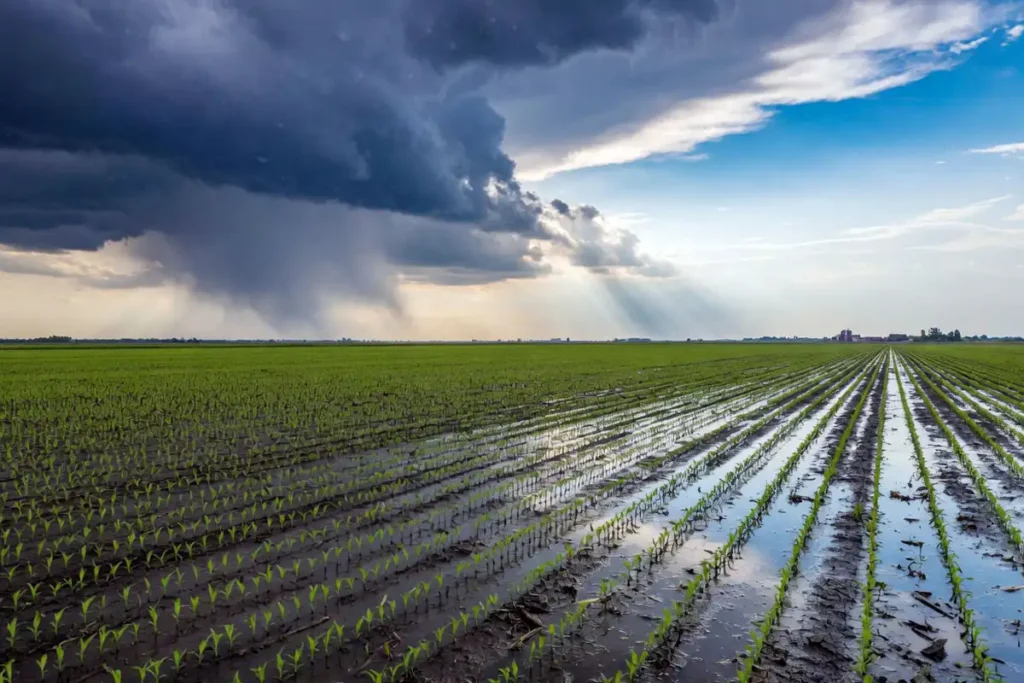
The forecast pointed to wet conditions across the South and the eastern Corn Belt, which raises the risk of another southern rust year for corn. Southern rust was a yield-stealer in 2025 across Illinois, Indiana, and Ohio. The disease pressure builds when warm, humid air from the Gulf rides north on the same weather patterns that bring spring storms.
The sweet spot for timely planting this year, based on those early forecasts, runs through Nebraska, Kansas, and Missouri. So far, that has held up. Harris said most growers in his part of northeast Kansas got corn in the ground during the first warm window in late April and are now waiting on the next dry stretch for soybeans.
Disaster Payments and the Financial Squeeze
The financial picture is putting extra weight on every planting decision. USDA’s Economic Research Service forecast net farm income at $153.4 billion for 2026, a decrease of $1.2 billion from 2025 in nominal terms. Adjusted for inflation, that’s a 2.6 percent decline. Total production expenses are forecast at $477.7 billion, a record. Farm sector debt is climbing to $624.7 billion, up 5.2 percent year over year.
Direct government payments are partially offsetting the pressure. USDA announced on April 24 that it was issuing a second Supplemental Disaster Relief Program payment for 2023 and 2024 losses, increasing the payment factor from 35 percent to 70 percent. The application deadline was extended to August 12, 2026. To date, USDA has provided more than $6.7 billion in SDRP payments, $9.3 billion through the Emergency Commodity Assistance Program, and nearly $1.9 billion through the Emergency Livestock Relief Program.
For producers in disaster-declared counties, those payments are the difference between covering input bills and rolling debt forward. For everyone else, they don’t show up.
What This Means in the Field Right Now
Heading into mid-May, the season looks split four ways. Producers in Nebraska, Kansas, and Missouri are mostly on schedule. Northern states from the Dakotas through Minnesota and into Wisconsin are sitting on cold soils and waiting. Eastern Corn Belt growers in Illinois, Indiana, and Ohio are planting between rain events and watching for southern rust signals later in the season. The Southern Plains is managing damaged winter wheat and dry topsoil.
“This season is going to reward patience and punish anyone who plants on the calendar instead of the soil,” Harris said. “The fast April start tricked a lot of growers into thinking the season was settled. It wasn’t. Cold soils, wheat drought, fertilizer volatility, and a fading La Niña are all live issues, and the next four weeks of weather will decide more than any market report.”
Agronomists offer the same advice every cold spring: check soil temperatures at planting depth for three consecutive mornings before pulling the trigger, prioritize fields with the best drainage, and avoid pushing corn into cold, wet ground just to chase the calendar.
The 2026 season is not lost. It’s just splitting in directions the industry doesn’t often see all at once.