Smallest US Wheat Crop Since 1972 Sends Prices Soaring as Plains Drought Bites
I’ve tracked a lot of USDA reports, but the May 12 wheat number stopped me cold. The smallest US wheat crop since 1972 is now the official forecast, and the fallout reaches your grocery aisle. Here’s what happened, why it happened, and what comes next.
Quick Answer: The USDA projects the 2026/27 US wheat harvest at 1.561 billion bushels, the smallest since 1972. A severe Plains drought slashed hard red winter wheat output, pushing Chicago futures to two-year highs in mid-May 2026.
What the May WASDE Actually Said
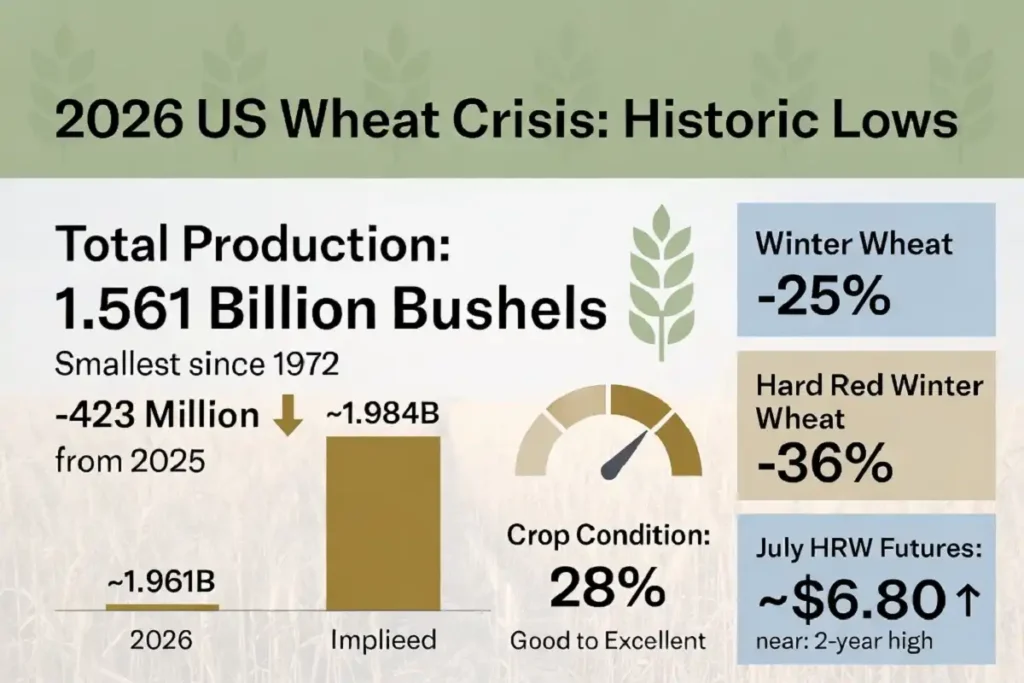
The number is 1.561 billion bushels. U.S. wheat production for the 2026/27 marketing year is expected to fall to 1.561 billion bushels, the smallest level since 1972/73, the U.S. Department of Agriculture said on Tuesday, May 12. That figure landed well under what traders expected.
The drop from last year is steep. Fewer planted acres combined with declining yield expectations dropped the U.S. wheat production estimate to 1.56 billion bushels, down 423 million from last year. The World Agricultural Outlook Board, which compiles the WASDE report, also cut yield hard. USDA lowered wheat yield by 5.8 bu. per acre to 47.5 bu.
Hard red winter wheat took the worst hit. That’s the variety that goes into most American bread flour. Total winter wheat production was pegged at 1.048 billion bu. down 25% from 2025 drug down by a 36% cut to the hard red winter wheat crop.
Why Is the Wheat Crop So Small This Year?
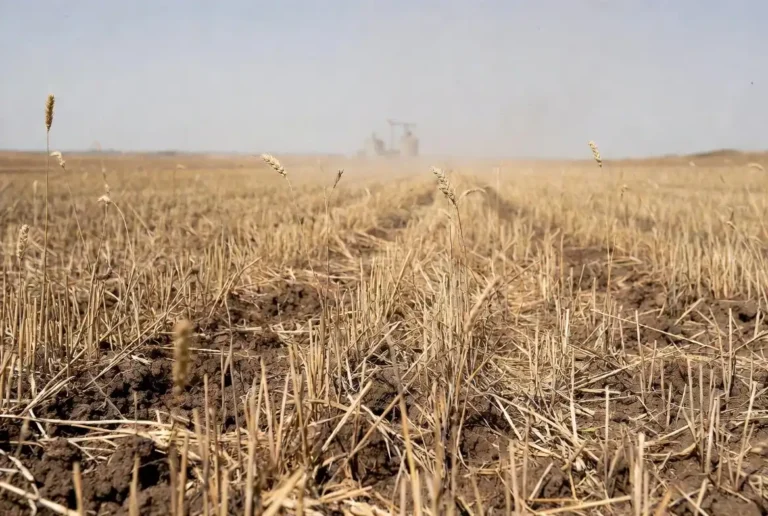
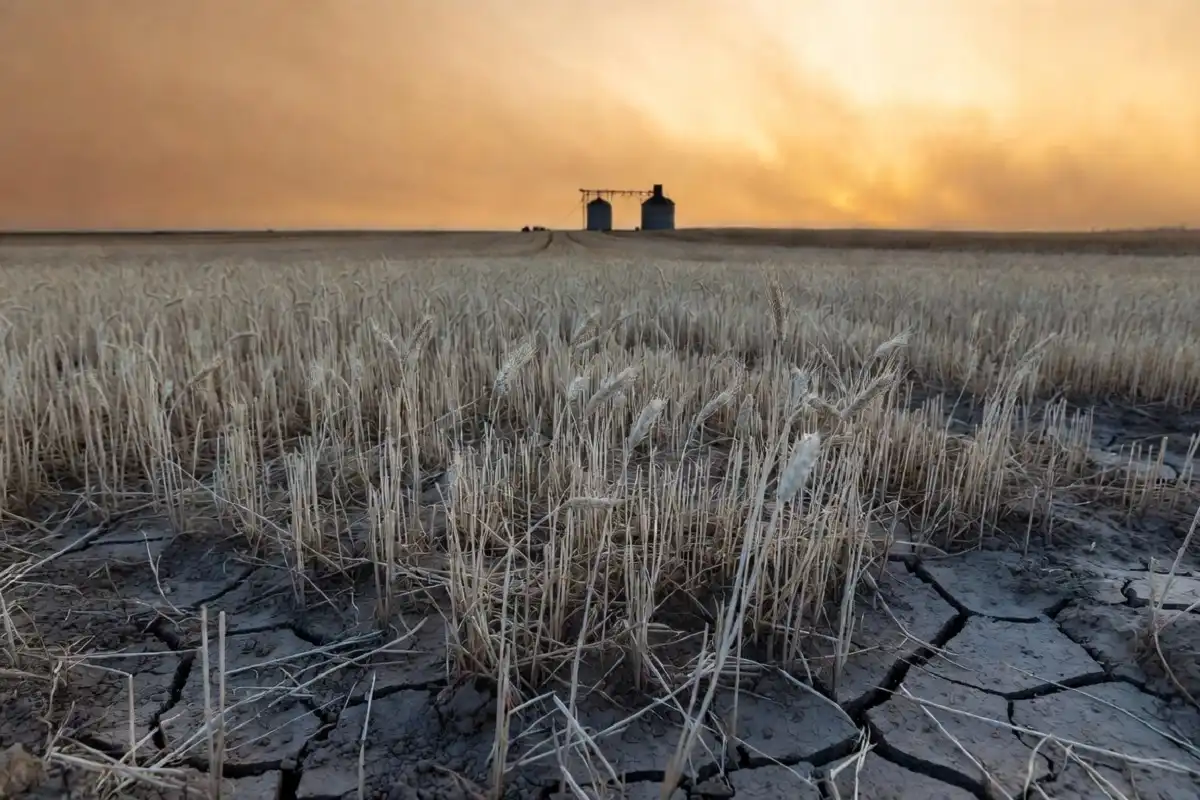
A relentless drought across the Southern Plains gutted production in the regions that grow most of America’s bread wheat. The dryness has gripped western Kansas, eastern Colorado, and the Oklahoma and Texas panhandles for months.
The scale of the stress is hard to overstate. The drought footprint for winter wheat has expanded by 30% since mid-January, with approximately 71% of the crop currently experiencing some level of drought stress. A mid-April freeze made it worse, hitting crops that had already raced ahead in development during an unusually warm spring.
Crop ratings collapsed to levels I rarely see this early. The USDA rated just 28% of the U.S. winter wheat crop in good-to-excellent condition in a weekly crop conditions report on Monday, the lowest rating for this point in the growing season in four years.
Then there’s abandonment. When fields look this bad, growers stop spending on them. In Texas and Oklahoma, growers are walking away from their fields; roughly a third of planted acres are being abandoned. Soaring fertilizer prices, tied to the closure of the Strait of Hormuz, also cut into the spring nutrient applications that wheat needs to finish strong.
This isn’t a one-off scare. The same drought pressure showing up in this year’s WASDE is part of the broader squeeze that has analysts warning that farm margins could tighten further into 2027, especially with input costs climbing.
How Bad Is It on the Ground in Kansas?
Very bad, and wildly uneven from field to field. Kansas is the top wheat-producing state, so its crop tour sets the tone for the whole market. The numbers from this year’s tour confirmed the worst.
During the 68th annual Hard Winter Wheat Evaluation Tour, held May 12-14, 60 scouts assessed 394 wheat fields across Kansas. The verdict was grim. The tour, organized by the Wheat Quality Council and Kansas Wheat, estimated the state’s wheat crop at 218 million bus, based on an average yield projection of 38.9 bus per acre.
Three problems hit at once. Drought, freeze damage, and wheat streak mosaic virus have collectively diminished yield potential across substantial portions of the state. The warm winter pushed the crop out of dormancy too soon, leaving it exposed.
What It Did to Wheat Prices
Futures exploded the day the report dropped. The figure fell below a range of trade expectations and sent Chicago Board of Trade wheat futures rising by their 45-cent daily maximum. Both winter wheat classes locked limit up.
The rally had been building for weeks before the report. As of May 1, July HRW wheat had rallied over $1.50, up 28% since the end of last year, and briefly neared $7.20 per bushel in late April.
Prices have since cooled a bit on profit-taking and trade headlines. Wheat futures fell to around $6.5 per bushel, down from a two-year high of $6.8 reached on May 12, as traders took profits and reacted to the lack of new agricultural details from the US-China summit. For growers sitting on grain to sell, this is still the best pricing window in two years.
The Other Half of the Story: Corn and Soybeans
While wheat struggled, corn and soybeans pointed the opposite direction. The same WASDE forecast huge harvests for both.
Corn and soybean production are both projected to be massive, with USDA estimating a 15.995 billion bushel corn crop and a 4.435 billion bushel soybean crop. Corn is down 6% from last year’s record, but soybeans are headed for the second-largest crop on record.
There’s a reason growers leaned into beans. U.S. growers expanded plantings of soybeans, which require less fertilizer than grains like corn and wheat. With nitrogen costs surging, that math made sense this spring. This split shows up beyond the WASDE too, in how 2026 planting has divided the northern and southern Plains.
The soybean demand picture stays murky, though, and it ties straight back to trade. Soybean demand remains unclear as top importer China has slashed purchases from the U.S. amid ongoing trade tensions between Washington and Beijing and abundant supplies from rival exporters Brazil and Argentina.
The China Trade Wild Card
A possible US-China deal hangs over every one of these markets. The White House said one was struck after the Trump-Xi summit in Beijing. Grain futures popped higher to begin the week, with bulls cheered by a White House fact sheet that said China committed to $17 billion in ag purchases per year on top of previous soybean commitments.
Beijing hasn’t fully backed those numbers. China’s Ministry of Commerce stated on Wednesday that the two countries had only set a “guiding target” to expand agricultural trade, without referencing the $17 billion figure. Until China actually buys, traders are treating the deal with caution.
This uncertainty matters far beyond the farm gate, since shifting trade policy is reshaping how global supply disruptions ripple through markets and consumer prices alike. For a deeper sense of how policy shocks move whole sectors, the patterns echo what we cover across business and finance topics.
You can read the USDA’s full data release through the agency’s own World Agricultural Supply and Demand Estimates portal for the complete balance sheets.
What This Means for Your Grocery Bill
Tighter wheat supply tends to push flour and bread prices up, and this is the smallest crop in over half a century. Bread is about to get more expensive. The last time U.S. farmers brought in a wheat harvest this small, Richard Nixon was still president.
The relief valve is the global market. The world still holds decent wheat stocks, and US wheat is priced high against competitors, so cheaper foreign supply can soften the blow at the store. Watch three things from here: whether rain reaches the Southern Plains in time to save any acres, whether China turns its “guiding target” into real orders, and where fertilizer costs head as the Strait of Hormuz situation plays out. Each one moves the needle on what you’ll pay for a loaf later this year.