Leadership Skills 2026: What Managers Need to Lead Now
Leadership skills 2026 look different from what worked five years ago. AI sits in daily workflows. Teams are hybrid. Trust is earned faster or lost quicker. This guide breaks down the exact capabilities that separate strong leaders from stalled ones this year.
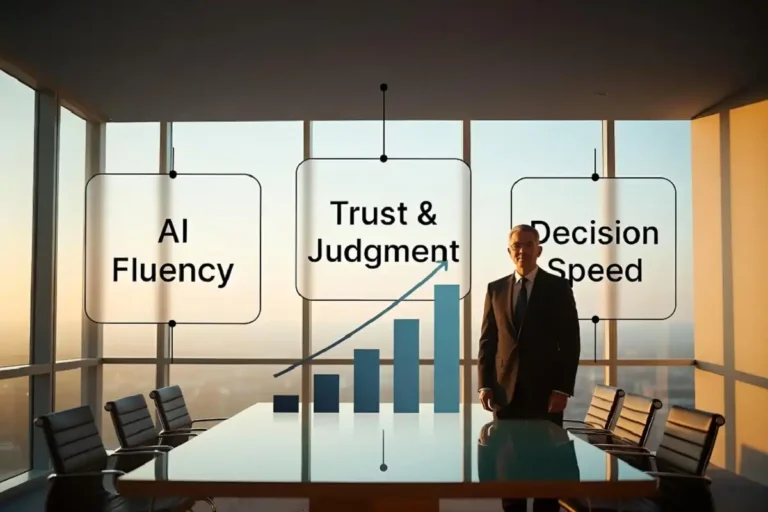
The most valuable leadership skills 2026 rewards are AI fluency, adaptive decision-making, and human-centered communication. Technical know-how matters less than the ability to guide people through constant change. Leaders who pair data judgment with emotional intelligence outperform peers across every sector I track.
Why Leadership Skills 2026 Demand a Reset
The old playbook broke. Command-and-control management assumed stable teams, predictable markets, and slow technology cycles. None of that holds now.
In my reporting on corporate leadership this year, three forces keep surfacing. AI adoption jumped inside operations. Workforces spread across offices, homes, and time zones. And employee expectations shifted toward meaning and flexibility. Each force rewrites what leadership skills 2026 actually require.
The data backs this up. A Gartner survey of HR leaders placed leader and manager development as a top priority for the year. That signal is clear. Companies know their managers are underprepared for the current environment.
Skills-based hiring reinforces the point. Employers now screen for demonstrated ability over pedigree. The same logic applies upward. Titles no longer prove competence. What you can do defines your value, and that mirrors how skills-based hiring is reshaping how you move up across industries.
There is a cost to falling behind. Teams led by underprepared managers show lower engagement and higher turnover. In a tight labor market, that gap hits the bottom line directly. Strong leadership is now a retention strategy, not a nice extra.
The Core Leadership Skills 2026 Rewards Most
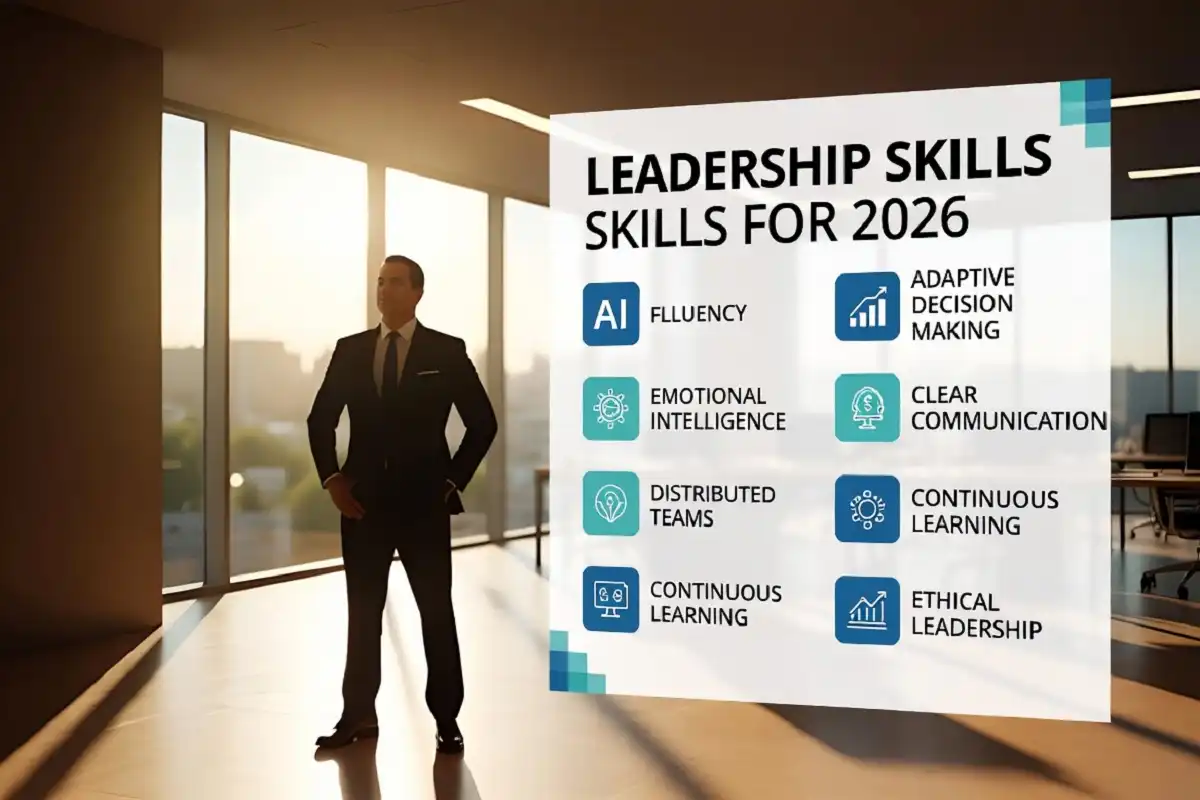
Seven capabilities stand out this year. I’ll take each in turn, with the specifics that make them work.
1. AI Fluency and Human Judgment
AI fluency tops the list of leadership skills 2026 employers want. This does not mean writing code. It means knowing what AI does well, where it fails, and when to trust its output.
Strong leaders use AI to draft, analyze, and forecast. Then they apply human judgment to the result. Jamie Dimon, CEO of JPMorgan Chase, has pressed his managers to treat AI as core infrastructure rather than a side tool. His warning to executives is direct. Leaders who ignore AI will fall behind ones who master it.
The practical skill is delegation to machines. Know which tasks to hand off. Keep the decisions that need context, ethics, and accountability. That balance defines modern management, and it echoes the broader warning Dimon has issued about AI leadership for the year ahead.
Start small if you are new to this. Pick one recurring task. Run it through an AI tool. Check the output against your own judgment. Over a few weeks, you learn where the tool helps and where it misleads. That hands-on habit builds fluency faster than any course.

2. Adaptive Decision-Making
Adaptability ranks among the most tested leadership skills 2026 will demand. Markets move fast. Plans age quickly. Leaders who cling to a fixed roadmap lose ground.
Adaptive decision-making means updating your view when facts change. Set a direction. Watch the signals. Adjust without ego. The best leaders I cover run small experiments, read results, and pivot early.
This skill pairs with comfort in uncertainty. You rarely get full information. Waiting for certainty costs time. Decide with what you have, then correct course as new data arrives.
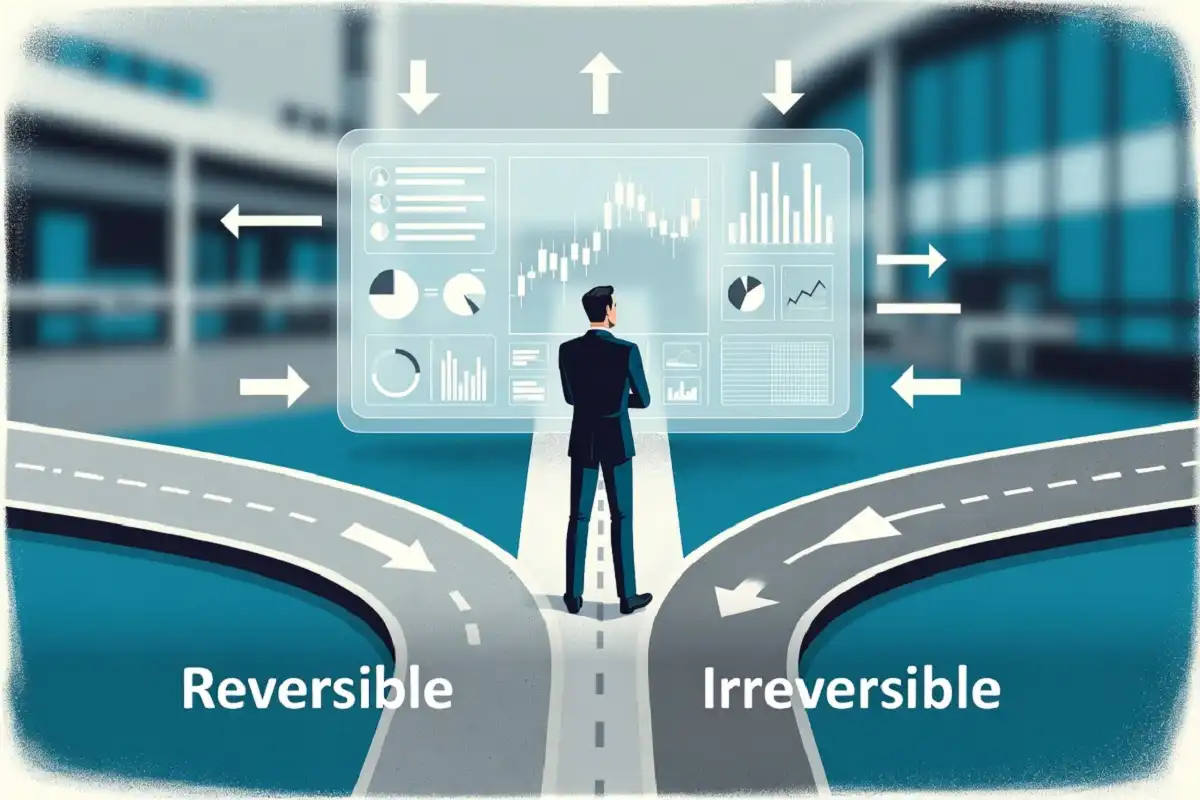
A useful practice here is the reversible-decision rule. Sort choices into two buckets. Reversible ones deserve speed. Make them fast and adjust later. Irreversible ones deserve care. Slow down and gather more input. Sorting decisions this way keeps you quick without being reckless.
3. Emotional Intelligence
Emotional intelligence remains central to leadership skills 2026, and its value keeps rising. As AI handles more analytical work, the human parts of leadership matter more, not less.
Emotional intelligence covers self-awareness, empathy, and social skill. Leaders who read a room, manage their own reactions, and connect with people build stronger teams. Daniel Goleman, who popularized the concept, has long argued that emotional intelligence predicts leadership success better than raw IQ.
In practice, this shows up in hard moments. Layoffs. Missed targets. Conflict between team members. Leaders with high emotional intelligence handle these with steadiness and care, and that steadiness is one of the clearest corporate leadership skills that build strong teams.
You can grow this skill deliberately. Name your emotions before you react. Ask more questions before you judge. Watch how your words land on others. Small habits compound into real presence over time.

4. Clear Communication Across Formats
Communication sits at the heart of leadership skills 2026 because teams are scattered. Messages travel through chat, video, email, and async docs. Clarity across all of them is non-negotiable.
Good leaders write plainly. They over-communicate in hybrid settings. They repeat priorities until they stick. Ambiguity breeds confusion when people rarely share a room.
Written communication carries extra weight now. Much of remote work happens in text. Leaders who write short, clear, and often keep teams aligned without constant meetings.
Match the message to the medium. Use video for nuance and hard conversations. Use writing for decisions and records. Use chat for quick coordination. Choosing the right channel prevents most misunderstandings before they start.

5. Leading Hybrid and Distributed Teams
Managing distributed teams is a defining test of leadership skills 2026. The office is no longer the default. Many teams span cities and countries.
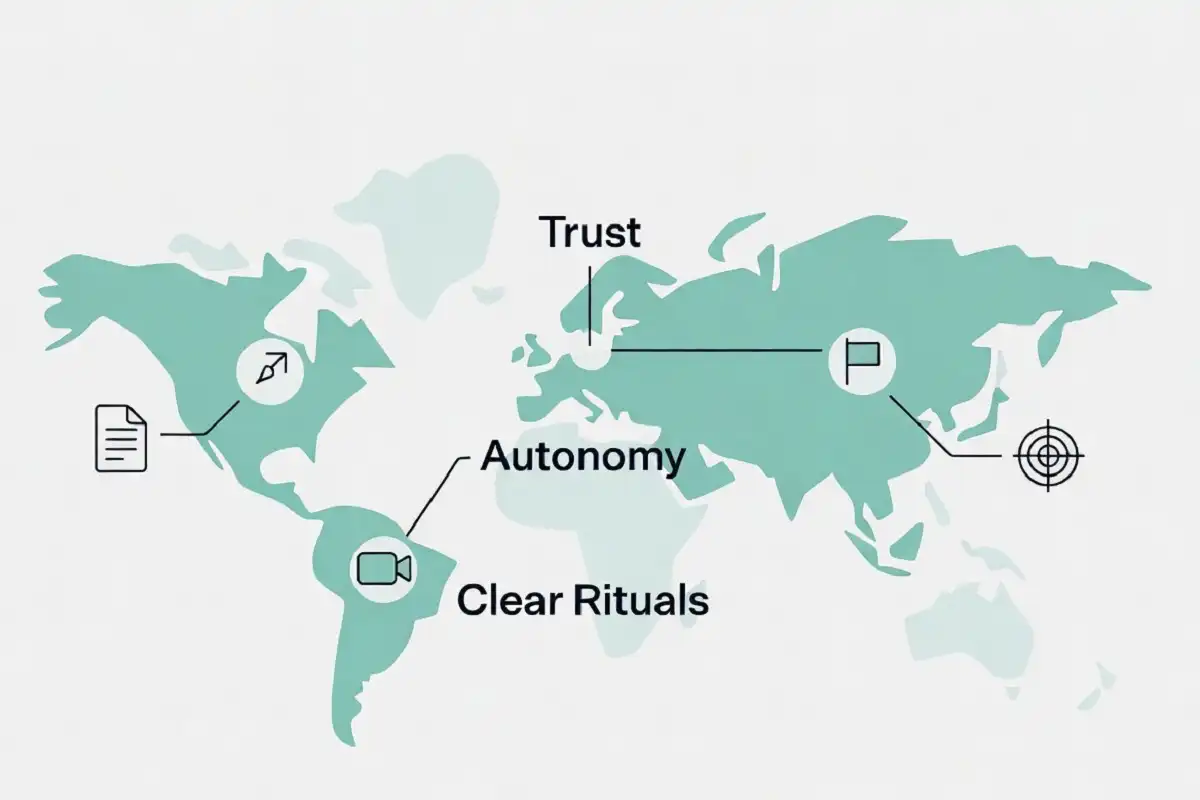
This requires trust over surveillance. Measure output, not hours logged. Give people autonomy. Set clear goals and let them work. Micromanagement fails hard across distance.
It also demands intentional connection. Remote teams lose casual bonding. Strong leaders build it back with structure. Regular check-ins. Clear rituals. Space for human conversation, not just task updates.
Time zones add another layer. Async work becomes the default across regions. Document decisions in writing. Record key meetings. Set clear response-time expectations so no one waits in the dark. These systems let scattered teams move as one.
6. Continuous Learning
A learning mindset underpins every other item on this leadership skills 2026 list. The pace of change means yesterday’s expertise expires fast. Leaders who stop learning stall.
Model curiosity. Ask questions. Admit what you do not know. Teams take cues from the top. A leader who keeps learning gives everyone permission to grow, which is exactly why AI skills are now the fastest route to career growth for managers and staff alike.
This applies most to technology. New tools arrive constantly. You do not need to master each one. You do need to understand what they change and how they affect your team.
Build learning into your calendar. Block time each week for reading, testing tools, or talking with people outside your field. Treat it as a fixed appointment, not a spare-time activity. Consistent small inputs beat occasional cramming.

7. Ethical and Transparent Leadership
Ethics anchors the leadership skills 2026 employers and workers both demand. Trust is fragile. One bad call can erode it across an organization.
Transparency builds durable trust. Share the reasoning behind decisions. Own mistakes openly. Treat people fairly even when it costs you. Workers today notice the gap between stated values and real behavior.
This matters more with AI in the mix. Automated decisions need human accountability. Leaders who explain how and why systems make choices protect both their people and their reputation. Bias in AI tools is a live risk, so someone must own the outcomes those tools produce.

How Leadership Skills 2026 Differ From Past Years
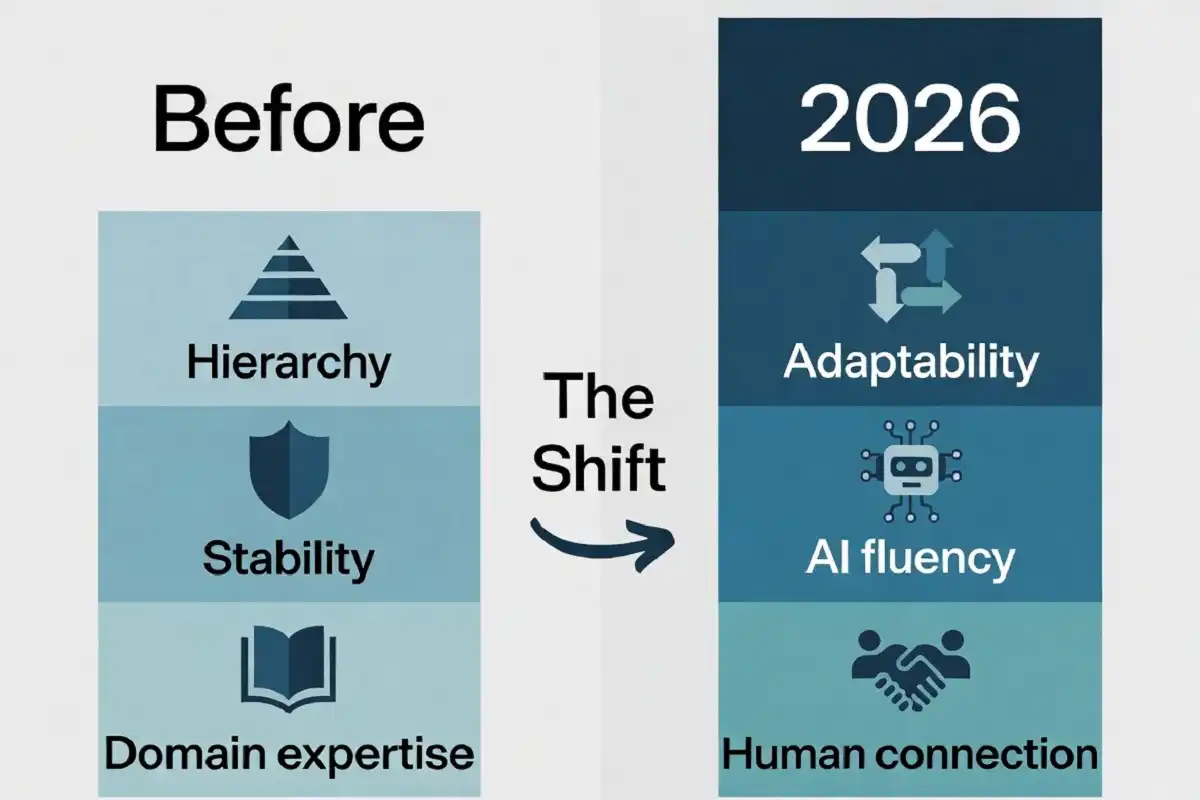
The shift is real, and it is measurable. Past leadership prized stability, hierarchy, and deep domain expertise. Leadership skills 2026 prize adaptability, flatness, and cross-functional range.
Three changes stand out. First, AI moved from optional to essential. A leader without AI fluency now carries a real gap. Second, remote work turned communication into a core competency rather than a soft extra. Third, employee power grew. Talented people have options, so leadership that ignores wellbeing loses them.
The result is a more human, more flexible model. Numbers still matter. But the ability to guide people through uncertainty now defines the job, and that pattern shows up clearly in how AI leadership skills top current hiring priorities.

How to Build Leadership Skills 2026 Employers Want
Start where you are. Building leadership skills 2026 requires deliberate practice, not a certificate hunt. Here is a direct path.
Audit yourself first. Rate your current ability across the seven areas above. Be honest. Ask a trusted peer for a second read. Gaps you cannot see cost you the most.
Pick two skills to develop. Do not spread thin. Choose the two with the biggest payoff for your role. Focus beats breadth in the early stage.
Practice on real work. Skills grow through use, not theory. If communication is your target, run a clearer weekly update. If AI fluency is the gap, use an AI tool on an actual task this week.
Get feedback fast. Ask your team what is working. Short, frequent feedback beats an annual review. Adjust based on what you hear.
Learn from strong leaders. Watch how the best people you know handle pressure. Read how respected executives make decisions. Borrow what fits your style.
The path is learnable. None of it requires a rare gift. It requires attention, practice, and the humility to keep improving.

Common Mistakes That Undercut Leadership Skills 2026
Even good leaders trip on the same patterns. Watch for these.
Avoiding AI ranks first. Some leaders treat it as a fad or a threat. That posture ages badly. Leadership skills 2026 assume basic AI fluency as a baseline.
Over-relying on authority comes next. Titles no longer command respect on their own. Influence is earned through competence and trust. Leaders who lean on position rather than value lose their teams.
Neglecting the human side is the third trap. Data-driven leaders sometimes forget the people behind the numbers. Metrics guide decisions. They do not replace connection.
Skipping self-development is the quiet killer. Busy leaders defer their own growth. Then the gap widens. The best protect time for learning even under pressure.
FAQs

What is the single most important leadership skill for 2026?
Can leadership skills be learned, or are they innate?
How long does it take to build strong leadership skills?
Do soft skills still matter with AI everywhere?
What This Means for Leaders in 2026
The bar rose, but the path is clear. Leadership skills 2026 blend technical fluency with deep human capability. AI handles the analysis. People still need someone to guide, decide, and connect.
Focus on the seven skills above. Audit your gaps. Practice deliberately. The leaders who thrive this year are not the ones with the most authority. They are the ones who adapt fastest and keep their people with them. That is the work now, and it starts with a single skill you commit to build this quarter.