
Why AI Skills Are Now the Fastest Path to Career Growth in 2026
If you have been watching the job market this year, one thing is clear: the rules of career growth have changed. The old path of spending years in the same role, waiting for a promotion, is giving way to something faster and more skills-driven.
Right now, in May 2026, the single biggest factor separating professionals who are moving up from those staying stuck is one thing: AI fluency.
The Pay Gap Is Real and Growing
Let me give you a number that should stop you in your tracks.
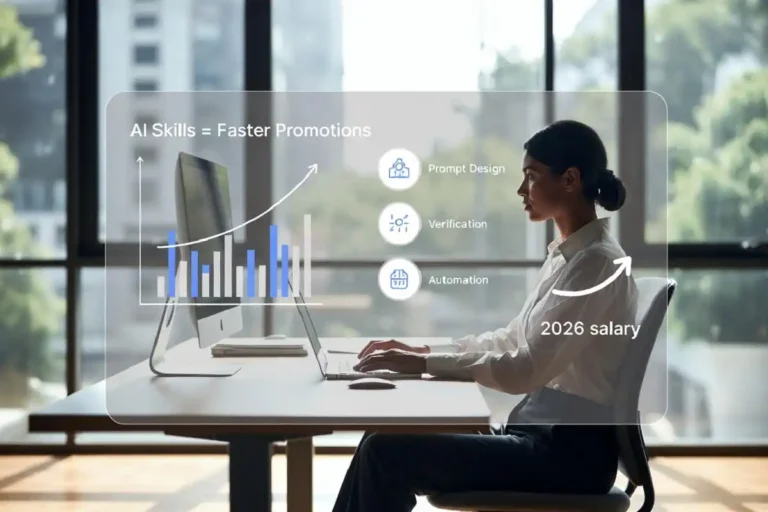
Workers with advanced AI skills are earning 56% more than peers in the same roles who lack those skills, according to PwC’s analysis. On top of that, productivity growth has nearly quadrupled in industries most exposed to AI since 2022.
That is not a minor edge. That is a career-altering gap.
For professionals who want to grow faster and earn more, the message from this year’s data is simple: AI is no longer an optional add-on skill. It is a core requirement for accessing the fastest-growing parts of the labor market.
This connects directly to the broader shift in how companies hire today. If you want to understand how business leadership decisions are reshaping enterprise strategy, the skills-first movement is one of the clearest examples.
Skills-Based Hiring Has Taken Over
Employers are no longer fixated on where you went to school or how long you stayed at your last job. They want to know what you can actually do.
Career advancement increasingly depends on continuous learning and credentialing. Specialized skills in data, analytics, and AI offer meaningful advantages in a competitive market. Theplanetgroup
Organizations that invest early in AI and focus on skill-based hiring are better positioned to attract and retain top talent, foster innovation, and boost productivity and growth. Fast Company
This matters whether you are job hunting or trying to move up inside your current company. Managers are watching for who is building relevant skills, and those people tend to get the visibility that leads to promotions.
AI Skills Can Level the Playing Field
Here is something that surprised me when I first saw the research on this.
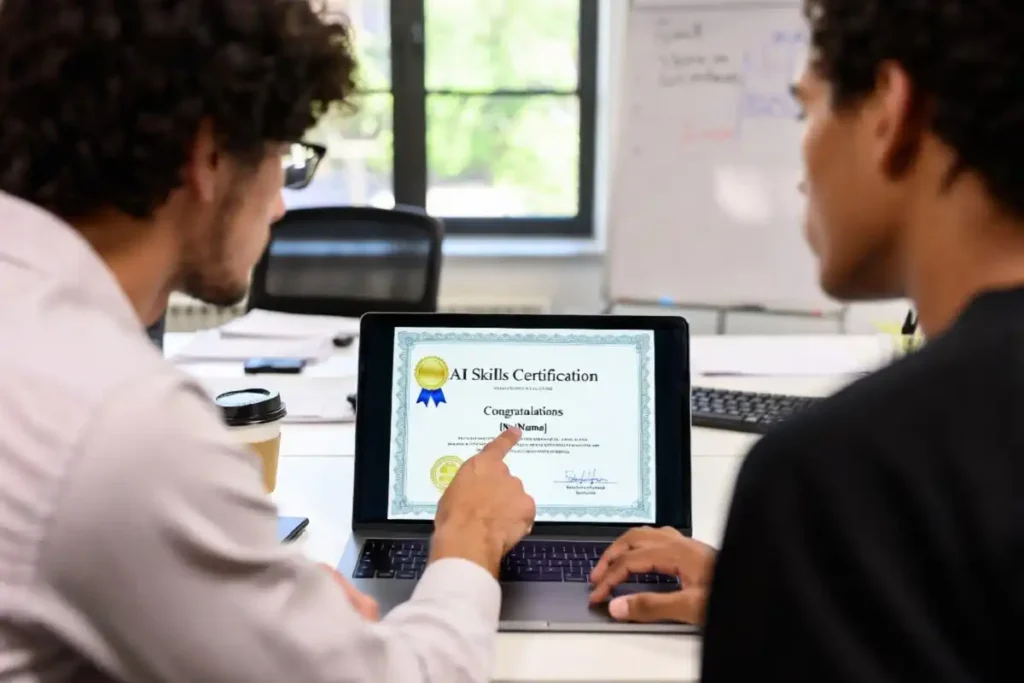
AI skills helped offset conventional disadvantages in hiring. Older applicants and candidates without advanced degrees, groups that often face lower call-back rates, saw their prospects improve substantially when AI skills were listed on their resumes. When those skills were supported by a recognized certificate, the effect was even stronger. World Economic Forum
This suggests that AI skills are working as a partial equalizer. Hiring attention shifts away from static background factors toward what you can demonstrate right now.
For anyone who has felt overlooked because of age, a non-traditional career path, or educational background, that finding is worth paying attention to.
The World Economic Forum’s reporting on AI and job quality digs deeper into this phenomenon, with research backing up the equalizer effect at scale.
What Skills Are Actually in Demand Right Now
As of May 2026, the AI job market is evolving faster than ever, with employers prioritizing hands-on, domain-specific expertise. The most sought-after skills are those that translate directly into business impact. Futurense
The roles getting the most traction right now include machine learning engineers, AI product managers, data scientists with LLM integration experience, and MLOps engineers who can take models from experiments into production.
But here is the piece that gets overlooked in most of the coverage:
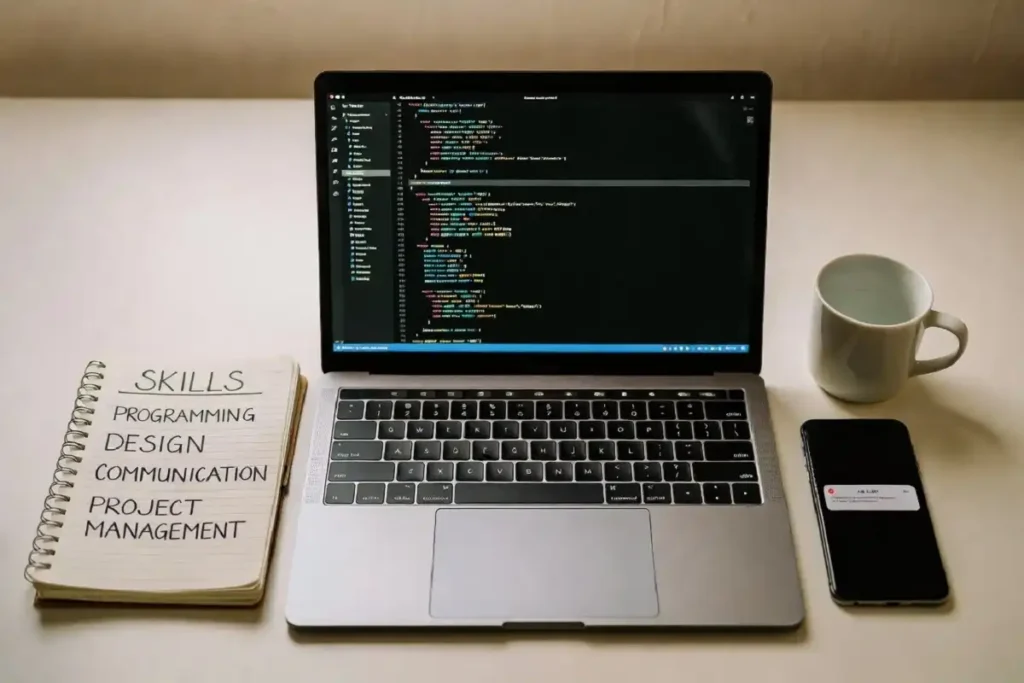
Human skills, including creative thinking, resilience, flexibility, and leadership, remain critical. The most valuable professionals in 2026 combine technical AI fluency with distinctly human capabilities that machines cannot replicate.
Pure technical skill without the ability to communicate, lead, or think creatively is not enough. The professionals moving fastest are those who bring both.
The Continuous Learning Requirement
One thing I keep seeing across every source covering this topic: the pace of change is relentless.
The pace of AI advancement means knowledge becomes outdated quickly. What worked six months ago may already be obsolete. Gloat
This is not meant to be discouraging. It just means treating your skills as a living portfolio rather than a credential you earn once and rely on forever.
Practical steps that are working for professionals right now include taking short certification courses from recognized providers, spending time applying AI tools to actual work tasks rather than just reading about them, and following developments in your specific industry vertical where AI adoption is moving fastest.
Over 90% of business leaders are budgeting for AI tools, upskilling, or enablement in 2026. That means many companies are willing to fund learning if you ask for it. Knowing that your employer may have budget available for this changes the conversation. Onward Search
You can follow ongoing coverage of the technology forces reshaping enterprise careers here at Tomaro Group.
The Broader Shift for Early Career Professionals
If you are earlier in your career, the landscape feels particularly steep right now.
Moving from college to a professional career is now more like a marathon than a sprint, requiring young job seekers to focus on building skills in high-demand fields and refining their job search tactics to navigate an increasingly selective environment. Fast Company
NACE’s 2026 job outlook reports that 45% of employers view the overall job market for the 2026 class of graduates as “fair,” the lowest sentiment reading in several years. Fast Company
That makes the skill differentiation strategy even more important for newer professionals. The fastest route to standing out in a selective market is not a longer resume. It is demonstrable, current capability in areas companies actually need.
Reuters has been tracking how AI-driven hiring is reshaping entry-level opportunities across sectors, and the patterns are consistent with what the skills data shows.
For anyone keeping track of salary benchmarks alongside career moves, our news section covers earnings data across industries on a regular basis.
What This Means for You
The clearest takeaway from everything happening in the job market right now is this: waiting is the riskiest move.
Companies are paying professionals with AI skills 56% more than those without. The employers and job seekers with the strongest AI skills will be the ones to thrive in 2026 and beyond. Onward Search
You do not need to become a machine learning engineer overnight. But building working familiarity with AI tools in your field, earning a recognized credential, and applying that knowledge to visible work will matter more for your next raise or promotion than almost anything else you could do right now.