CEO Confidence Drops to 47 in Q2 2026 as Leaders Brace for a Weaker Economy
Corporate America just flipped from hope to worry. CEO confidence sank to 47 in the second quarter of 2026, its sharpest drop in months. Below 50 means pessimists now outnumber optimists. Here is what the latest read tells you about jobs, hiring, and the road ahead.
CEO confidence fell to 47 in Q2 2026 from 59 in Q1, according to The Conference Board. A reading under 50 signals more pessimism than optimism. Many CEOs now expect weaker conditions and plan workforce cuts.
What the Q2 2026 CEO Confidence Survey Found
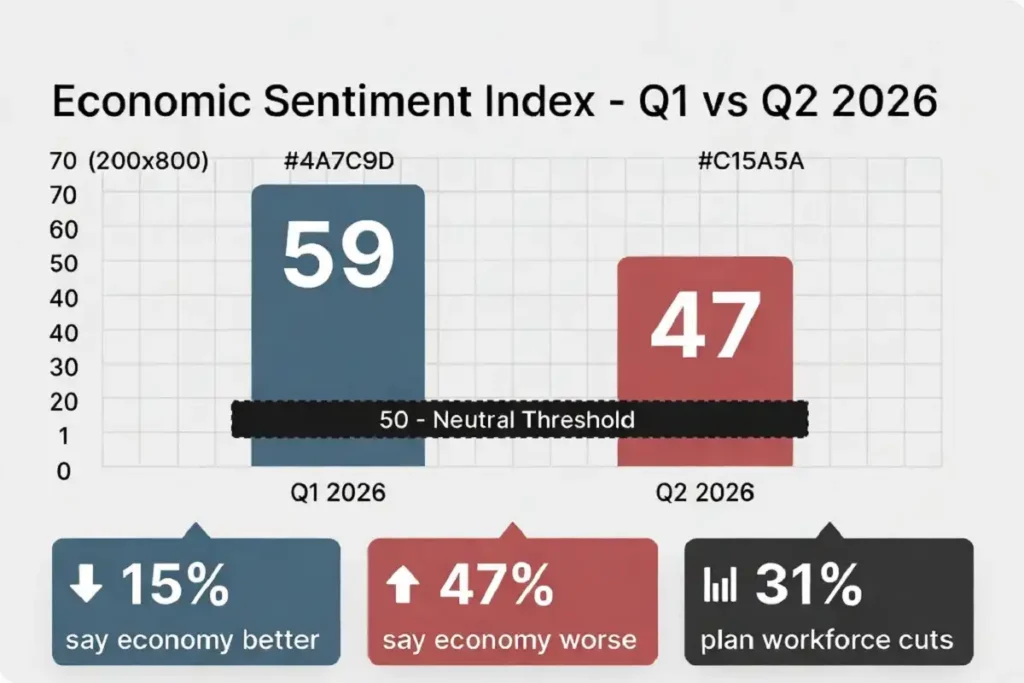
The headline number is 47. The Conference Board Measure of CEO Confidence, run with The Business Council, surveyed 141 CEOs and found the overall score fell to 47 in Q2 from 59 in Q1. That is a 12 point swing in one quarter. Any score under 50 tips the balance toward negative views.
The shift in sentiment is steep. Only 15% of CEOs say the economy is better than six months ago, down from 39% in Q1, while 47% say it is worse, up from just 8%. Few corporate surveys move that fast.
The outlook is no brighter. 40% of CEOs expect economic conditions to worsen over the next six months, compared to 13% who felt that way last quarter.
Why Are CEOs So Pessimistic Right Now?
CEOs are pessimistic because they see slowing growth, rising costs, and fresh geopolitical strain hitting at once. The mood reversed quickly after a hopeful start to the year.
Conference Board Chief Economist Dana Peterson put it plainly. She said CEO confidence fell back into negative territory in Q2 2026, reversing the surge in optimism from the first quarter, and that leaders see the economy as materially worse than six months ago with further weakening expected.
The hard data backs the unease. The Bureau of Economic Analysis reported that the economy grew at an annualized 0.5% in the final quarter of 2025, below the 0.7% economists had expected. Slow growth at the end of last year set a shaky base for 2026.
There is also a clear shift in what keeps executives up at night. Nearly two-thirds of CEOs now rank cyber risk as a top threat to their industries, with geopolitical and AI risks also high on the list, while supply chain and energy concerns gained intensity in Q2. That same anxiety over technology shows up in how AI leadership skills now top hiring priorities for senior roles.
What Lower CEO Confidence Means for Jobs
Falling CEO confidence usually shows up first in hiring plans, and this quarter is no different. The numbers point to belt-tightening.
31% of CEOs expect to reduce their workforce over the next six months, now ahead of the 28% who plan to expand hiring. That is a notable flip. When more leaders plan cuts than additions, the labor market loses momentum.
Pay plans are cooling too. Planned wage increases are losing steam and clustering in the 3% to 4% range, while 53% of CEOs reported some hiring problems in certain areas.
Roger Ferguson, Jr., Vice Chairman of The Business Council, summed up the pattern. He described a low-hire, low-fire economy, noting that the share of CEOs planning to grow their workforce edged down while those expecting job cuts rose slightly. For anyone weighing a move, it helps to know the steps that actually drive career growth when employers turn cautious.
How This Fits the Wider 2026 Picture
This survey does not stand alone. It lands amid a string of warning signs from the top of corporate America.
JPMorgan Chase CEO Jamie Dimon has stayed cautious even as markets climb. Dimon said he remains cautiously pessimistic on the economy despite the stock market hitting record highs. His caution echoes an earlier Jamie Dimon warning to CEOs about AI leadership and the pressure now reshaping the corner office.
Macro pressure is building elsewhere too. The recent Moody’s downgrade that shook the Treasury market and renewed talk of stagflation risk after the May Fed minutes feed the same gloom. You can read the full release on the Conference Board’s CEO confidence page for the underlying data.
The Takeaway
CEO confidence at 47 is a real signal, not noise. Leaders who were upbeat in January are now planning for fewer hires, smaller raises, and a softer six months. The combination of weak Q4 growth, cyber and AI worries, and geopolitical strain pushed the mood down hard. Watch hiring plans next. If the low-hire, low-fire pattern holds, workers and job seekers will feel it before the headline numbers catch up.