
Business Leadership in 2026: The Skills, Data, and Mistakes That Define It
Leaders are running teams that look nothing like they did three years ago. Business leadership 2026 means managing hybrid staff, AI copilots, and tighter budgets at the same time. Here is what the data says works, what to stop doing, and how to build the skills that matter now.
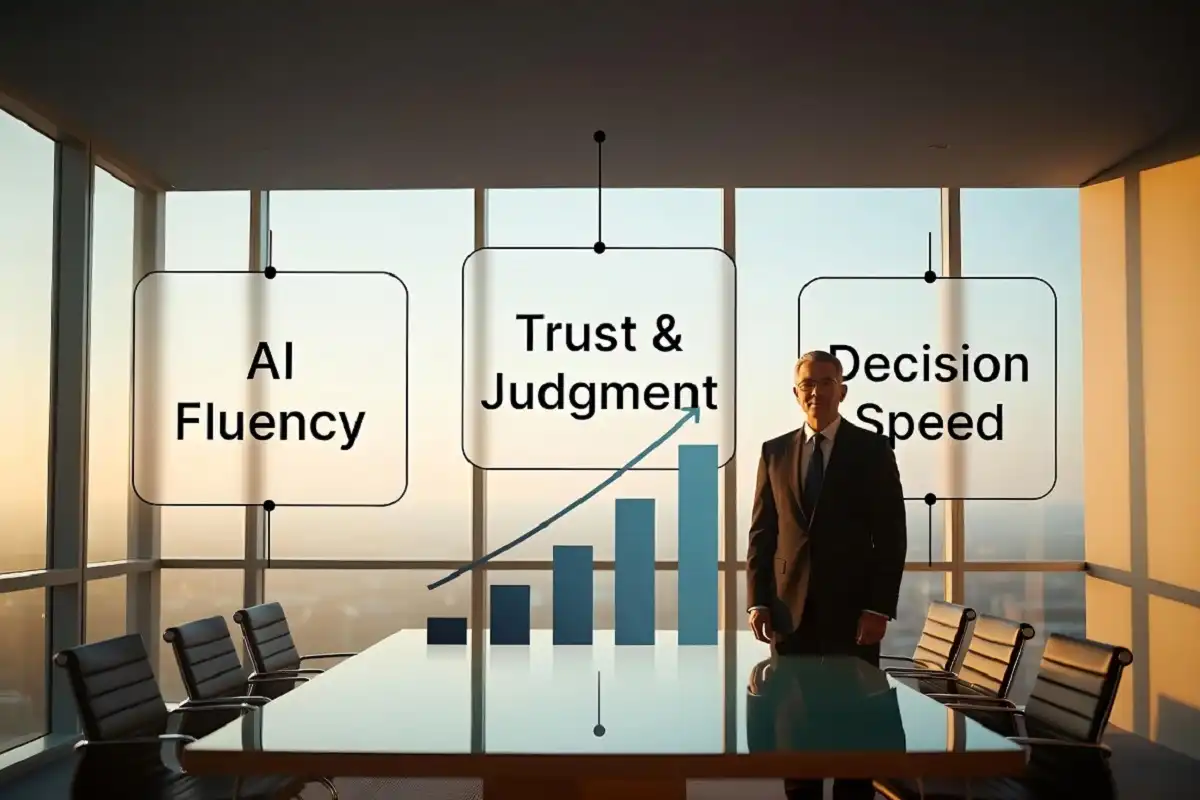
Business leadership 2026 rewards leaders who pair AI fluency with human skills like trust-building and clear communication. Boards reward CEOs who cut decision lag, retain talent, and deploy AI responsibly. Adaptability beats authority. Results come from listening, not just directing.
What Has Changed for Leaders
The job description shifted fast. A few years ago, executives managed people and process. Today they manage people, process, and machines. McKinsey’s research on the state of AI reports that most large organizations now use generative AI in at least one business function. That single shift rewired how teams operate.
Three forces drive the change. First, AI moved from pilot to production. Second, hybrid work became permanent for knowledge roles. Third, economic pressure forced leaner teams. Each one alone would be hard. Together, they redefined the work.
I’ve been tracking this pattern across sectors since early 2025. The leaders who adapted early are pulling ahead. The ones who waited are now playing catch-up on skills their staff already expect them to have. Business leadership 2026 is, at its core, about closing that gap fast.
Why AI Fluency Now Defines Strong Leaders
AI fluency defines strong leaders because teams expect direction on tools they use daily. A manager who cannot discuss AI workflows loses credibility fast. In business leadership 2026, you do not need to code. You do need to understand what the tools do, where they fail, and how to deploy them safely.
JPMorgan Chase CEO Jamie Dimon has said AI will affect nearly every job at the bank. That view now shapes hiring across finance and tech. Executives who grasp AI’s limits make better calls than those who either fear it or oversell it.
The skill gap is real. Leaders who understand AI adoption in the workplace set clearer priorities and waste less budget on tools that do not fit. Those who do not often chase hype and stall.
Here is the practical test. Can you explain to your team when to trust an AI output and when to check it? If yes, you lead well on this front. If no, that is the first gap to close. AI fluency is now the entry ticket to business leadership 2026, not an optional edge.
The Human Skills That Still Decide Outcomes
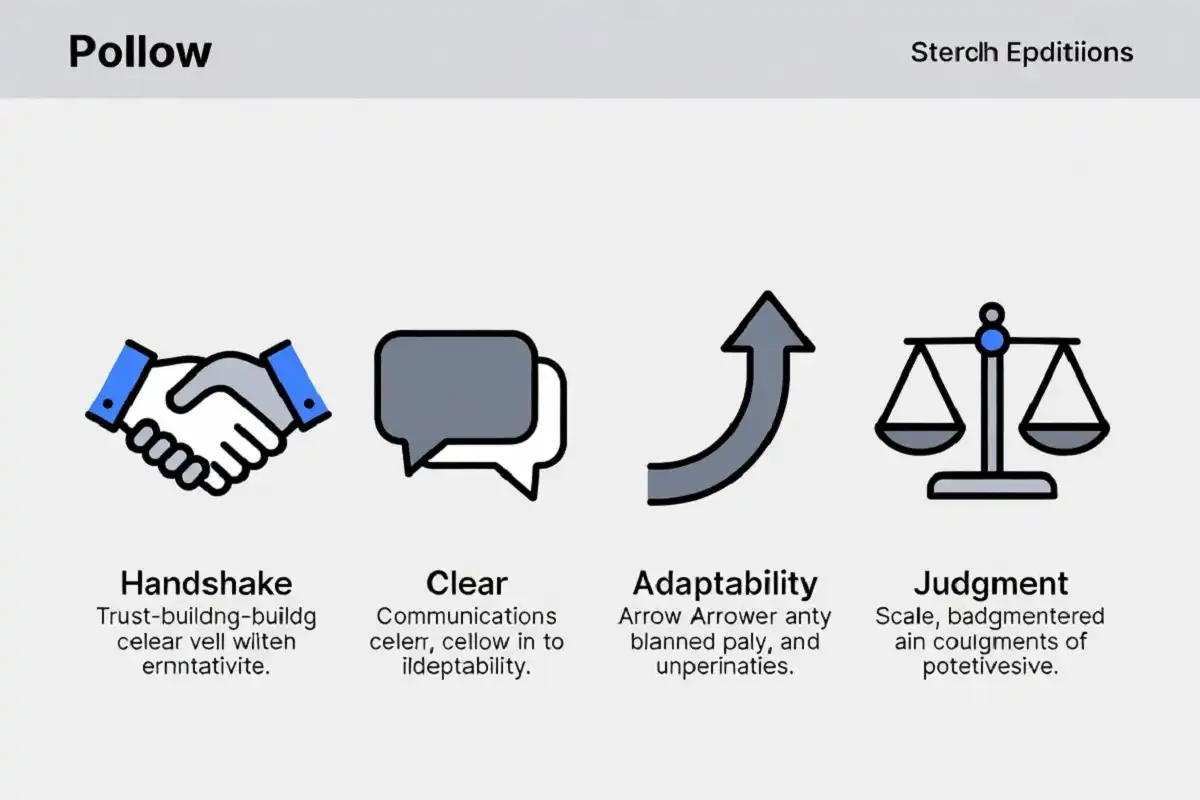
Human skills decide outcomes because AI handles tasks, not relationships. Trust, clear communication, and sound judgment separate strong leaders from weak ones. Automation raised the value of these skills instead of replacing them.
Gallup’s long-running workplace research ties engagement directly to manager quality. Teams with skilled managers show higher retention and output. That link held steady even as tools changed. People still leave managers, not companies.
Four human skills matter most right now:
- Trust-building. Staff work harder for leaders they believe in. Trust cuts friction and speeds decisions.
- Clear communication. Remote and hybrid teams need direct, plain messages. Vague direction wastes time.
- Adaptability. Conditions shift monthly. Leaders who adjust keep teams steady.
- Judgment. AI gives options. Humans pick. Good judgment is now a premium skill.
None of these show up on a dashboard. All of them show up in results. The human side of business leadership 2026 is what AI cannot copy, and that is exactly why it commands a premium.
How to Lead Hybrid and Remote Teams Well

Lead hybrid teams by setting clear outcomes, not tracking hours. Measure what people produce, not where they sit. Micromanagement fails harder in remote settings than in offices, and it quietly undermines business leadership 2026 more than any other habit.
Set expectations in writing. Ambiguity grows across distance. Document goals, deadlines, and ownership so nobody guesses. Then check in on progress, not presence.
Overcommunicate on purpose. In an office, people absorb context by proximity. Remote staff miss that. Repeat priorities. Share context often. Say the quiet part out loud.
Protect focus time too. Back-to-back video calls drain teams. The four-day week and shorter-schedule experiments gaining ground in current workplace trends show one thing clearly. Output rises when leaders cut low-value meetings and defend deep work. Distributed teams are now a permanent feature of business leadership 2026, so this skill is not optional.
What Boards and Investors Expect From CEOs Now
Boards expect CEOs to move faster, retain talent, and deploy AI without scandal. Under the lens of business leadership 2026, decision speed is now a scored metric. Slow leaders lose to fast ones in crowded markets.
Talent retention sits near the top of board priorities. Replacing skilled staff costs more than keeping them. Directors watch turnover as a leadership signal. High churn reads as a management problem, not a market one.
Responsible AI use matters just as much. A data breach or a biased AI tool creates legal and brand damage. Boards want leaders who move fast and stay safe. That balance is the new bar for business leadership 2026, and directors now ask about it directly in reviews.
How AI Governance Became a Core Leadership Duty
AI governance is now a leadership duty because unmanaged AI creates real legal and reputational risk. Leaders own the outcomes of every tool their teams deploy. A biased hiring model or a leaked prompt is a leadership failure, not a technical footnote.
Three governance basics belong on every leader’s desk:
- Know where AI touches decisions. Map which tools affect hiring, lending, pricing, or customer data.
- Set review rules. Decide which AI outputs need a human check before they ship.
- Track accountability. Name who owns each AI system and its results.
The EU AI Act and similar rules raised the stakes. Regulators now expect named accountability. Business leadership 2026 includes owning AI risk the same way leaders own financial risk. Skipping this step is the fastest way to turn a productivity tool into a lawsuit.
The Leadership Mistakes That Cost the Most in 2026
The costliest mistake in business leadership 2026 is treating AI as a headcount cut instead of a capability boost. Leaders who slash teams and expect tools to fill the gap usually end up with burned-out staff and worse output.
Three more mistakes show up often in the companies I cover:
- Ignoring AI entirely. Teams lose confidence in leaders who avoid the tools they use.
- Chasing every trend. Adopting tools without a plan wastes budget and time.
- Neglecting the human side. Cutting mentorship and one-on-ones to save time backfires within a quarter.
Avoid these and you clear a bar most leaders miss. The pattern is consistent across the filings and reports I review. Business leadership 2026 punishes shortcuts faster than any prior era, because both staff and investors see the results in real time.
Why Succession Planning Matters More Now
Succession planning matters more because AI-era skills are scarce and hard to replace fast. Losing a key leader with AI fluency and team trust sets a company back further than losing one a decade ago. The bench is thinner for these blended skills.
Build depth on purpose. Identify who could step up. Give them stretch assignments now, not later. Pair AI-fluent staff with strong people-managers so both sets of skills spread across the team.
Boards increasingly ask CEOs about succession readiness. A strong pipeline signals stability. A weak one signals risk. Planning for the next generation of leaders is a quiet but central part of business leadership 2026, and directors notice which companies take it seriously.
How to Build Leadership Skills for 2026
Build leadership skills by pairing hands-on AI practice with deliberate work on communication and trust. Do not pick one. The strongest leaders develop both tracks at once.
Start with AI. Use the tools your team uses. Run real tasks through them. Learn where they help and where they fail. That direct experience beats any course.
Then work the human side. Ask for feedback from your team and act on it. Practice clear, written communication. Hold real one-on-ones. Strong corporate leadership habits compound over time.
Read widely too. Track named sources like McKinsey, Gallup, and Harvard Business Review. Watch what companies actually do, not just what they announce. Steady learning is the throughline of every leader worth following, and it is the surest path into business leadership 2026 for anyone starting now.
A Quick Self-Check for Leaders
Run this short check on yourself. It cuts through the noise fast.
- Can you explain your AI tools to a new hire?
- Does your team trust your direction?
- Do you measure output, not hours?
- Is someone ready to step into your role?
- Do you own your AI risk?
Answer yes to all five and you are ahead of most. Answer no to any and you have your next priority. The strongest examples of business leadership 2026 score well on every line, not just the technical ones.
The Numbers to Watch Next
Business leadership 2026 rewards leaders who blend AI fluency with human judgment and move fast without breaking trust. Watch three signals in your own team: retention rates, decision speed, and how confidently staff use AI tools. Those three tell you more than any title. The leaders who master this mix now will define the next decade, and the gap between strong business leadership 2026 and everything else keeps widening by the quarter.