World News Today, May 30, 2026: UN Heat Warning and Israel-Lebanon Pentagon Talks
Two major stories are dominating global headlines on May 30, 2026. The UN just issued its starkest climate warning in years, and Israel and Lebanon held an unprecedented military meeting at the Pentagon.
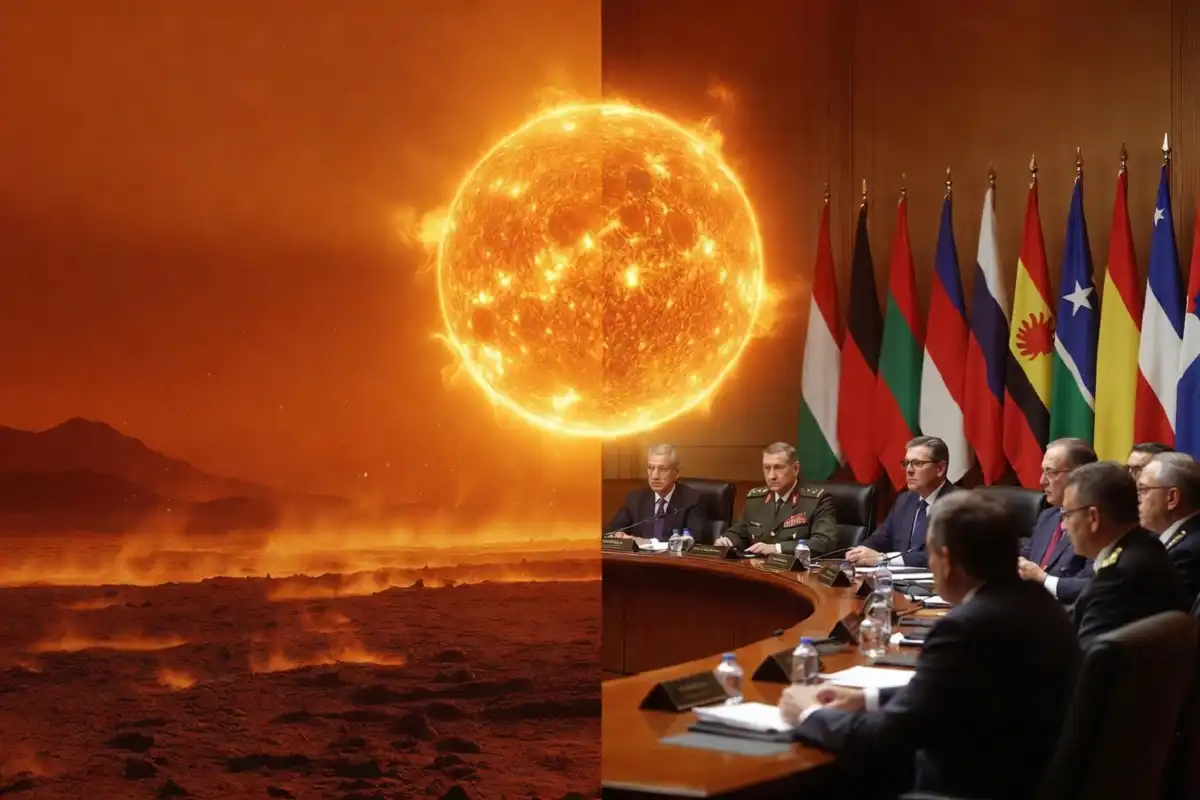
On May 30, 2026, the UN’s weather agency warned that global temperatures will stay at or near record levels through 2030, while Israeli and Lebanese military officials met at the Pentagon for the first dedicated security talks in the ongoing peace process.
What the UN’s New Climate Report Actually Says
The World Meteorological Organization, using projections produced by the UK Met Office, has found there is an 86 percent chance that at least one year between 2026 and 2030 will surpass 2024 as the hottest year ever recorded.
That number alone should get your attention. But it gets worse.
The same report found there is a 91 percent likelihood that average global temperatures will temporarily exceed 1.5 degrees Celsius above pre-industrial levels during at least one of the next five years.
The 1.5°C threshold is not an abstract number. It is the key benchmark under the Paris Agreement on climate change, with scientists warning that exceeding it for prolonged periods would sharply increase the risks of extreme weather, ecosystem collapse, food insecurity, and displacement.
Annual global temperatures between 2026 and 2030 are expected to range between 1.3°C and 1.9°C above the 1850 to 1900 average, and there is a 75 percent chance that the average warming across the entire five-year period will exceed 1.5°C.
That last figure is the one keeping climate scientists up at night. This is no longer about a single bad year. It is a sustained pattern.
What This Means for the Planet
The WMO report does not just flag temperature numbers. It points to specific consequences across regions.
The World Meteorological Organization forecasts an overheating Arctic that warms nearly 3 degrees Fahrenheit (1.66 degrees Celsius) between now and 2030, and a dangerous drought with potential wildfires for the Amazon, a crucial part of Earth’s natural defenses against human-caused climate change.
The Amazon angle is especially serious. That forest acts as a carbon sink for the entire planet. If it dries out and burns, it could release stored carbon at scale, accelerating the very warming it has historically helped slow.
Scientists note that a hotter globe from the burning of coal, oil, and gas means more extreme weather including floods, droughts, and heat waves. One researcher quoted in coverage warned: “This will mean many people will lose their lives, we are in for a lot of food price shocks, and more intense wildfires.”
For American readers tracking food prices after the smallest US wheat crop since 1972, those climate-linked supply shocks are already more than theoretical.
Does Breaching 1.5°C Mean the Paris Agreement Has Failed?
No, not technically. Such temporary breaches do not mean the Paris Agreement’s long-term climate goals are unattainable, since the accord refers to warming sustained over decades rather than individual years. Still, the forecasts underscore the accelerating pace of global warming and the increasing frequency of extreme heat events.
Scientists are drawing a careful line here. One hot year breaking 1.5°C is not the same as the planet being permanently locked above that level. But crossing that threshold repeatedly, year after year, starts to look less temporary each time.
Israel and Lebanon Hold First Military Talks at the Pentagon
The second major story out of May 30 involves the Middle East, specifically a quiet but significant shift in the US-Iran peace process that now involves Lebanon directly.
On May 29, the United States facilitated a security-track meeting at the Pentagon, with military delegations from both Israel and Lebanon. This followed two days of political talks held at the State Department on May 14 and 15, where the two countries agreed on a framework for negotiations aimed at lasting peace, full recognition of each other’s sovereignty and territorial integrity, and establishing genuine security along their shared border.
This is historic. Israel and Lebanon have technically been in a state of war since 1948. Direct military-to-military negotiations at the Pentagon represent a level of engagement that would have seemed impossible even 18 months ago.
The security meeting at the Pentagon was the first gathering of strictly military personnel after both sides agreed to split the process into security and diplomatic tracks. While negotiators had held three earlier rounds of talks at the State Department, the May 29 session marked a new phase focused specifically on military coordination.
Where the Hezbollah Question Stands
The core sticking point in any Israel-Lebanon agreement is Hezbollah. Israel and the United States want the group disarmed. The ceasefire that brought both sides to the table was brokered by the United States and took effect on April 16, 2026, as a temporary cessation of hostilities. A three-week extension was announced on April 23 by President Donald Trump following additional talks with Israeli and Lebanese envoys.
The parties agreed to a 45-day extension of the April 16 cessation of hostilities agreement, intended to allow the security track to move forward. Political talks are set to reconvene on June 2 and June 3.
The next two weeks will be telling. Hezbollah has signaled it does not recognize agreements made between Beirut and Jerusalem. That position complicates any deal that requires actual disarmament on the ground. For readers who have been tracking how US strikes on Iran rattled the broader regional picture, this Lebanon track is a direct extension of those same tensions.
Other Global Headlines Rounding Out May 30, 2026
Beyond climate and the Middle East, a few other stories are worth noting today.
The India-US critical minerals partnership, signed in New Delhi on May 29 by External Affairs Minister S. Jaishankar and Secretary of State Marco Rubio, formalizes a framework covering mining, processing, and recycling of rare earths. This is a direct response to supply chain dependence on China and fits into the broader US-China narrative that has defined trade diplomacy in 2026.
In Singapore, US Defense Secretary Pete Hegseth attended the Shangri-La Dialogue on May 29, an annual Asia-Pacific security forum hosted by the International Institute for Strategic Studies. The forum addressed tensions in the Middle East, Ukraine, and rising concerns about Chinese military activity in the Indo-Pacific.
A Russian drone hit a residential building in eastern Romania on the evening of May 29, injuring two people. Romanian authorities confirmed the drone was part of a larger overnight attack on Ukraine. The incident raises NATO’s Article 5 proximity concerns again, even as attention has shifted toward the Middle East.
What the Numbers on Climate Risk Mean for Policy Leaders
The WMO report lands at a moment when climate ambition and geopolitical stress are pulling in opposite directions. Countries are tied up in military conflicts, economic slowdowns flagged by Moody’s recent downgrade and Fed rate concerns, and domestic politics that rarely reward long-term climate spending.
The forecast temperatures of 1.3°C to 1.9°C above the pre-industrial average are not distant projections. They describe conditions expected within the next four years. For agriculture, insurance, infrastructure, and public health systems, that timeline requires decisions now.
The WMO made clear this is not a drill. The UK Met Office data backing the report is peer-reviewed and consistent with independent modeling from multiple agencies. Skeptics do not have credible counter-projections at this point.
My Read on This
Two stories, one pattern: the world is being asked to manage long-term crises while short-term pressures demand every available unit of political attention.
The UN heat report is the most consequential piece of climate news in years. Not because the science is new, but because the probabilities have crossed into near-certainty territory. A 91 percent chance of breaching 1.5°C in the next five years is not a warning you can defer.
The Israel-Lebanon security talks at the Pentagon are more fragile. The military track is meaningful, but the Hezbollah issue has derailed every previous attempt at a durable arrangement. The June 2 and 3 political sessions will be the real test of whether both sides can move from framework language to something binding.
Both stories deserve more sustained attention than the 24-hour news cycle is built to give them.