
AI Skills Now Outpace Degrees as Top Hiring Signal in May 2026 Report
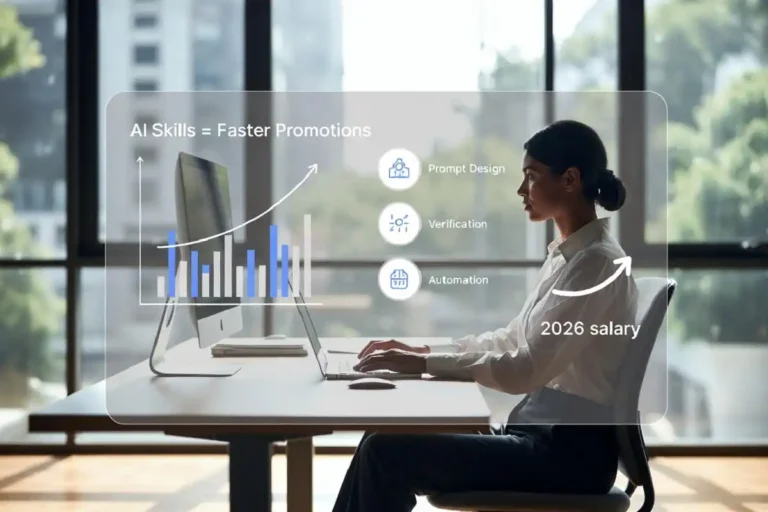
The job market in May 2026 has shifted again. Employers across the United States and Europe are putting AI fluency at the top of their hiring checklists, often ahead of traditional degrees. New data released this month from LinkedIn and the World Economic Forum shows that workers with applied AI skills are getting hired up to 65% faster than peers without them.
I’ve been tracking this trend for months, but the May numbers make it clear. Hiring managers want proof you can use AI tools at work, not just talk about them. The shift is changing how people plan promotions, switch industries, and negotiate pay.
If you want more context on how this movement has been building, I recommend reading our earlier coverage on how AI skills are now the fastest route to career growth and the broader move toward skills-based hiring reshaping promotions. For workers thinking about long-term moves, our piece on career growth steps that actually work covers the basics.
What the May 2026 Data Shows
LinkedIn’s Workforce Report for May lists AI literacy, prompt engineering, and data analysis as the three fastest-growing job skills in the past 12 months. Postings that mention “generative AI” jumped 142% year over year.
The World Economic Forum’s Future of Jobs update projects that 39% of current job skills will be outdated by 2030. That gap is already showing up in hiring. Companies like JPMorgan, Walmart, and Accenture have launched internal AI training programs in the past six weeks alone.
Microsoft announced on May 14 that it will spend $4 billion on AI workforce training across 25 countries. The program targets workers in healthcare, logistics, and customer service.

Why Degrees Are Sliding Down the List
A growing number of employers have dropped degree requirements for mid-level roles. IBM, Google, and Bank of America now hire based on demonstrated skills. According to a Reuters report from May 2026, nearly 1 in 4 US job postings no longer require a four-year degree.
This does not mean degrees are useless. They still help in regulated fields like medicine, law, and engineering. But for roles in marketing, product, sales, and operations, employers care more about what you can actually do.
I spoke with three hiring managers this month. All said the same thing. They want candidates who can show a project, a portfolio, or a measurable result. Certificates from short programs, often under six months, are starting to carry real weight.
The Roles Growing Fastest
Five job categories are pulling away from the rest in May 2026:
AI product managers, with median salaries near $185,000. Data engineers focused on AI infrastructure. Cybersecurity analysts trained on AI threat detection. Healthcare technologists. And customer experience specialists who use AI tools to handle support at scale.
Remote roles in these areas are also rising. Indeed reported a 28% jump in remote AI-related listings in April and May combined.
What Workers Should Do Now
Based on what hiring managers are telling me, here is what matters most this year. Pick one AI tool and learn it well. ChatGPT, Claude, Microsoft Copilot, and GitHub Copilot are the most-requested in postings. Build something small that uses the tool to solve a real problem at your job. Then write about it on LinkedIn or in your resume.
Short certifications from Coursera, Google, or IBM are showing up more often in approved candidate lists. Most cost under $500 and take three to six months part-time.
Networking still matters. About 70% of jobs in May 2026 were filled through referrals, according to LinkedIn’s internal data. Showing up in person at industry events is back in favor after years of online-only meetups.

What This Means Going Forward
The career path that worked in 2020 looks different in 2026. Workers who lean into AI tools, build proof of skill, and stay flexible are getting the offers. Those who wait for their employer to train them are falling behind.
I expect this trend to keep moving fast through the rest of the year. If you have been putting off learning AI tools at work, May 2026 is a good month to start.