
Texas A&M Trust: How the A&M System Earned a AAA Rating
Investors and taxpayers watch credit ratings for a reason. In June 2026, the Texas A&M trust story got a strong endorsement. All three major agencies handed the A&M System their top marks, a rare feat in higher education.
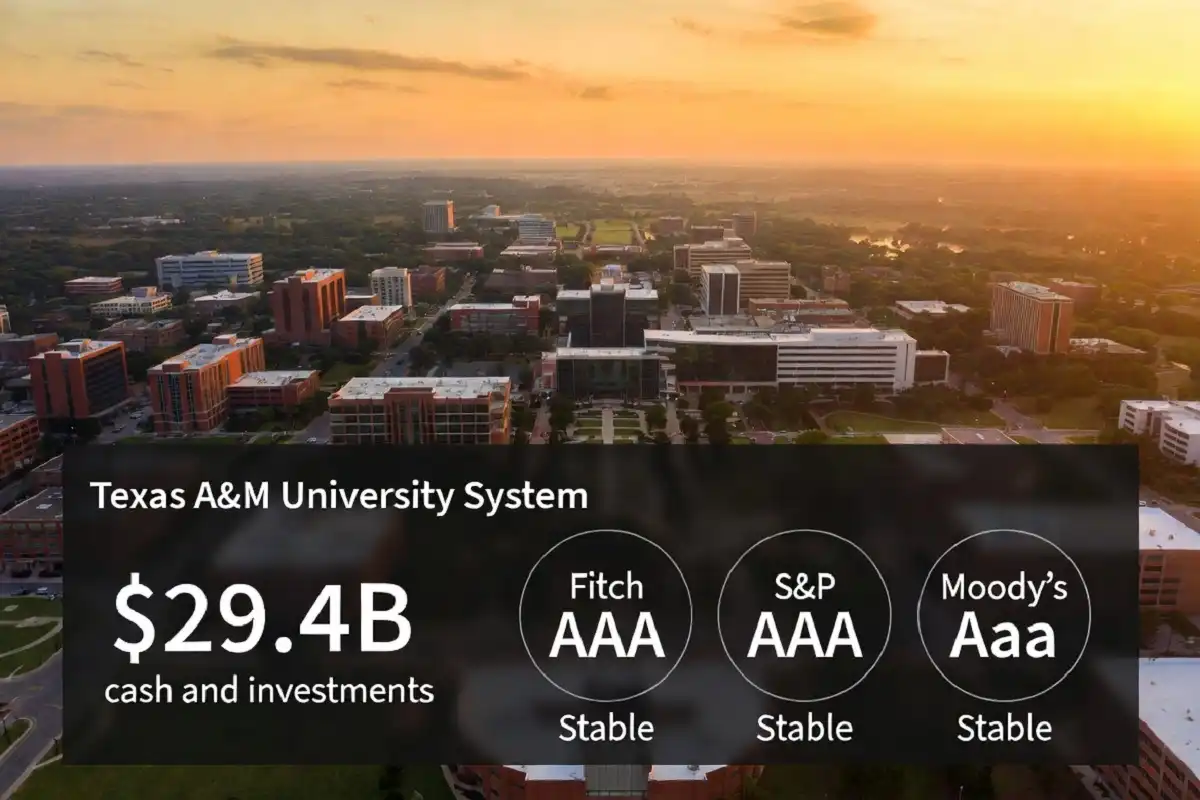
The Texas A&M trust rests on top credit ratings from all three major agencies. On June 29, 2026, Fitch and S&P assigned AAA ratings to new Permanent University Fund bonds. Moody’s lists the System at Aaa. All outlooks are stable.
What “Texas A&M Trust” Means Here
The Texas A&M University System now sits among an elite group of four universities and university systems nationwide with the highest ratings from all three major agencies. That is the core of the Texas A&M trust question. Rating agencies act as outside referees. They judge whether an institution can pay its debts and manage its money well.
Robert L. Albritton, the System’s Board Chairman, framed it directly. He called the ratings an outside assessment of the strength and discipline of the System, adding that the top marks show the System is managing growth responsibly and earning the trust placed in it.
The takeaway for leaders is simple. Trust is not a slogan here. It is a measured outcome, verified by parties with no incentive to flatter.
The 2026 Ratings, Agency by Agency
Three firms reviewed the System. Each reached the same top-tier conclusion.
| Agency | Rating | Outlook | What they cited |
|---|---|---|---|
| Fitch Ratings | AAA | Stable | Financial resources, state support, debt management |
| S&P Global Ratings | AAA | Stable | Strength of the Permanent University Fund |
| Moody’s Ratings | Aaa | Stable | Exceptional credit quality, robust reserves |
Fitch assigned its AAA rating to $358,720,000 in tax-exempt Series 2026A bonds and $43,325,000 in taxable Series 2026B bonds. Fitch also affirmed its AAA rating on roughly $1.5 billion in outstanding System PUF bonds, plus an F1+ short-term rating on $300 million in authorized commercial paper notes.
Moody’s backed up its grade with scale. Its report noted 12 campuses serving more than 146,000 full-time equivalent students and $29.4 billion in total cash and investments for fiscal year 2025. Those numbers explain why the Texas A&M trust holds firm even under stress.
Why the Permanent University Fund Matters
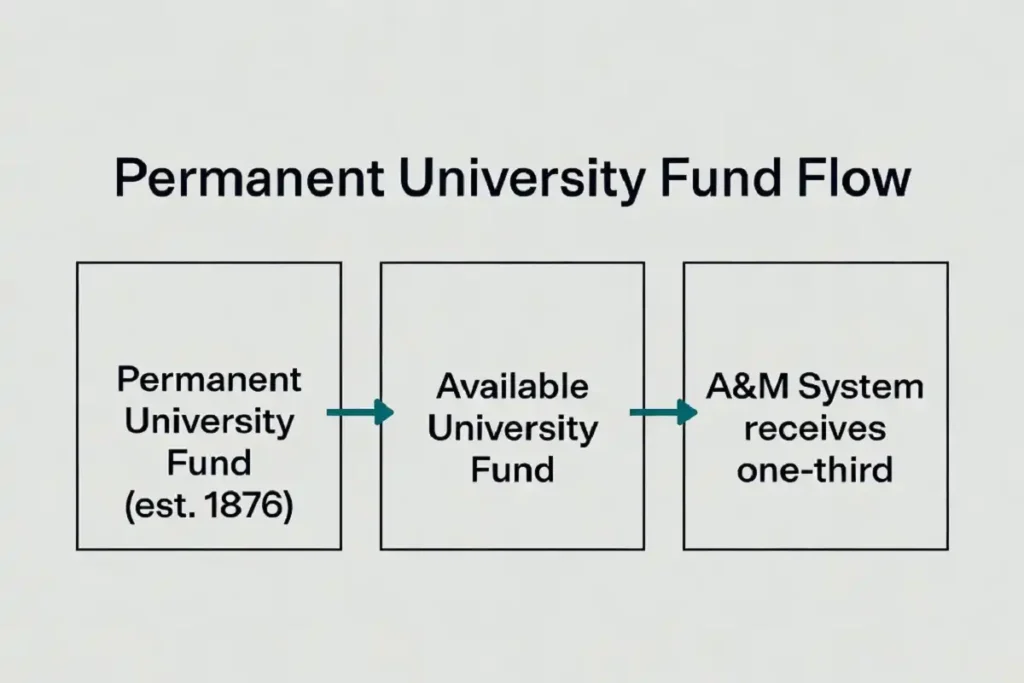
The Permanent University Fund is the financial engine behind the rating. It is a state endowment, not a private account.
The Texas Constitution established the Permanent University Fund in 1876. The A&M System receives one-third of the annual distribution from the Available University Fund, which itself draws from the Permanent University Fund. Those distributions help finance eligible capital projects across the System.
This structure gives the Texas A&M trust a durable base. State-backed endowment support signals stability that most universities cannot match. Rating agencies weigh that heavily.
How the Ratings Save Money for Texas
A top rating is not just a trophy. It lowers borrowing costs.
Chancellor Glenn Hegar made the practical case. He said the ratings help the System build for Texas at a lower cost, letting it move forward with projects that serve students, support research and prepare the state’s workforce. Lower interest means more dollars reach classrooms and labs.
The new PUF bonds will refund outstanding commercial paper and portions of previously issued bonds. Proceeds will also expand academic and research capacity, including investments in advanced computing infrastructure and new educational facilities.
What Disciplined Leadership Looks Like
The rating reflects governance, not luck. Strong balance sheets come from consistent decisions over time.
Hegar described the outcome as disciplined growth: strong financial management tied directly to service. That phrase captures the leadership lesson. The System scaled up enrollment and research while keeping its finances tight.
Leaders in any sector can read the pattern. Trust builds through boring consistency, not bold gestures. The companies and institutions that earn top ratings tend to share three traits: diversified revenue, deep reserves, and clear oversight. The same discipline that shapes strong corporate leadership and steady teams shows up in how the A&M System governs its money.

How This Compares to the State of Texas
The System’s rating tracks with the state itself. Texas holds AAA/Aaa marks from the major agencies too.
In December 2025, the state comptroller’s office confirmed that ranking. Agencies cited Texas’ diversified economy, steady population growth, strong fiscal reserves and disciplined financial practices. A strong state backdrop reinforces the Texas A&M trust, since state support is a rated factor.
This context matters for anyone tracking broader market stability. When both a state and its flagship university system hold top ratings, the signal compounds. It reflects the kind of fiscal footing that shapes how major financial institutions manage risk during volatile stretches.
The Numbers to Watch Next
The Texas A&M trust rests on real figures, verified by three independent agencies as of June 29, 2026. Watch enrollment, reserve levels, and future PUF distributions. Those drive the next review. For now, the AAA and Aaa marks stand, all with stable outlooks, and that is a strong foundation for the System’s growth plans.