AI Memory Stocks 2026: What Investors Need to Know Now
Memory chips became the surprise bottleneck of the AI boom. If you want exposure to that story, AI memory stocks 2026 is the search that leads you to a small group of companies controlling the supply. Here’s what they are and what actually moves them.
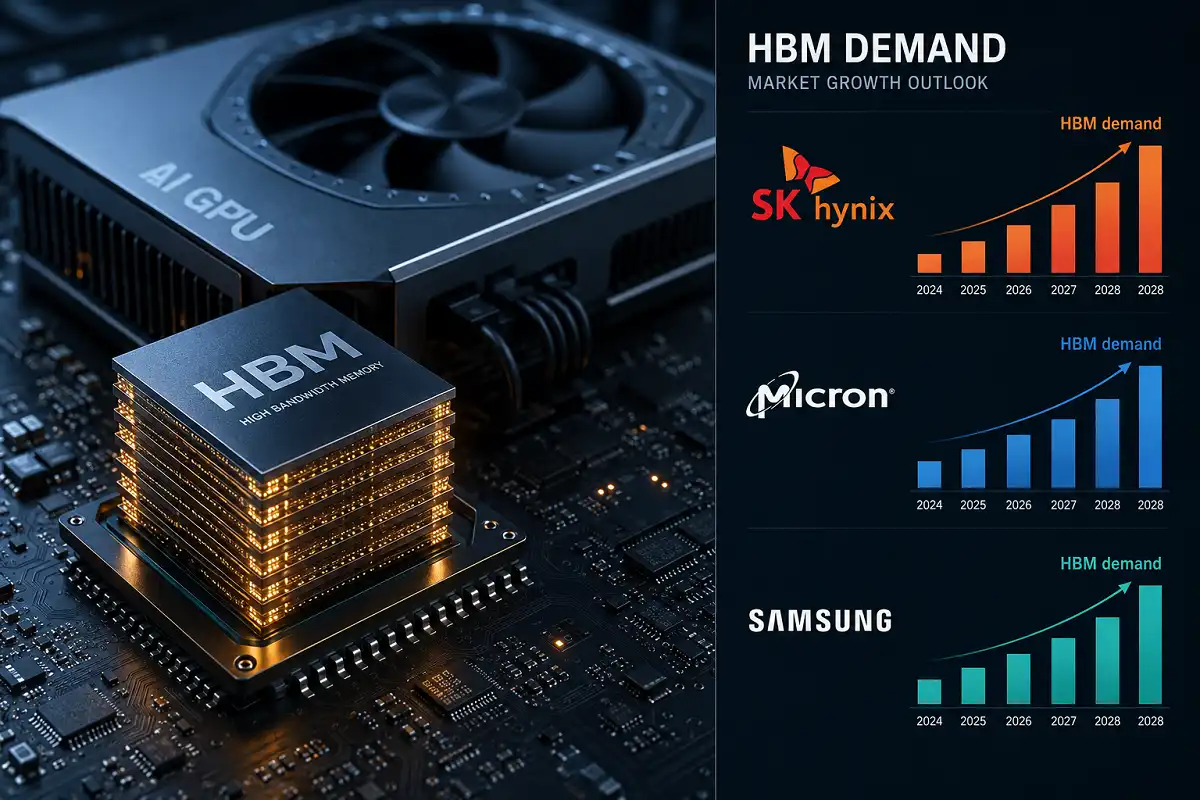
The main AI memory stocks 2026 investors track are SK Hynix, Samsung, and Micron on the DRAM side, plus equipment makers like Lam Research. High-bandwidth memory (HBM) drives the thesis. Demand outpaces supply, and that pricing power is the whole trade.
What Are AI Memory Stocks?
AI memory stocks are shares in companies that make the memory chips AI systems depend on. Training and running large models needs enormous, fast memory sitting right next to the processor. That specific type is high-bandwidth memory, or HBM.
Three firms dominate HBM production: SK Hynix, Samsung Electronics, and Micron Technology. A second group supplies the tools and testing gear these plants can’t run without. Together they form the memory layer of the AI hardware stack.
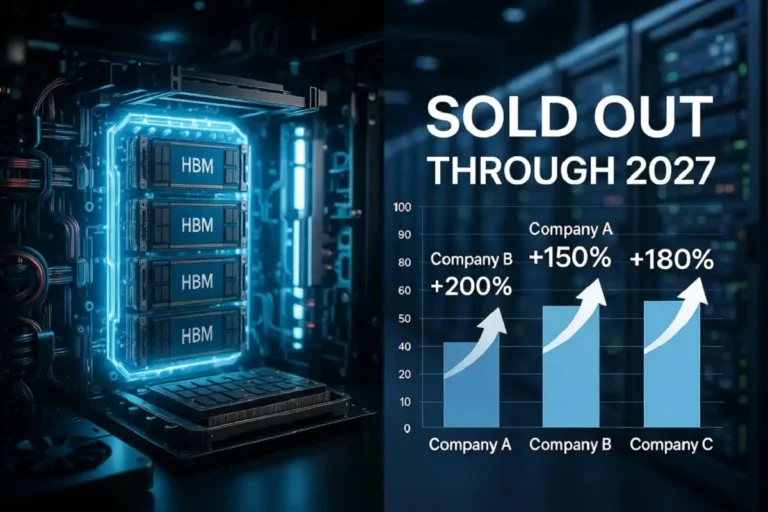
Regular consumer memory is a commodity. HBM is not. It sells out in advance, often booked a year ahead, which changes the economics completely.
Why Memory Became the AI Bottleneck
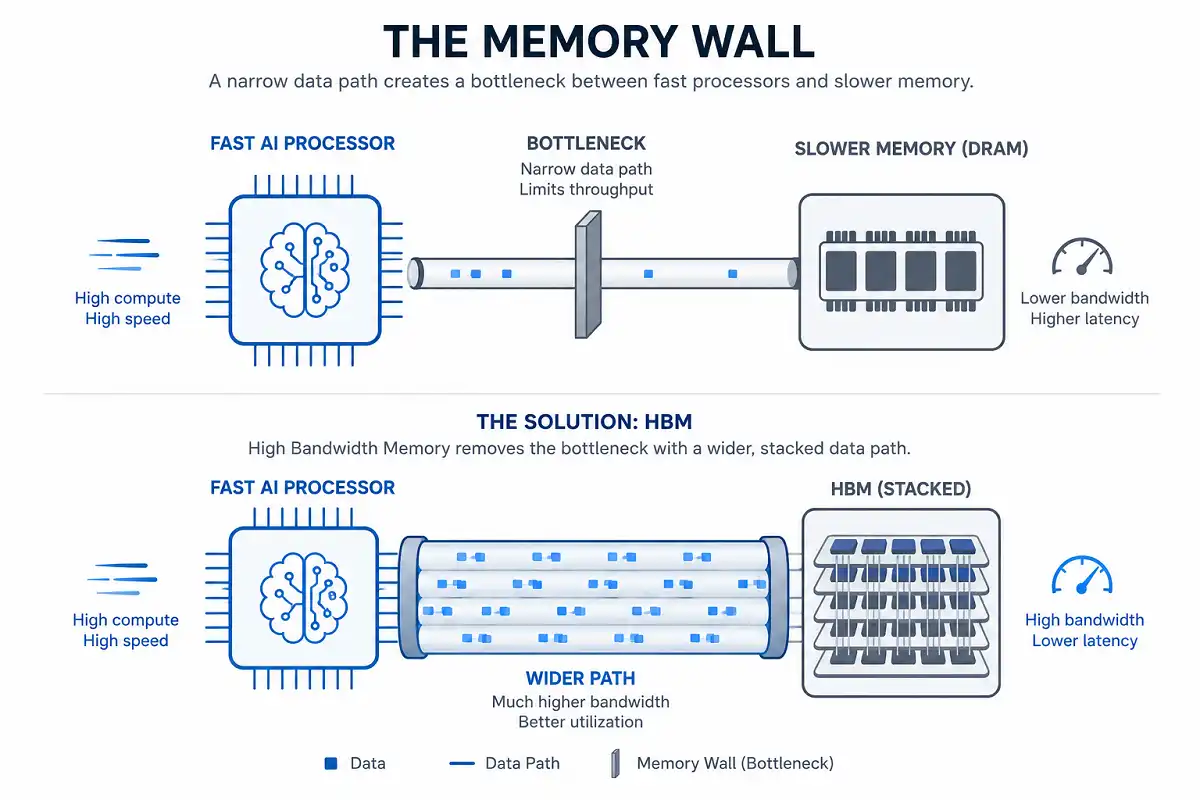
Processing power alone doesn’t run a large model. The chip has to feed data to the processor fast enough, and standard memory can’t keep up. That gap is called the memory wall, and HBM exists to close it.
Every advanced AI accelerator now ships with HBM stacked beside it. Nvidia’s data center GPUs are the clearest example. As accelerator demand climbed through 2024 and 2025, HBM demand climbed with it, and supply couldn’t expand fast enough.
That imbalance is the engine behind AI memory stocks 2026. When a product sells out before it’s made, the maker sets the price. Analysts at TrendForce have tracked HBM pricing and capacity commitments closely, and the pattern of sold-out capacity has held across reporting periods.
The Main AI Memory Stocks 2026 Investors Are Watching
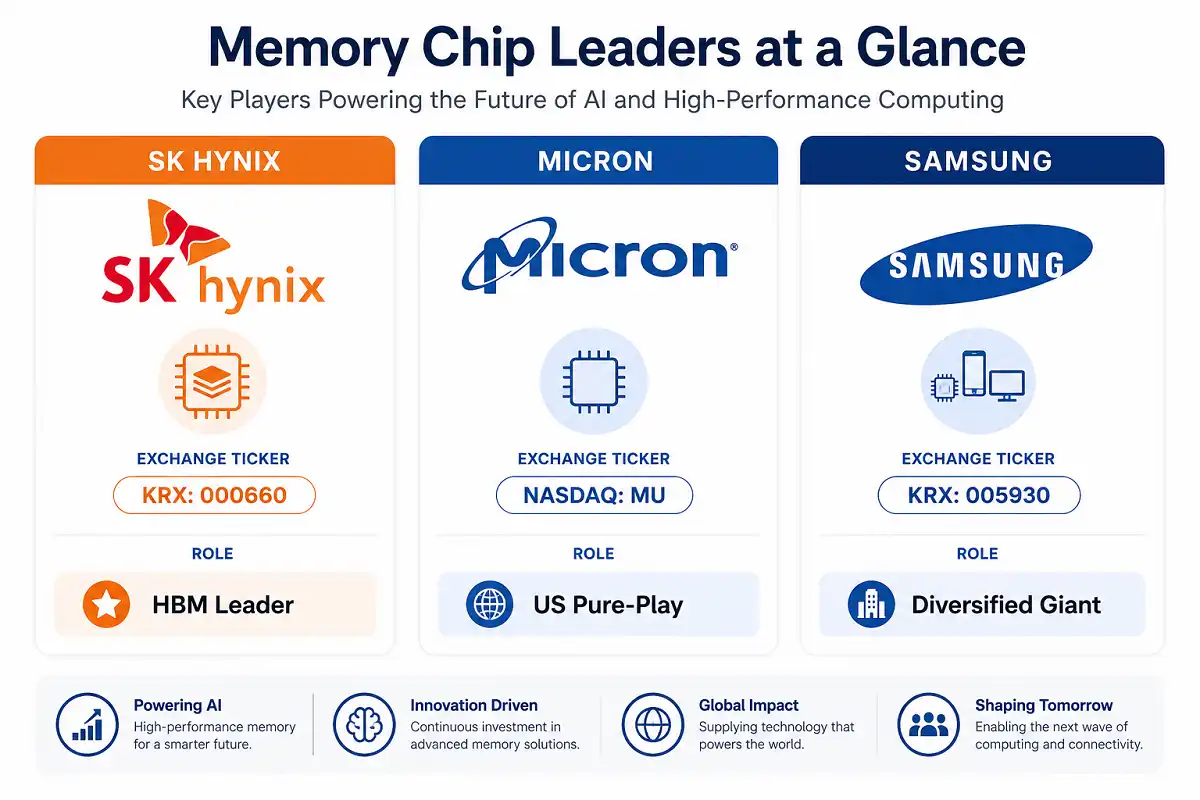
Here are the names that come up most, grouped by what they actually do.
SK Hynix (KRX: 000660). The South Korean firm took an early HBM lead and became a primary supplier to Nvidia. HBM is central to its recent results. As of [VERIFY: date], its share price was [VERIFY: price] and quarterly revenue was [VERIFY: figure, source: SK Hynix earnings release].
Micron Technology (NASDAQ: MU). The only major US-based memory maker, which makes it the most accessible AI memory stock for American investors. Micron reports HBM demand well ahead of supply. As of [VERIFY: date], MU traded at [VERIFY: price], with a market cap of [VERIFY: figure, source: Nasdaq].
Samsung Electronics (KRX: 005930). The largest memory maker overall and a diversified giant. Because phones, displays, and foundry work sit alongside memory, Samsung gives less concentrated HBM exposure than the other two.
Equipment makers. Lam Research (NASDAQ: LRCX) and Applied Materials (NASDAQ: AMAT) sell the tools that build memory. When memory firms expand capacity, these suppliers book orders. They’re an indirect way to hold the theme.
For readers weighing this against other chip plays, our breakdown of how AI is reshaping software and semiconductor stocks covers the adjacent opportunities.
What Actually Moves These Stocks
Four things move AI memory stocks 2026 more than anything else.
First, HBM pricing. Prices rise while supply stays tight and fall the moment new capacity floods in. Watch every capacity announcement.
Second, Nvidia’s roadmap. Its accelerator shipments set the pace for HBM demand. When Nvidia guides higher, memory suppliers usually follow.
Third, qualification wins. Getting a specific HBM product approved for a customer’s next platform is a real catalyst. Losing that slot to a rival is a real risk.
Fourth, the broader chip cycle. Memory has always been cyclical. AI demand has softened those swings, but it hasn’t erased them, and treating this as a one-way bet ignores decades of history.
Risks You Can’t Ignore
Concentration is the first risk. So much of the thesis rests on Nvidia demand and on HBM pricing staying firm. If either weakens, these names fall together.
Capacity is the second. All three makers are expanding HBM output. Enough new supply arriving at once could compress the pricing power that defines the trade. That’s the classic memory-cycle trap.
Geopolitics is the third. Most advanced memory production sits in South Korea and Taiwan. Export controls and cross-strait tension add risk that has nothing to do with company performance. Our coverage of rising friction between China and Taiwan explains why supply-chain investors track that region so closely.
Valuation is the fourth. After a strong run, some AI memory stocks 2026 may already price in years of growth. Buying near a cyclical peak is how memory investors have been burned before.
How to Get Exposure Without Picking One Stock
Not sure which name to hold? A semiconductor ETF spreads the bet across many chip firms, including memory makers, and softens single-stock risk.
Buying Micron directly gives the cleanest pure-play HBM exposure on a US exchange. Equipment makers offer a steadier, more diversified route. Matching the vehicle to your risk tolerance matters as much as picking the theme, and the wider pattern of how AI demand is flowing into equipment and hardware suppliers shows why the picks-and-shovels approach appeals to cautious investors.
For deeper background on the technology itself, the high-bandwidth memory entry on Wikipedia is a solid, non-commercial primer on how HBM works and why AI systems depend on it.
Are AI Memory Stocks 2026 a Good Buy?
There’s no single answer, because it depends on price and your time horizon. The demand story behind AI memory stocks 2026 is real and grounded in physical supply constraints, not hype. But memory is cyclical, and the group can fall fast when sentiment turns.
The disciplined approach is to track HBM pricing, capacity announcements, and Nvidia’s demand signals rather than the daily quote. This is not a set-and-forget holding. It rewards investors who watch the cycle.
I’m not a financial advisor, and this isn’t a recommendation. Do your own research and confirm every current figure against a live source before you act.
The Numbers to Watch Next
Watch HBM pricing trends, quarterly capacity announcements from SK Hynix and Micron, and Nvidia’s forward guidance. Those three signals tell you more about AI memory stocks 2026 than any price target. When capacity growth starts outrunning demand, the cycle is turning, and that’s the moment to pay closest attention.