Canada Teen Social Media Ban: Bill C-34 Explained
The Canada teen social media ban just moved from political discussion to real legislation. On June 10, 2026, Culture Minister Marc Miller introduced Bill C-34 in the House of Commons, officially named the Safe Social Media Act. Miller told Parliament directly: “We’re failing our children. Enough is enough.” Here is a full breakdown of what the bill says, how it would work, and what happens next.
What Is Bill C-34?
The Canada teen social media ban is embedded in a broader piece of legislation called the Safe Social Media Act. Bill C-34 enacts two new laws at once: the Digital Safety Act and the Digital Safety Commission of Canada Act. The bill introduces a framework to improve online safety, ensures digital services are transparent and accountable for the risks they create, and creates a new Digital Safety Commission of Canada to enforce the rules and support victims of online harms.
The Digital Safety Act sets new requirements for both social media platforms and AI chatbot services. The new Digital Safety Commission will oversee compliance, conduct audits, and enforce penalties against companies that fall short.
The government says the bill was shaped by consultations with victims, civil society groups, Indigenous partners, and industry stakeholders. You can review the full proposal on the Government of Canada’s Safe Social Media Act page.

How the Ban Would Actually Work
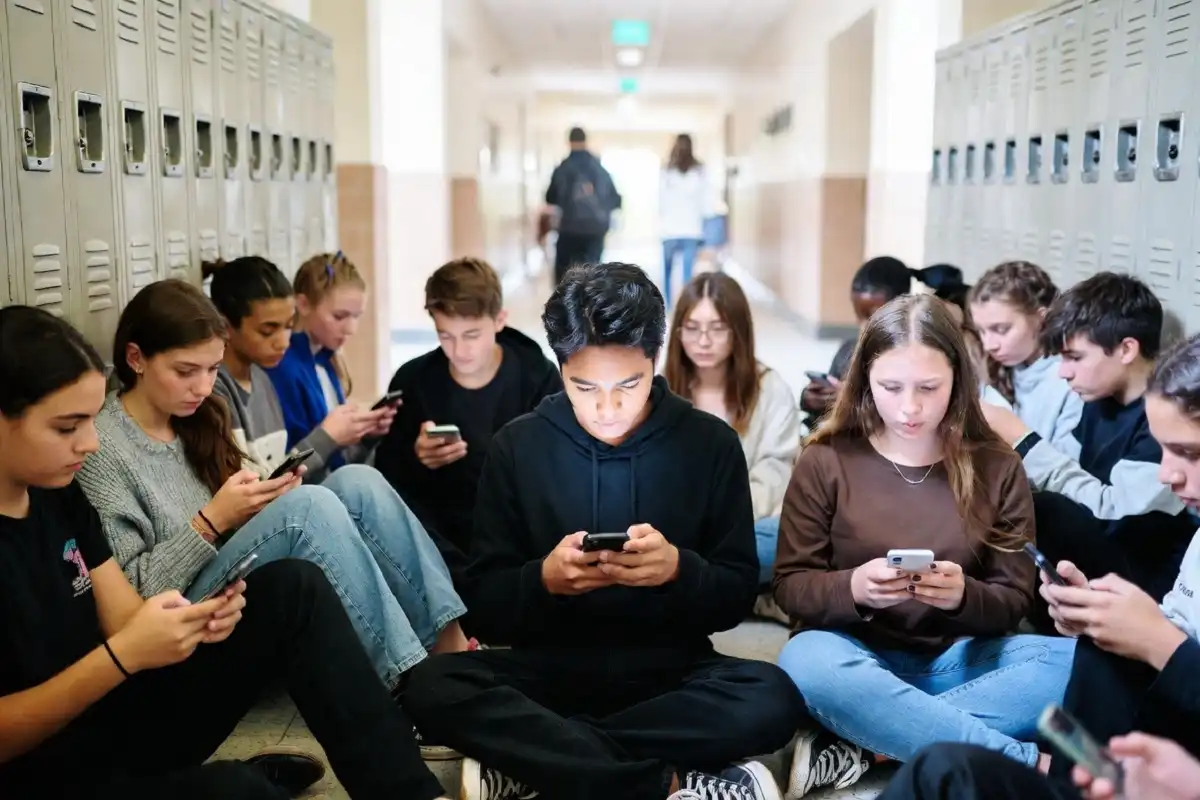
Under the Canada teen social media ban, platforms must enforce a minimum age of 16 for social media accounts. Miller confirmed this at a press conference: “The act will establish a minimum age of 16 to have a social media account. The act will require social media platforms and AI chatbot services to do more to protect children and make their platforms safe by design.”
But the Canada teen social media ban stops short of being a full prohibition. Companies will be responsible for deciding how they implement the ban, and the Commission will be responsible for overseeing regulations and guidance. Companies could be exempt if they implement what officials called adequate safeguards to protect children, though it is not yet clear what those safeguards would look like.
This puts significant pressure on platforms like Instagram, TikTok, Snapchat, and YouTube to change how they operate. If you want to follow how major social media platforms and mobile apps respond to laws like this, that section tracks ongoing developments.
Seven Categories of Harmful Content
The Canada teen social media ban is backed by seven specific categories of harmful content that platforms must address. Understanding these categories helps explain why the Canada teen social media ban focuses on platform structure, not just removing individual posts.
Bill C-34 focuses on seven categories of harmful content: child sexual abuse material, content that induces a child to harm themselves, cyberbullying of children, content inciting violence, hate content, terrorism and extremism content, and non-consensual intimate imagery including deepfakes.
The government argues that features such as algorithmic recommendation systems, engagement-based feeds, autoplay, and endless scrolling can amplify harmful content and increase exposure, particularly for young users. The law targets the design behind the content, not only the posts themselves.

Penalties Platforms Face
The Canada teen social media ban gives the regulator serious financial leverage. Companies that fail to comply face penalties of 3% of global revenue or up to C$10 million (about $7.2 million USD), whichever is greater. Companies can face multiple penalties for repeated violations.
The new Digital Safety Commission would have the power to audit platforms, issue compliance orders, and hand out financial penalties to services that don’t follow the rules. For platforms the size of Meta, TikTok, YouTube, and Snapchat, 3% of global annual revenue is a very substantial number.
Given how digital safety laws are reshaping the broader tech landscape, our cybersecurity section covers how platform accountability is evolving worldwide.
AI Chatbots Are Included Too
One aspect that makes the Canada teen social media ban broader than similar laws elsewhere is the inclusion of AI chatbot services. The bill also aims to make AI chatbots safer by setting up a digital regulator to establish safety standards. ChatGPT, Google Gemini, and similar services fall under the same compliance requirements as social media platforms.
The bill’s introduction in Parliament comes weeks after families affected by the Tumbler Ridge, B.C., mass shooting sued OpenAI, alleging that the company knew the killer was planning the attack after banning the shooter from its platform over troubling conversations on ChatGPT, but did not warn police. That case pushed the government to bring AI platforms under the same regulatory umbrella as social media.
As AI-powered services become more embedded in daily life for children and teens, this kind of oversight is expanding fast. Our artificial intelligence section has more on how regulatory pressure around AI is building globally.
What the Timeline Looks Like
The Canada teen social media ban will not take effect quickly. Government officials said it could take a year for the bill to pass, and 18 months to set up the digital regulator once it does. That puts realistic enforcement of the Canada teen social media ban at late 2028 at the earliest.
The legislation still needs to pass through the House of Commons. The government had tried to pass the Online Harms Act in the last House, but that bill died on the order paper. This time, the Canada teen social media ban places the legal burden firmly on platforms to make their services safe by design, rather than targeting individual behavior online.
Canada Is Part of a Global Wave
The Canada teen social media ban follows growing international action on this issue. In December 2025, Australia became the world’s first country to ban social media for children under 16. A month after its law was introduced, social media companies collectively deactivated the accounts of nearly 5 million teenagers.
The UK, several European countries, and multiple US states are moving in the same direction. Parents, pediatric mental health professionals, and schools around the world have pushed governments hard to act. The global momentum is one reason observers expect the Canada teen social media ban to have stronger political support this time around.
For context on how similar laws are rolling out in other nations, our global updates section covers international digital policy closely.
What This Means for Parents
If the Canada teen social media ban passes, the responsibility for blocking underage access shifts from families to platforms. Companies must enforce age verification or face significant penalties. Parents would no longer carry sole responsibility for managing their children’s social media access.
That said, age verification online is not simple. Requiring users to prove their age without collecting excessive personal data from adults is a real tension the Digital Safety Commission will need to resolve through regulations. The CBC has detailed coverage of the open questions around how Canada’s age restriction would function in practice once passed.
For now, Bill C-34 is tabled and Parliament will begin debating it in the coming weeks. The Canada teen social media ban has cleared its first hurdle. Whether it becomes law depends on the months ahead.