AI Assistant Apps Are Taking Over the App Store in May 2026
Three AI chatbots now sit in the Top 5 of the free App Store charts. That’s not a blip. It’s a structural shift in how people use their phones, and it’s happening right now in May 2026.
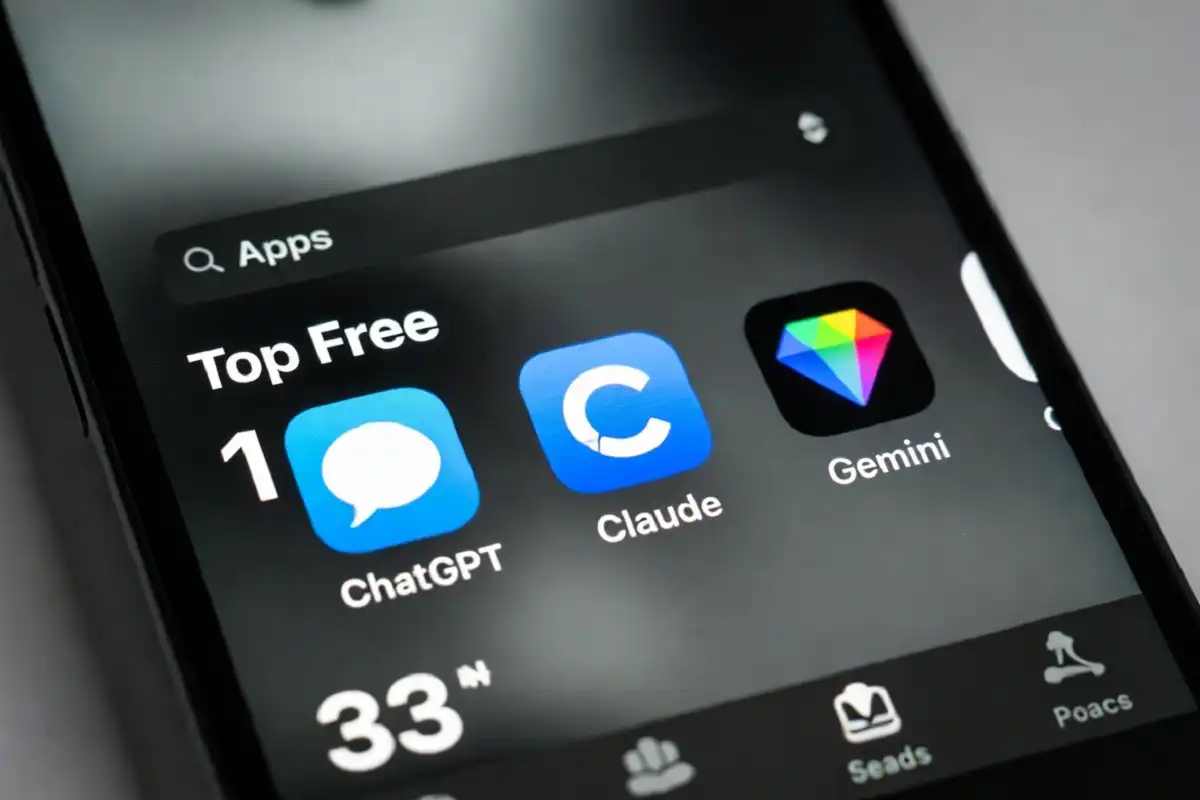
Quick Answer: As of May 2026, AI assistant apps including ChatGPT, Claude, and Gemini hold three of the top five free app positions on the Apple App Store, marking the first time AI tools have collectively dominated the charts at this scale.
What the App Store Charts Look Like Right Now
The numbers are hard to argue with. Three of the top five free apps on the App Store as of May 2026 are AI assistants: ChatGPT at number one, Claude at number four, and Gemini at number five.
That concentration at the top is unlike anything the App Store has seen before. Social media giants and streaming platforms used to own these positions. Now they’re being pushed down by AI tools.
May 2026 has been one of the most eventful months for app developers and marketers in recent memory, with AI-powered discovery and structural chart changes demanding attention across the industry.
This isn’t a temporary spike. Analysts tracking app store data describe it as a permanent realignment of what users reach for first on their phones.
Why AI Assistant Apps Are Winning Downloads
Is this just a trend, or is something deeper happening?
It’s deeper. Contrary to earlier predictions that artificial intelligence would reduce reliance on mobile apps, new data suggests the opposite: the app ecosystem is seeing a sharp rise in activity, with AI playing a key role in driving a new wave of development.
People predicted AI chatbots would kill the app economy. Instead, they became the app economy’s biggest stars.
AI-powered apps ranging from chatbots and image generators to productivity assistants are dominating download charts and revenue rankings across both iOS and Android platforms, with many of the most popular AI apps worldwide reaching millions of users within weeks of launch.
There’s a feedback loop at work here. More users download AI apps. More developers build AI apps. More AI apps flood the charts. The cycle accelerates.
The technology and mobile apps space hasn’t seen competitive pressure like this in years.
The App Release Surge Behind the Charts
How fast is the overall app market growing in 2026?
Extremely fast. According to market intelligence provider Appfigures, worldwide app releases in Q1 2026 were up 60% year-over-year across both Apple’s App Store and Google Play, with the iOS App Store alone showing an 80% increase. In April 2026, total app releases were up 104% across both stores compared to the same period last year.
That’s a doubling of output in a single year.
AI tools are making it easier for individuals to build apps, even without formal coding skills. Platforms using AI-assisted development are lowering the barrier to entry, enabling creators to quickly turn ideas into functional software.
The apps being built also look different now. While games still lead in absolute volume, Utilities has climbed to second place, Lifestyle to third, and Productivity plus Health and Fitness are entering the top five. In some markets, four of the top six free apps are AI-related.
For anyone tracking artificial intelligence trends in tech, this is the clearest sign yet of where the industry is heading.
Google Play Is Changing Too
Apple isn’t the only platform being reshaped. Google is moving fast on its own side.
Google is rapidly moving from keyword-based discovery toward AI-powered curation, deepening its AI-powered discovery tools within Google Play in May 2026.
The Ask Play feature introduced with Google Play Store v49 enables users to find apps by speaking with an AI assistant inside the app store. This assistant can summarize user reviews, compare app features with competing apps, and answer specific questions from users.
That changes how apps get found. It puts more pressure on developers to optimize not just for search keywords but for how an AI summarizes their app to a potential user.
Google’s May 2026 system updates also added new developer features to support Utilities-related processes in apps, along with expanded language support for in-app gaming discussions, now available in Spanish, Portuguese, Indonesian, Chinese, Japanese, and Korean.
Fortnite’s Return Adds Another Layer to the Story
The AI story isn’t the only big mobile news this month.
Fortnite is back on the App Store in every country except Australia, Epic Games announced on May 19, 2026, as the company declared it is entering the “final battle” of its long-running legal dispute with Apple.
Epic Games CEO Tim Sweeney declared the return marks “the beginning of the end of the Apple Tax worldwide,” with the move prompted by Apple’s own statements to the U.S. Supreme Court acknowledging that regulators around the world are watching the case.
This legal fight matters beyond Fortnite. The outcome could permanently change the mobile gaming industry by reducing platform restrictions and giving studios more freedom over payment systems and storefront distribution.
The Fortnite worldwide App Store return in May 2026 is a story worth following closely as Apple’s court case reaches its final stages.
What This Means for App Developers
The competitive landscape in May 2026 is brutal if you’re building a traditional app. And it’s wide open if you’re building something with AI at the core.
AI-native apps are pulling rankings away from traditional categories, and the competitive dynamics within the AI vertical are intensifying rapidly. Developers in adjacent categories need to account for AI apps in their competitive analysis and keyword strategies.
A new meta-category is effectively emerging: AI apps that compete across productivity, education, and utilities simultaneously, blurring traditional category boundaries. Category ranking is no longer siloed; a competitor may come from an entirely different category serving overlapping user needs. For companies watching how AI skills are reshaping career and tech hiring in 2026, the App Store charts are real-time evidence of where demand is concentrated.
Security is also a rising concern. Apple has already reported large-scale enforcement actions, including rejecting hundreds of thousands of submissions and blocking tens of thousands of potentially harmful apps. Analysts argue platforms need systems that track rising apps in real time, especially those gaining rapid popularity, to prevent harmful or misleading apps from reaching users.
Anyone who read about the Coinbase insider data breach in 2026 already knows how quickly trust can erode when platforms drop the ball on security. The same risk applies to app stores if vetting doesn’t keep pace with volume.
My Read on This
The App Store charts in May 2026 tell a simple story: AI won mobile. ChatGPT, Claude, and Gemini sitting in the Top 5 isn’t a coincidence. It’s the result of years of investment, user behavior change, and a tech ecosystem that bet heavily on conversational AI.
The app release surge, the Google Play AI overhaul, and the Fortnite legal endgame are all part of the same bigger picture. The mobile platform wars are entering a new phase, and the winners this time around are the ones who built AI into their core product from day one.
If you’re a developer, a marketer, or just a phone user, the app on your home screen is about to look very different a year from now.