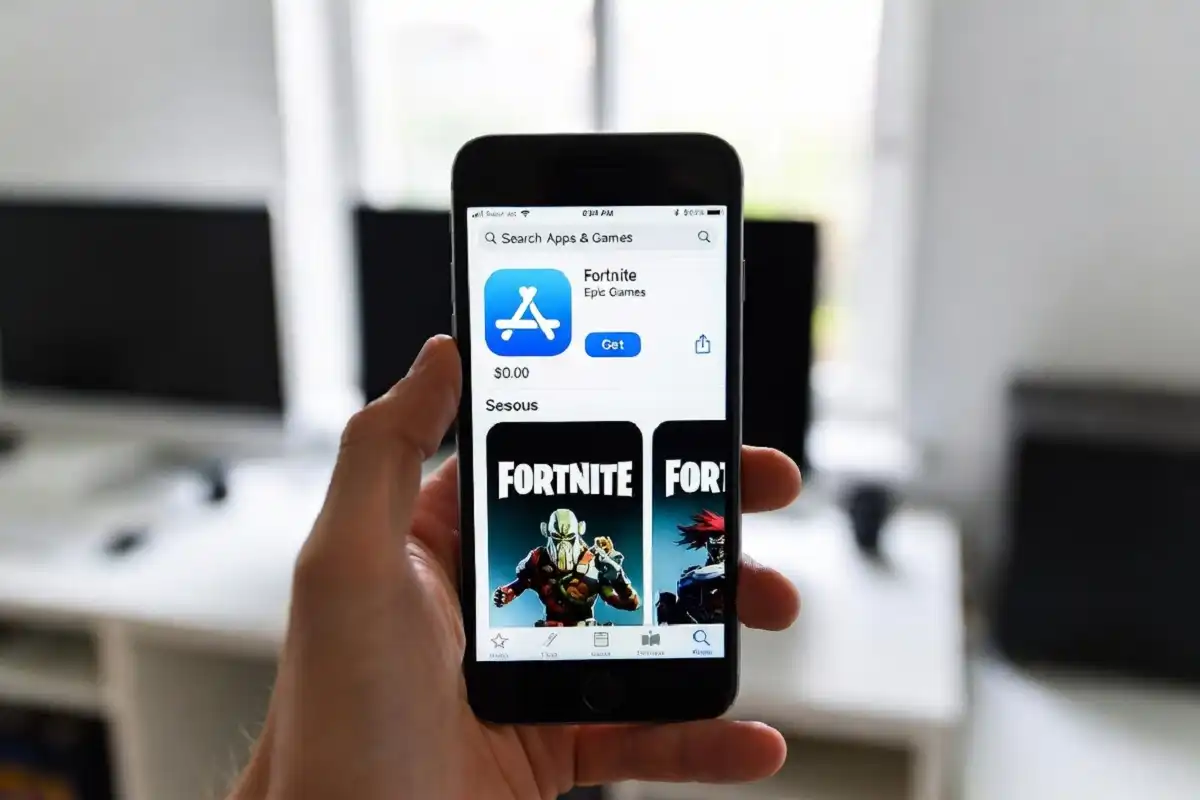
Fortnite Returns to the App Store Worldwide as Epic Declares Its “Final Battle” With Apple
I’ve watched the Epic versus Apple fight drag on for almost six years. In May 2026, it took its biggest turn yet. Fortnite is back on the iOS App Store in nearly every country, and Epic says the real fight over App Store fees is just starting.
Quick Answer: Fortnite returned to the Apple App Store worldwide on May 19, 2026, available everywhere except Australia. Epic Games CEO Tim Sweeney called it “the beginning of the end of the Apple Tax,” signaling a final legal push over commission rates.
What Actually Happened on May 19
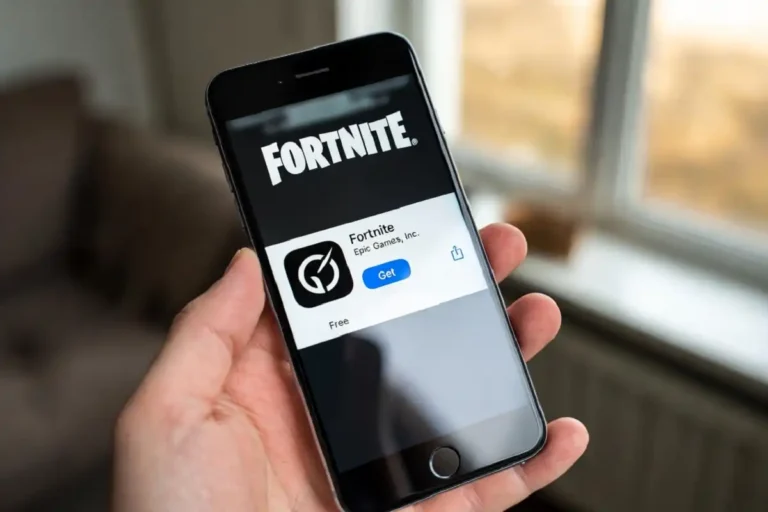
Epic Games pushed Fortnite back onto iOS in nearly every market on May 19, 2026. The return of Fortnite to iPhone and iPad devices marks one of the biggest moments in mobile gaming history. Players in most regions can now download the game directly from Apple’s store after nearly five years of restricted access.
There’s one holdout. The return covers all major markets except Australia, where Epic claims Apple is defying a local court ruling. So if you’re in Sydney or Melbourne, you’re still waiting.
Tim Sweeney did not stay quiet. Epic Games CEO Tim Sweeney took to X to declare that the return marks “the beginning of the end of the Apple Tax worldwide.” That’s not a victory lap. That’s a threat.
Why Now? Apple Handed Epic the Opening
Epic timed this move around Apple’s own words. The company’s decision to push Fortnite back onto iOS globally was prompted by Apple’s own statements to the U.S. Supreme Court, in which Apple acknowledged that regulators around the world are watching this case to determine what commission rate Apple may charge on covered purchases in huge markets outside the United States.
Epic pounced on that admission. Epic seized on this admission, arguing that it proves Apple’s fee structure is unsustainable under global rules. In short, Apple told the highest court in the land that the whole world is watching. Epic decided to give the world something to watch.
This is the same playbook Epic ran when it forced its way back into the U.S. App Store back in 2025. The legal pressure worked once. Epic is betting it works again on a global scale.
How We Got Here: A Six-Year Timeline
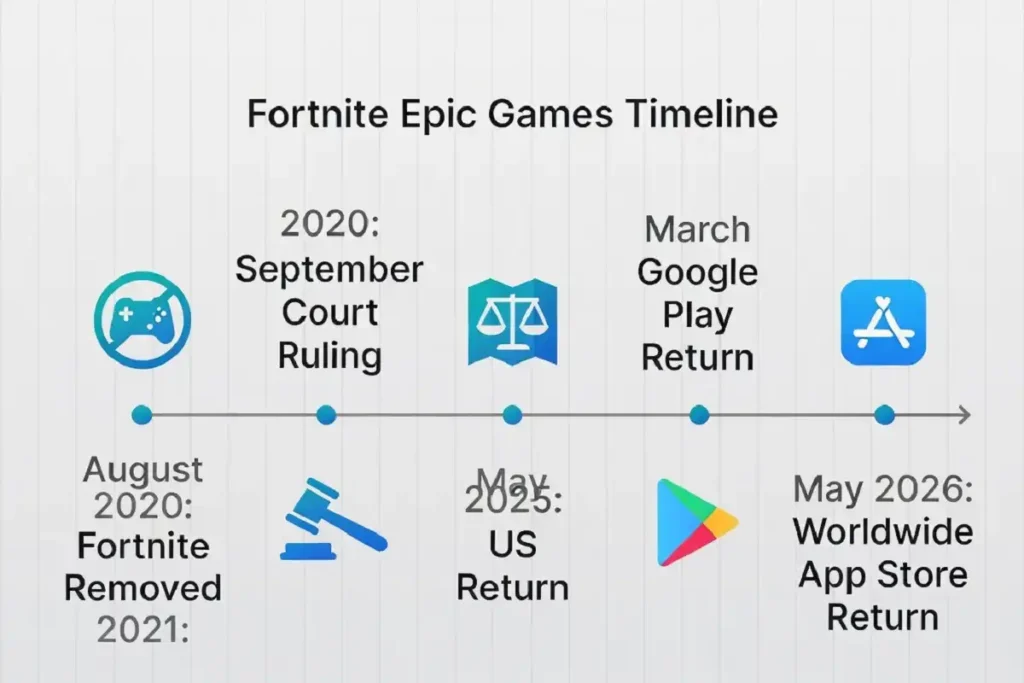
The fight started in August 2020. Epic slipped a direct-payment system into Fortnite to dodge Apple’s cut. Apple yanked the game within hours. Epic sued the same day.
Here’s the short version of the road since then:
- August 2020: Apple removes Fortnite after Epic bypasses in-app payments.
- September 2021: Judge Yvonne Gonzalez Rogers rules mostly for Apple but strikes down its anti-steering rules.
- April 2025: Rogers finds Apple willfully violated her order. Fortnite returns to the U.S. App Store in May 2025.
- March 2026: Fortnite comes back to Google Play worldwide after Google adjusts its policies.
- May 2026: The global Apple App Store return.
That April 2025 ruling mattered. The return was forced after District Judge Yvonne Gonzalez Rogers threatened to require the Apple official overseeing app decisions to appear in court, which prompted Apple to approve the submission.
Then the appeals court reopened the core question. In late April 2026, the Ninth Circuit Court of Appeals reversed a stay that had allowed Apple to pause its compliance with rulings on App Store fees, sending the case back to Judge Gonzalez Rogers to determine what commission Apple can charge on purchases made via external links.
What Is the “Apple Tax” Everyone Keeps Fighting About?
The “Apple Tax” is the commission Apple takes on digital purchases made inside iOS apps. At the time, Apple required all iOS developers to use Apple’s payment system for in-app purchases, and Apple charged commissions that could reach 30% on digital transactions.
That 30% is the whole war in one number. Epic says it’s a monopoly toll. Apple says it pays for a safe, trusted marketplace. The court now has to decide what Apple can charge when a purchase happens through an outside link instead of Apple’s own system.
Apple’s position has not softened. The company has long argued that its commission structure pays for secure payments, fraud protection, and a trusted marketplace, and that it makes targeted changes only when courts and regulators require them.
Why This Hits the Whole Mobile App Industry
This isn’t only a Fortnite story. The ruling could reset the rules for every app maker on iOS. Many developers believe the outcome could permanently change the mobile gaming industry by reducing platform restrictions and giving studios more freedom over payment systems and storefront distribution.
If Apple loses control over external-payment commissions, the math changes for thousands of apps. Subscription services, mobile games, and one-person studios could keep more of every dollar. That ripples straight into how apps get discovered and ranked across the major stores, where AI assistants are already crowding the top charts.
The case has reach beyond the U.S. too. The case itself has already influenced how governments, regulators, and major tech companies approach digital marketplaces. Europe’s Digital Markets Act pushed Apple to allow sideloading and third-party stores. Other regulators are taking notes.
Mobile platform power has become one of the defining tech fights of the decade, sitting right alongside the big infrastructure and AI moves shaking the sector this spring.
Not Everyone Is Cheering
Plenty of users see this as two giants fighting over money, not principle. Comment sections under the coverage on MacRumors split hard. Some readers said it’s Apple’s device, Apple’s rules. Others fired back that they bought the hardware, so they should install what they want.
Even sympathetic observers note Epic’s motives aren’t pure. Epic cut a deal with Google in March 2026 after framing its resistance as a fight for the soul of gaming. So the moral high ground is shaky on both sides. This is business strategy wearing a crusader’s costume.
What This Means for You
If you play Fortnite on an iPhone or iPad outside Australia, you can download it straight from the App Store again. That’s the simple part. The bigger story is what happens next in court.
If Judge Gonzalez Rogers sets a low ceiling on Apple’s external-link commission, expect cheaper in-app purchases and a wave of developers steering you to their own checkout. If Apple holds the line, not much changes for your wallet. Either way, the decision coming out of the Northern District of California will shape what you pay inside apps for years. Epic calls it the final battle. I’d bet it’s the start of the next one.