China’s $17 Billion Ag Deal Lands. Farmers Are Still Waiting for Beijing to Buy
The China ag purchase deal is real on paper. Whether it shows up in farmers’ bank accounts is another question. Here’s what the $17 billion commitment actually covers, what it leaves out, and why grain markets cooled after the early excitement.
China committed to buying at least $17 billion in U.S. farm products per year for 2026, 2027, and 2028, on top of its October 2025 soybean pledge. The 2026 figure is prorated. So far Beijing has not confirmed the numbers or started buying.
What the China Ag Purchase Deal Includes
The deal sets a dollar target, not a volume target. China will purchase at least $17 billion per year of U.S. agricultural products in 2026 (prorated), 2027, and 2028, in addition to the soybean purchase commitments that it made in October 2025. The White House released the fact sheet on Sunday, May 17, following meetings between President Donald Trump and President Xi Jinping in Beijing.
The structure matters. The October 2025 agreement was based on a specific volume while the May 2026 statement said the agreement is based on a dollar amount. That October deal locked in 12 million tonnes of US soybeans during the 2025-26 marketing year as well as 25 million tonnes annually for the next three years.
The $17 billion sits separate from those soybean tonnes. U.S. Trade Representative Jamieson Greer told CBS the commitment covers aggregate purchases, meaning it could include more soybeans or shift toward other commodities entirely.
Why Did Grain Markets Cool Off After the Announcement?
Beijing never confirmed the figures. Grain futures jumped at the open of the week, then faded. Grain futures popped higher to begin the week, with bulls cheered by a White House fact sheet that said China committed to $17 billion in ag purchases per year on top of previous soybean commitments. Beijing offered neither follow-through buying interest nor affirmation of the figures, leaving markets to consolidate amid a lack of fresh bullish news.
That gap between announcement and action is the whole story right now. The numbers from when the news first broke were strong. Corn futures came the closest to reaching its daily trading limit for the commodity, with the prompt month settling 4.7% higher. Wheat rode the spillover, and July soybeans also settled sharply higher, jumping 3.1%. By the following week, the rally had run out of fuel without confirmed sales on the books. If you’ve followed the way Chinese demand has whipsawed corn and soybean prices in recent reports, this pattern looks familiar.
How Bad Did U.S. Farm Exports to China Get?
The drop was steep. Tariffs gutted the trade through 2025. U.S. agricultural exports to China fell 65.7% year-on-year to $8.4 billion in 2025, according to U.S. Department of Agriculture data. For context, soybean sales alone tell the story: China purchased $12.6 billion worth of soybeans in 2024.
China also pulled back its overall dependence. China has dramatically scaled back its reliance on U.S. farm goods since Trump’s first term, sourcing roughly 20% of its soybeans from the U.S. That’s a long fall for a country that was once the dominant buyer of American beans.
Beef and Poultry Get Back In
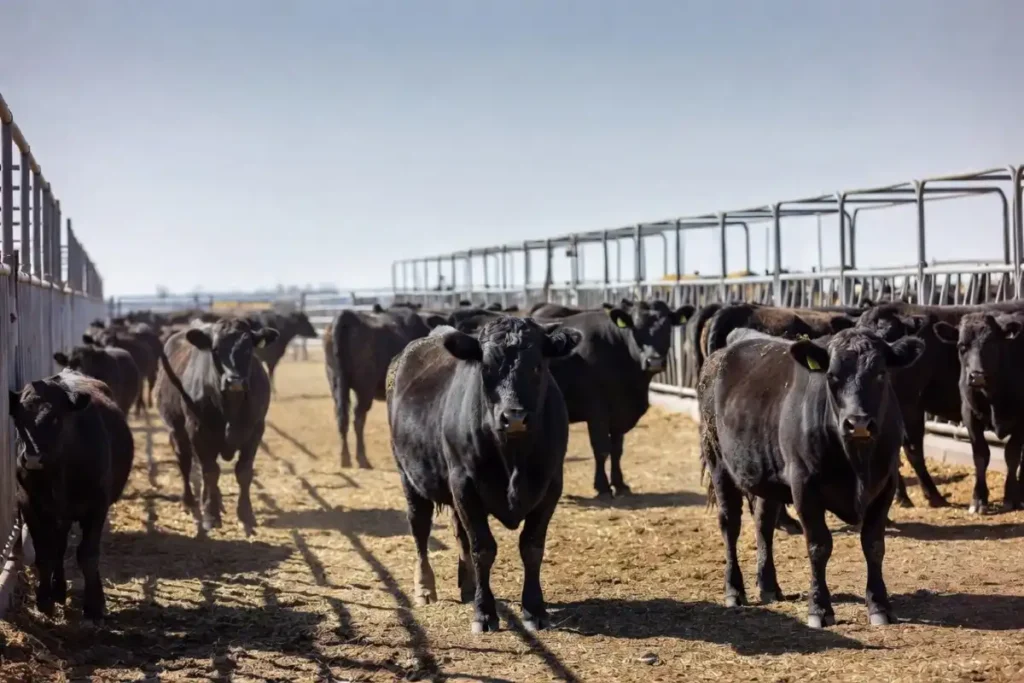
The deal reopens two doors that had been shut. China restored market access for U.S. beef by renewing expired listings of more than 400 U.S. beef facilities and adding new listings. It also resumed imports of poultry from U.S. states determined by the USDA to be free of highly pathogenic avian influenza.
Beef matters here because the recent numbers were ugly. Beef exports to China reached $1.95 billion in 2022 and were steady at $1.5 billion in 2024 before crashing last year. Reopening those plant registrations gives ranchers a shot at recovering a market that nearly vanished.
How This Stacks Up Against the 2020 Phase One Deal
This commitment is smaller and looser than the last big one. The commitments appear to be less aggressive than in 2020 when President Trump signed the Phase 1 Agreement with China that detailed China would buy up to $40 billion a year in agricultural products. That earlier target proved hard to hit. China never quite achieved that goal but did purchase $38 billion in U.S. agricultural goods in 2022.
A new piece this time is the structure for follow-up talks. The fact sheet describes a “Board of Trade” and “Board of Investment” as government-to-government forums. These vehicles are “unprecedented,” former Senior Trade Representative for China at the Office of the United States Trade Representative Sara Schuman told Agri-Pulse. She framed it as a more limited, narrower setup than what past administrations attempted.
What Farmers and Analysts Are Saying
Officials in the deal are confident. The skeptics are watching the order book. Former Chief Ag Trade Negotiator said there’s no doubt a deal exists. Agriculture Secretary Brooke Rollins called the visit a historic win for farmers and pointed to the new purchase commitments, the poultry reopening, and the beef plant relistings.
But the mood in farm country is cautious for good reason. Margins have been thin, and many growers have already started rethinking their rotations, a shift toward soybeans that ties directly to what happens with Chinese demand. The deal arrives as corn and soybean planting is in the final stretch and as HRW wheat conditions keep deteriorating. The smallest wheat crop in decades is its own pressure point shaping prices this season. Confirmed Chinese buying would help. Right now, the buying hasn’t started.
Bottom Line
The $17 billion deal gives American farmers a target and reopens beef and poultry channels that had collapsed. That’s real. What’s missing is confirmation from Beijing and actual purchases on the books. Until China starts buying, this stays a promise on a fact sheet. Markets have already priced in the doubt. Watch the export sales reports over the next several weeks. That data, not the press releases, will tell you whether 2026 turns the corner for U.S. ag trade.
You can read the full White House fact sheet on the historic deals with China and the Reuters report on the $17 billion commitment.