
Pentagon War Force: Inside the DoD’s Push to Recruit Hundreds of AI Engineers
The Pentagon just opened a hiring drive for software engineers, not soldiers. It wants coders, not combat troops. The offer: a two-year tour, up to $200,000 a year, and a shot at building military AI. Here’s what the program is and who it targets.
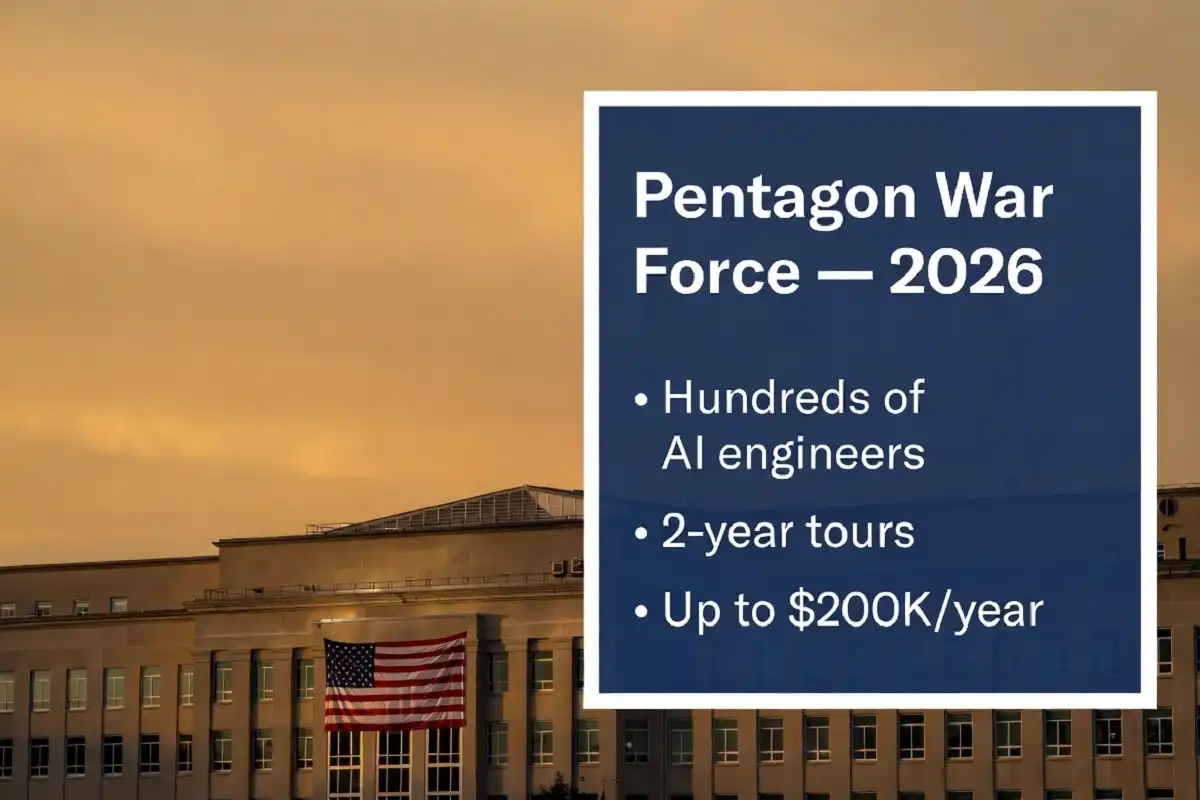
Pentagon War Force is a Department of Defense recruitment campaign launched June 30, 2026, with the Office of Personnel Management. It hires hundreds of software engineers and AI specialists for two-year “forward deployed engineer” roles paying up to roughly $200,000 a year.
What Is the Pentagon War Force?
Pentagon War Force is a targeted hiring campaign to bring top software engineers and AI specialists into the Department of Defense. The Office of Personnel Management and the Pentagon jointly announced the launch on Tuesday, June 30, 2026. The goal is straightforward. Fill the technical talent gap and speed up military AI adoption.
The program does not recruit combat personnel. The initiative doesn’t seek to hire trigger-pullers but rather AI experts and other software engineers. These hires write code, build systems, and deploy AI tools. They support the mission from behind a keyboard.
The scale is significant. OPM will be looking to hire “hundreds” of software engineers for the Pentagon via the War Force effort, according to the press release. That is a large intake for a specialized federal program.
Why Did the Pentagon Launch War Force Now?
The Pentagon launched War Force to replace a large number of technology workers it recently lost. The timing ties directly to workforce cuts under the current administration.
The numbers explain the urgency. Pentagon War Force is a direct response to the net loss of 5,700 technology workers at the Pentagon since the Trump administration took office. Broader federal data shows a steeper drop. GAO data shows the Defense Department lost 24,366 technical employees by the end of fiscal 2025, followed by another 2,787 during the first quarter of fiscal 2026.
Some of those losses were deliberate. In March 2025, Defense Secretary Pete Hegseth issued a memo outlining plans to rebuild the department, aiming to eliminate redundant and bureaucratic steps through automation and technological solutions. The plan cut civilian positions on purpose. Now the department needs specialized engineers back. This pattern of thinning teams and then scrambling for talent shows up across the organizations I cover, and it rarely resolves cleanly.
The AI mission adds pressure. As the Pentagon accelerates its push to integrate artificial intelligence across the military, it is turning its attention to recruiting the technical talent needed to turn that strategy into reality.
How Does War Force Fit Into Tech Force?
Pentagon War Force is a spinoff of a larger federal program called Tech Force. It narrows that broader effort to a single department.
The recruitment effort operates under OPM’s larger Tech Force program, which launched in December 2025 to onboard tech and cybersecurity professionals across federal agencies. Tech Force set an ambitious target. When it first launched last December, OPM set a goal of hiring 1,000 technologists by March.
That goal fell short. So far, close to 300 Tech Force candidates have been hired and about 125 have been onboarded, OPM Spokesperson McLaurine Pinover told Federal News Network. The gap between the target and the result is worth watching as War Force ramps up.
War Force is not the first spinoff. The War Force initiative marks the second spinoff effort under Tech Force. In March, NASA rolled out its own tech talent recruitment program, called NASA Force.
The War Force Job: Pay, Terms, and Requirements
Here is the core deal for applicants. Read these numbers before you commit.
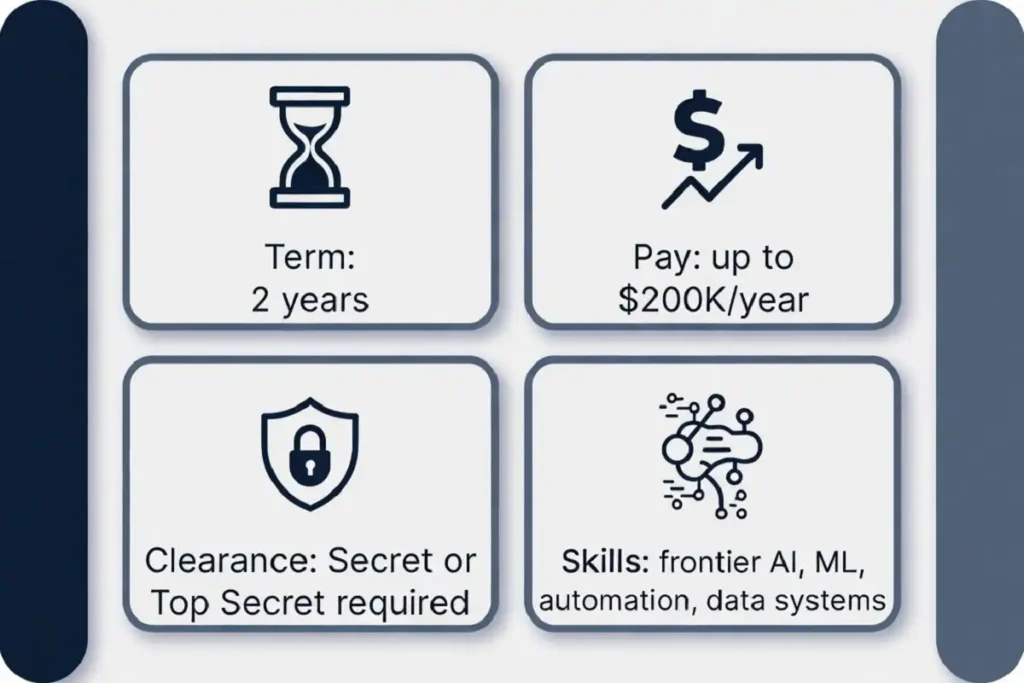
The roles are temporary, two-year appointments with annual salaries up to approximately $200,000. The positions carry a specific title. They are classified as “forward deployed engineer” roles, targeting people with hands-on experience in AI, machine learning, automation, and data systems.
Eligibility is strict. Applicants must be U.S. citizens and must be capable of obtaining and maintaining a Secret or Top Secret security clearance. That last point matters more than the salary for many people. The clearance process can take six months to well over a year on its own. Plan for that delay.
The hiring path skips the usual red tape. These are two-year appointments processed through a streamlined hiring pathway that bypasses the standard competitive civil service examination process.
One detail to confirm: the application deadline. Sources report two different dates. Applications are open on USAJobs through July 17, 2026, according to most reporting. Some early announcements listed July 10 instead. As of this writing, the July 17 date appears in the most recent USAJobs-based reporting. Check the live USAJobs listing before you apply, since the official posting is the only binding source.
What Will War Force Engineers Actually Do?
Pentagon War Force engineers build and deploy AI systems directly inside military operations. They embed with the units that use the technology.
The reach is deep. The engineers could “embed down to the unit level across the department” to support operational needs and “ensure a more lethal United States military,” according to an OPM press release. The work centers on frontier technology. The department seeks experts in designing, building, integrating and maintaining capabilities like frontier AI, machine learning, automation and data systems.
The mission connects to a specific strategy. Pentagon Chief Technology Officer Emil Michael said War Force will help with executing the key tenets of the War Department’s AI Acceleration Strategy, guidance released in January that outlines plans for rapidly integrating AI capabilities into operations. The way AI adoption reshapes daily work here echoes the wider shift toward AI adoption across workplaces, just under far higher stakes.
Michael framed the pitch in patriotic terms. “War Force is a call to action for patriotic forward-deployed engineers who want to serve their country and the warfighter,” he said.
Where Does the “Forward Deployed Engineer” Model Come From?
The “forward deployed engineer” title is borrowed from the private defense tech sector. War Force did not invent it.
The designation is borrowed directly from the Palantir playbook, where the model was pioneered in the early 2010s. Palantir built the role and used it in military settings first. The idea is simple. Put engineers next to the customer, not back at headquarters.
The name itself is notable. President Donald Trump signed an executive order last September that authorized DOD to use the “secondary title” of War Department. That framing runs through the whole campaign, from the program name to the official statements.
Can War Force Compete on Pay?
War Force can compete with defense contractors, but not with top AI labs. The pay ceiling sets a clear boundary on who it will attract.
Against Palantir, the offer holds up. Palantir pays its median forward deployed software engineer around $215,000 in total compensation in 2026, a tier War Force’s pay range can meet. Against frontier AI labs, it falls behind. Senior FDE total compensation at OpenAI and Anthropic runs $350,000 to $550,000 and up, according to 2026 compensation data.
Demand for these engineers is surging everywhere. FDE job postings across the industry grew 729 percent year over year from April 2025 to April 2026, per Indeed data. That number tells you why the Pentagon had to launch a dedicated campaign. It is fighting for scarce talent.
So the target pool is specific. War Force is competing against a specific tier of the defense tech market – Palantir, Anduril, Shield AI – where the mission-driven FDE model originated and where security clearances are already the norm. Those candidates already accept clearances and mission work. They are the realistic applicants. For engineers weighing the move, the broader signal is clear: AI skills are becoming the fastest route to career growth, and defense is now bidding for them directly.
How War Force Connects to Other Pentagon Tech Efforts
Pentagon War Force is one piece of a wider Pentagon push to rebuild technical staff. Other programs run alongside it.
The Pentagon War Force recruitment effort comes after DOD announced in April that it was launching a cyber apprenticeship program this summer to bring more skilled personnel into the agency. That program drew heavy interest. Pentagon Chief Information Officer Kirsten Davies said the apprenticeship program had already generated more than 70,000 inquiries ahead of its official launch.
The people running War Force bring specific backgrounds. Kaydee James, chief of staff of the DoD’s Chief Digital and Artificial Intelligence Office and a former DOGE chief of staff, described the program’s core operational problem at a Government Service Delivery conference on June 11. The rise of AI-driven roles like these mirrors how hiring itself is shifting toward skills over credentials across the wider job market.
What to Watch Next
Pentagon War Force is a two-year bet by the Pentagon to buy back the technical talent it shed. The pay tops out near $200,000, which competes with defense contractors but not with the AI labs paying double. Watch three things: how many of the “hundreds” of targeted hires actually onboard, whether the clearance backlog slows the whole effort, and whether the July deadline holds on the live USAJobs listing. Given that Tech Force missed its first target by a wide margin, the onboarding numbers will tell the real story.