
Bellevue Defense Tech: The 2026 Guide to a Rising Military Innovation Hub
Defense money is flooding into Bellevue. What was a Microsoft-and-Amazon commuter suburb five years ago now anchors one of the fastest-growing military tech clusters in the country. Here is who is here, why they came, and what it means.
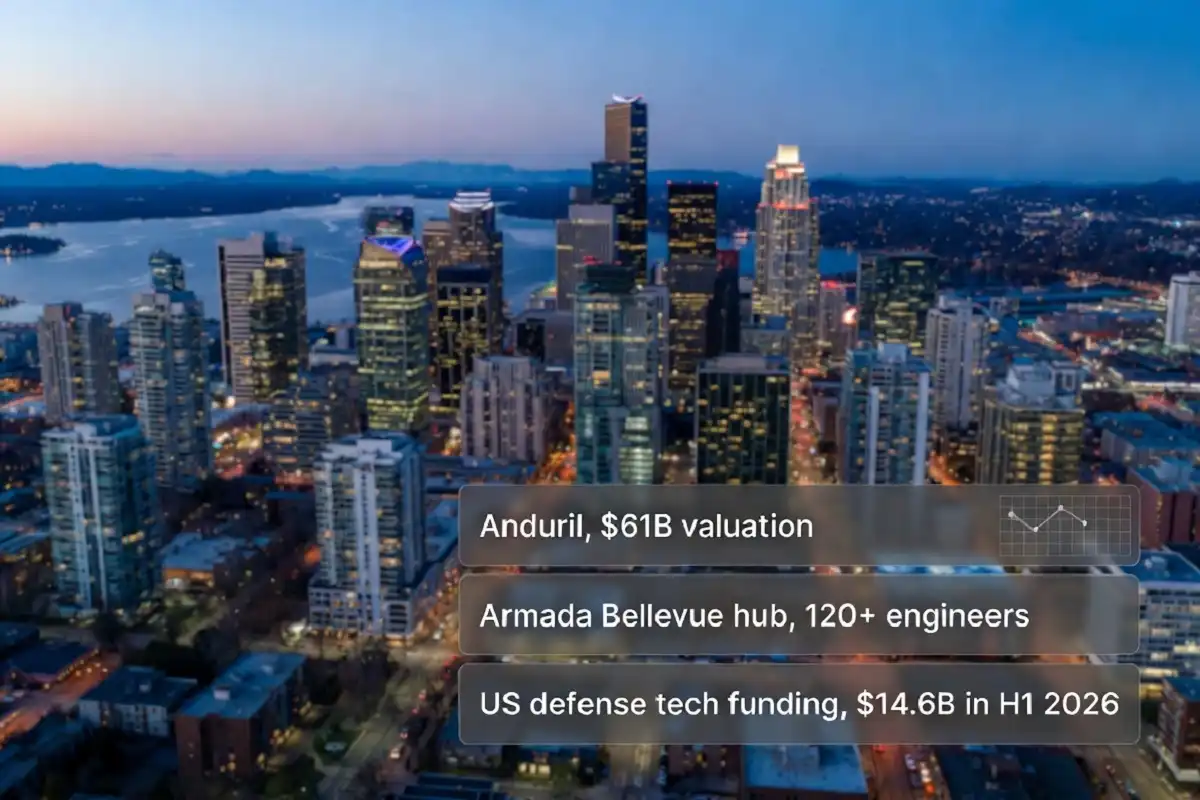
Bellevue defense tech centers on companies like Anduril and Armada tapping the Seattle region’s deep engineering talent to build AI, autonomous systems, and rugged military hardware. National defense funding hit $14.6 billion in the first half of 2026, and Bellevue is grabbing a share.
What Is Bellevue Defense Tech?
Bellevue defense tech refers to the cluster of military-focused technology companies building operations in Bellevue, Washington, and the surrounding Seattle area. These firms design autonomous systems, defense software, radar, and AI infrastructure for the U.S. Department of Defense and allied governments.
The pull is simple. Bellevue sits inside a metro packed with engineers from Microsoft, Amazon, and Meta. Defense startups want people who have shipped hardware and software at massive scale. That talent lives here.
I’ve been tracking the Bellevue defense tech shift since early 2025, and the pace has surprised even local observers. Bellevue has landed satellite offices from more than 100 companies, including OpenAI, Shopify, Snowflake, and Zoom. Defense firms are now part of that wave.
Why Is Defense Tech Moving to Bellevue in 2026?
Three forces are driving it: talent, money, and policy. The Seattle region offers a rare pool of engineers who know how to build at scale. Venture capital is pouring record sums into defense. And Washington already has deep military and maritime roots.
Washington state is a maritime powerhouse. It holds deep ports, a skilled technical workforce, and one of the largest concentrations of U.S. Navy personnel in the country. For companies building autonomous ships and connected battlefield tech, that mix is hard to match.
The money side is just as important. The venture capital industry is funneling record private capital into American defense startups, a sector once seen as too controversial to touch. Public and private defense technology companies raised more than $14.6 billion in private investment in the first five months of 2026, according to Crunchbase. That figure already beat the sector’s previous annual record of $9.6 billion set during all of 2025.
This surge tracks with the broader boom in AI infrastructure spending, the same trend pushing deals like the recent tie-up between Google and Blackstone on a $5 billion AI project. Defense buyers want that computing power close to the fight, which is a core driver behind the Bellevue defense tech surge.
Anduril: The Anchor Tenant
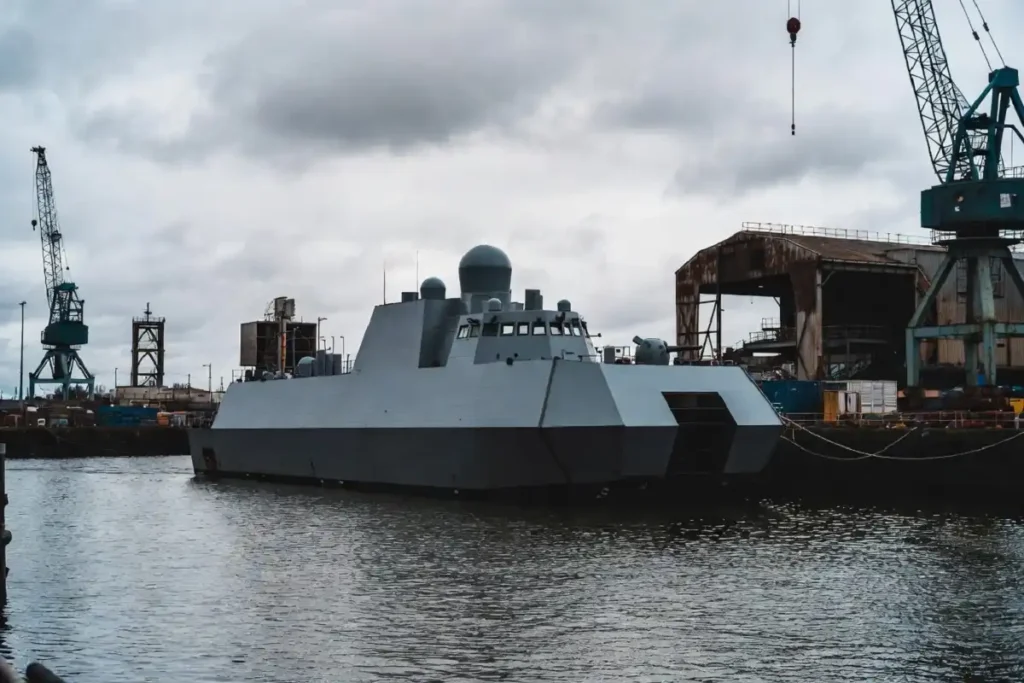
Anduril is the biggest name in Bellevue defense tech. The autonomous weapons maker leased space in downtown Bellevue and is scaling fast across the region. It builds AI-powered hardware and software for the U.S. military.
Here are the specifics. Anduril leased 39,851 square feet at Skyline Tower through a sublease with Meta, taking over floors the social media company had vacated. The firm kept its original Seattle office, open since 2020. After starting with a small Seattle office about six years ago, the Costa Mesa, California-based company expanded into Bellevue and Seattle’s ship canal, pumping millions of dollars into the region as it develops and sells autonomous weapons technology to the Department of Defense.
The scale is enormous. Anduril announced a $5 billion funding round in May 2026, and the company was recently valued at $61 billion. Its 10-year contract with the U.S. Army is valued at up to $20 billion in products and services, putting it in direct competition with legacy primes like RTX and Lockheed Martin.
Anduril’s Seattle-area push goes beyond offices. The company revamped the historic Foss Shipyard on the Lake Washington Ship Canal, where it is building a new class of autonomous surface vessels, essentially drone warships. It announced in November 2025 a partnership with shipbuilder HD Hyundai Heavy Industries to create autonomous warships for the U.S. Anduril was founded in 2017, with Palmer Luckey, the Oculus VR founder, as its most public figure.
Armada: Bellevue’s Engineering Powerhouse
Armada runs a major engineering hub in Bellevue, and it is one of the clearest examples of Bellevue defense tech in action. The company builds portable AI data centers that work in remote and contested environments where normal cloud access fails.
The Bellevue footprint is substantial. Armada employs about 120 people at Bellevue’s Sunset Corporate Campus along the I-90 corridor, and that office serves as the hub of the company’s hardware and software engineering teams. The company chose the Seattle area for its engineering center because of the concentration of experienced engineers from Microsoft and Amazon who know how to build and operate at massive scale.
The reasoning is practical. Armada’s systems get deployed in mines, oil fields, and military sites, so they have to work without an IT department on call. The platform is designed to let organizations run AI-powered operations anywhere, even without existing internet connectivity.
Growth has been steep. Armada raised $230 million at a $2 billion valuation in May 2026, alongside a manufacturing deal with Johnson Controls to produce modular data centers at a new 400,000-square-foot Arizona factory called Galleon Forge One. Customer bookings grew 540% from fiscal 2025 to fiscal 2026. The company already sells to the U.S. military; the U.S. Navy used its systems during the UNITAS naval exercise.
The Microsoft link matters here too. Armada signed an agreement to combine Microsoft’s Azure Local and Foundry Local with its modular infrastructure, aimed at running AI systems in edge environments where data can’t leave the site. That kind of on-site AI processing sits at the heart of where military computing is heading, a shift I’ve written about in the context of how the Pentagon is now recruiting AI engineering talent directly.
The Wider Seattle-Area Defense Cluster
Bellevue does not stand alone. It sits at the center of a regional defense tech network stretching across the Puget Sound. Several nearby companies feed the same talent pool and investor interest that fuel Bellevue defense tech.
Echodyne, based in nearby Kirkland, builds advanced radar. The company designs radar systems for defense, government, and commercial sectors using its patented MESA technology, and is backed by investors including Bill Gates, NEA, Madrona Venture Group, Baillie Gifford, and Northrop Grumman. In February 2026, Echodyne announced a new 86,350-square-foot facility with capacity to ship more than 30,000 radars per year, driven by demand for counter-drone systems.
Other players round out the map. Overland AI spun out of the University of Washington to make self-driving military vehicles, and Exia Labs builds AI software to improve wargaming efforts. A Renton-based accelerator called the Defense Technology Accelerator launched to identify and support startups addressing Defense Department needs. Together, these firms explain why the region keeps drawing comparisons to a rising defense corridor.
How Does Bellevue Fit Into the National Defense Boom?
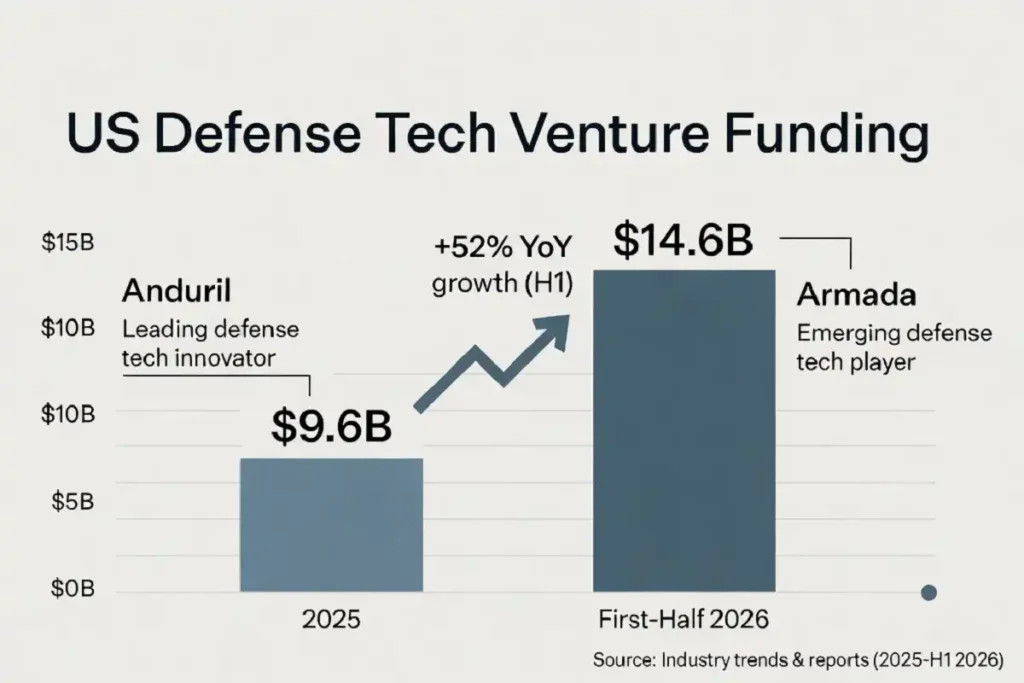
Bellevue is one node in a national surge, not the whole story. The biggest deals still cluster in California, Colorado, and Texas. But Bellevue defense tech carries outsized weight in AI and autonomy thanks to its talent density.
The national numbers set the backdrop. Natsec-focused private companies raised $46.3 billion across nearly 1,900 deals in 2025, according to PitchBook, almost 900% growth in under a decade. Congress passed a record $901 billion defense budget in December to fund critical technology areas like AI and quantum. Federal buyers want faster, cheaper, software-driven systems, and that favors the kind of work happening in Bellevue.
Investor concentration is a defining feature. The rise in capital has not brought a proportional rise in deal volume, with roughly 107 venture rounds so far in 2026, mirroring a broader pattern where larger sums flow into fewer, more established companies. Anduril and Armada both fit that mold. This is the same AI-driven reshaping of work and capital that runs through how companies are folding artificial intelligence into daily operations.
What Jobs Does Bellevue Defense Tech Create?
Bellevue defense tech creates high-skill, high-pay technical roles. Think AI engineering, autonomous systems, infrastructure, security, and hardware development. These jobs carry competitive salaries and ripple through the local economy.
The openings are real and current. Armada alone listed more than 20 open positions in AI engineering, infrastructure, security, and product management in Bellevue as of May 2026. Anduril’s nearly 40,000-square-foot lease signals substantial staffing plans, though the company has not disclosed specific hiring targets.
For engineers weighing a move into Bellevue defense tech, the appeal is a mix of mission and money. The work touches national security. The pay competes with big tech. And the region lets people switch between commercial and defense roles without relocating.
The Ethics and Risk Angle
Defense tech carries real debate, and readers deserve a straight take. Building autonomous weapons and battlefield AI raises hard questions about accountability and use. Not every investor or engineer is comfortable with it, and that tension shapes Bellevue defense tech as much as the funding does.
The tension is built into the market. Some limited partners avoid defense exposure entirely on ethical grounds, which shapes where money flows. Founders in the space are increasingly asked to address regulatory, security, and policy risk directly rather than treat it as an afterthought. Anduril’s own pitch leans into this, arguing that credible deterrence requires exactly the scalable, autonomous systems critics worry about.
There is also business risk. Market enthusiasm and government priorities shift. A record funding year does not guarantee durable companies, and investors warn that firms leaning only on government contracts, without commercial revenue, tend to struggle. Bellevue’s dual-use players, like Armada with its energy and mining customers, are better hedged than pure defense contractors.
What to Watch Next
Watch three things. First, whether Anduril goes public; its $61 billion valuation has fueled speculation it may list by the end of 2026. Second, whether Armada’s Bellevue engineering team keeps expanding past 120 people. Third, whether more startups add to the Bellevue defense tech map.
The direction is clear even if the details shift. The Seattle area now blends advanced manufacturing with AI, autonomy, and defense software, and Bellevue defense tech sits near the middle of it. As of mid-2026, the momentum is real and the money is still arriving. For a suburb once defined by cloud computing and e-commerce, that is a notable turn, and one worth tracking closely through the rest of the year.