Outdoor Adventure 2026: The Complete Guide to Planning a Trip You’ll Never Forget
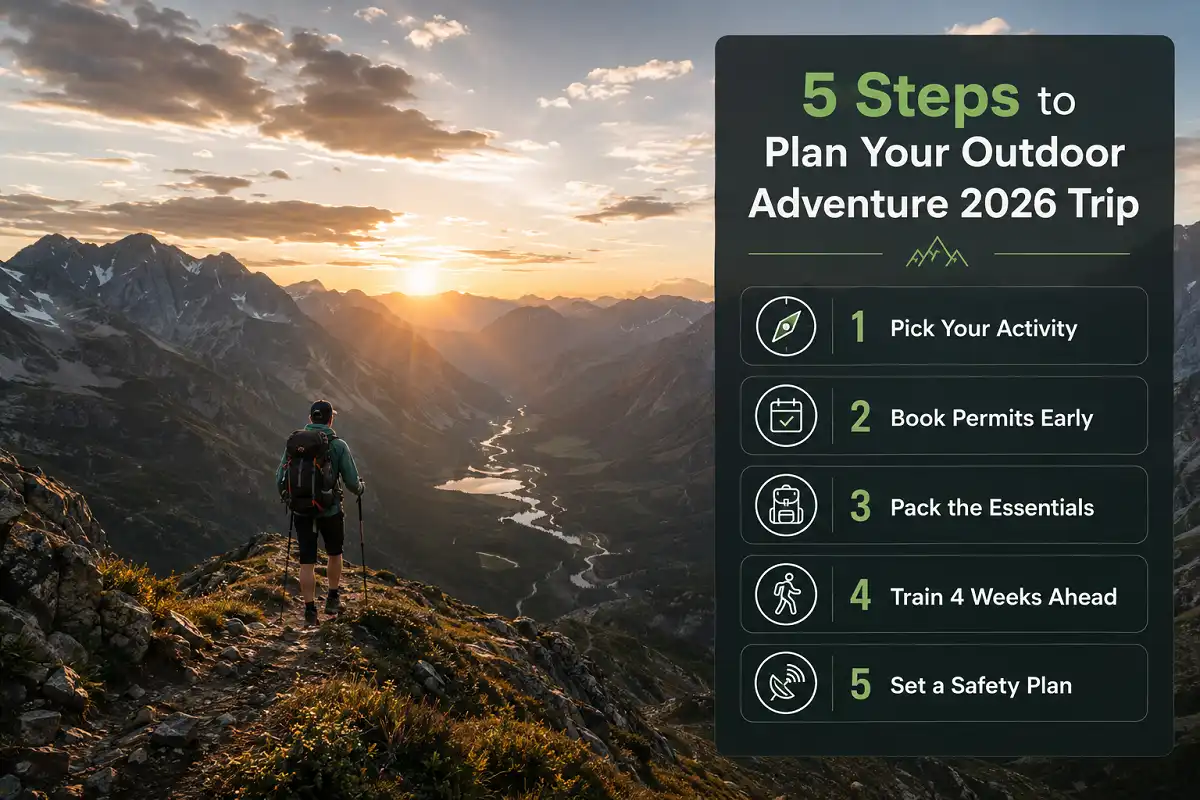
Planning a great outdoor adventure 2026 trip comes down to five things: choosing an activity that matches your fitness and interests, booking permits early (many parks now require reservations months out), packing light but smart, training your body for a few weeks beforehand, and building in a real safety plan before you leave cell service. Get those five right, and almost any trail, coastline, or mountain range becomes a place you can explore with confidence instead of anxiety.
More people are unplugging from screens and heading outside than at any point in recent memory, and 2026 is shaping up to be a banner year for outdoor recreation. But swapping your commute for a trailhead takes more than good intentions. This guide walks through exactly how to plan a trip, what gear actually matters, how to pick the right activity for your skill level, and how to stay safe while you’re out there — so your first (or fiftieth) outdoor adventure 2026 experience turns into a story worth telling instead of a lesson learned the hard way.
Why Outdoor Adventure 2026 Trips Look Different Than a Decade Ago
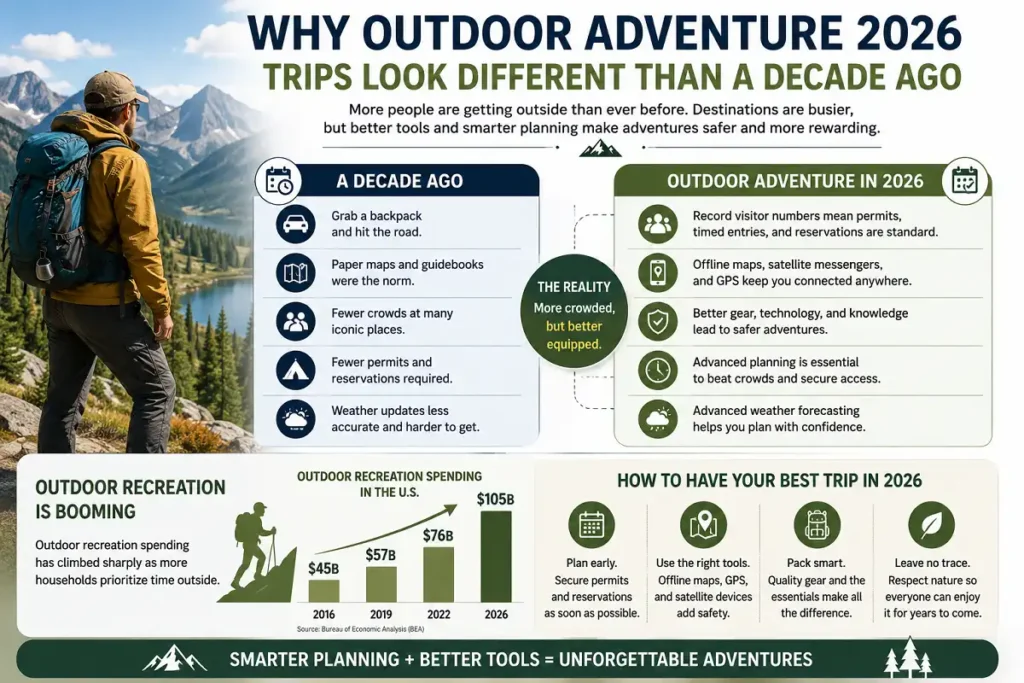
Getting outside used to mean grabbing a backpack and driving to the trailhead. That still works for a quiet afternoon hike, but the bigger picture has shifted. Popular destinations are seeing record visitor numbers, which means permit systems, timed entries, and reservation windows are now standard at many national parks and iconic trails. At the same time, offline mapping apps, satellite messengers, and better weather forecasting have made it easier than ever to explore remote places safely if you know how to use them.
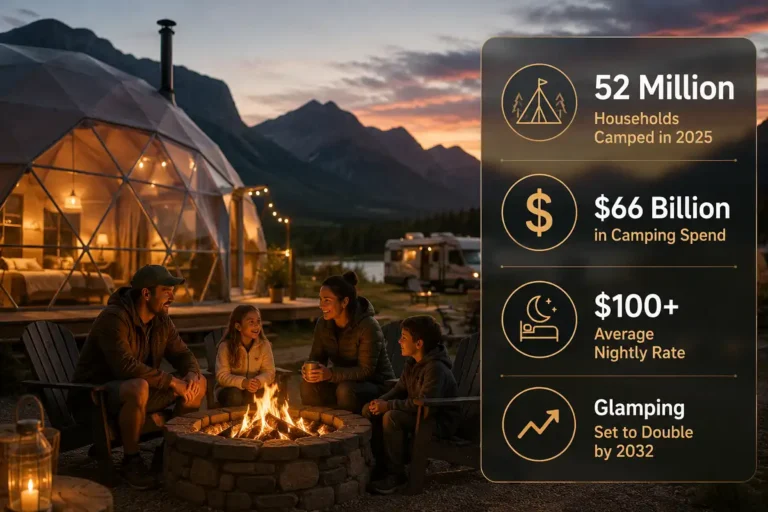
That combination of “more crowded, but better equipped” is really the story of every outdoor adventure 2026 trip. The people who have the best time are the ones who plan around the crowds and lean on the technology, rather than showing up unprepared and hoping for the best. It also helps to see how demand is shifting nationally outdoor recreation spending has climbed sharply as more households prioritize time outside.
Step 1: Find Your Adventure Style Before You Book Anything
Before you buy gear or pick a destination, get honest about what you actually want out of the trip. Are you chasing the quiet, meditative rhythm of a long-distance hike? The adrenaline of mountain biking down a technical descent? The novelty of trying something you’ve never done, like canyoning or paragliding? Every good outdoor adventure 2026 itinerary starts with an honest answer to that question, not with a gear list.
If this is your first real trip into the wild, start small with a “micro-adventure” a short, local outing that lets you test your gear and stamina without being days from help. A state park overnight, a coastal day hike, or a guided half-day paddle are all perfect low-stakes ways to build confidence before you commit to something bigger.
Step 2: Navigate the 2026 Permit and Booking Landscape
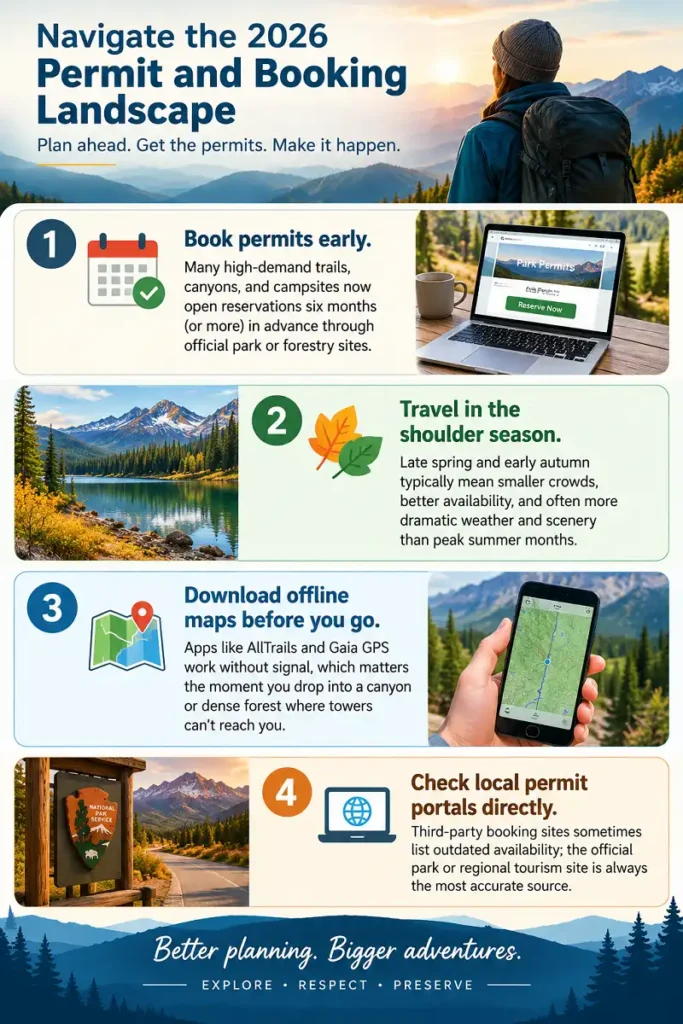
Reservation systems have become the norm rather than the exception, and this is the single biggest planning change for anyone chasing an outdoor adventure 2026 experience.
- Book permits early. Many high-demand trails, canyons, and campsites now open reservations six months (or more) in advance through official park or forestry sites.
- Travel in the shoulder season. Late spring and early autumn typically mean smaller crowds, better availability, and often more dramatic weather and scenery than peak summer months.
- Download offline maps before you go. Apps like AllTrails and Gaia GPS work without signal, which matters the moment you drop into a canyon or dense forest where towers can’t reach you.
- Check local permit portals directly. Third-party booking sites sometimes list outdated availability; the official park or regional tourism site is always the most accurate source.
Step 3: Pack the “Big Three” and the 10 Essentials
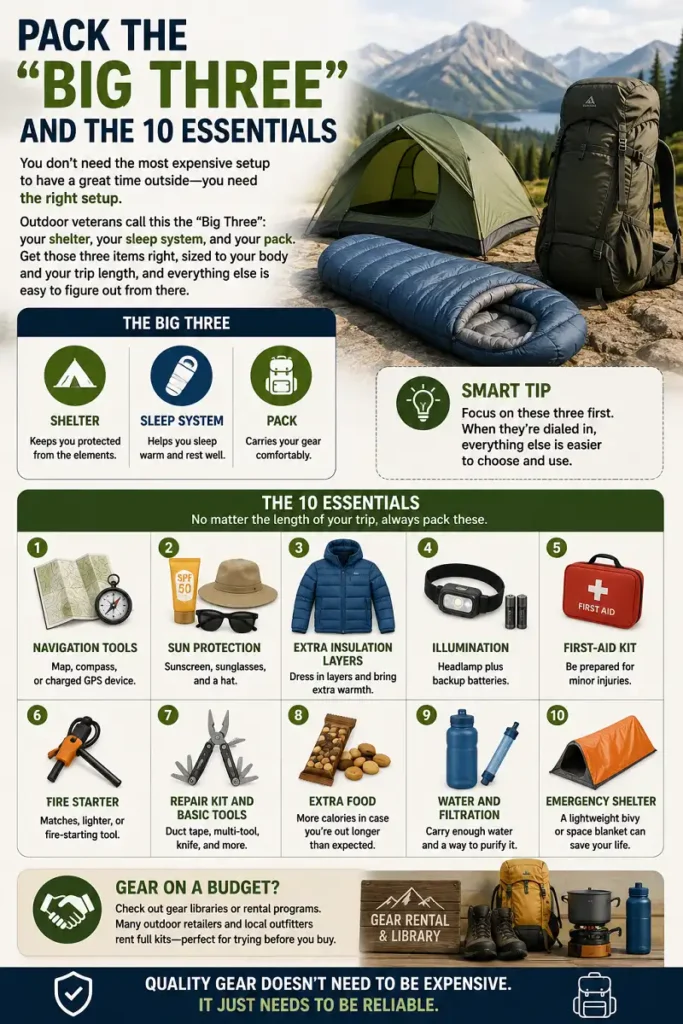
One of the most common beginner mistakes is over-buying gear. You don’t need the most expensive setup to have a great time outside you need the right setup. Outdoor veterans call this the “Big Three”: your shelter, your sleep system, and your pack. Get those three items right, sized to your body and your trip length, and everything else is easy to figure out from there.
Regardless of trip length, every outdoor adventure 2026 packing list should include what’s known as the 10 Essentials:
- Navigation tools (map, compass, or charged GPS device)
- Sun protection (sunscreen, sunglasses, hat)
- Extra insulation layers
- Illumination (headlamp plus backup batteries)
- First-aid kit
- Fire starter
- Repair kit and basic tools
- Extra food
- Water and a filtration method
- Emergency shelter (even a lightweight bivy or space blanket)
If the upfront cost of gear is a barrier, look into gear libraries or rental programs — many outdoor retailers and local outfitters now rent full kits, which is a smart, low-commitment way to figure out what actually works for you before you buy. Quality gear doesn’t need to be expensive to make your outdoor adventure 2026 packing list complete; it just needs to be reliable.
Step 4: Train Your Body and Prepare Your Mindset
Nature doesn’t care how fit you think you are. A “moderate” trail can feel brutal if it’s the first time you’ve carried real weight on your back. Start a walking routine at least four weeks before a bigger trip, ideally in the same boots and pack you’ll use on the day.
Just as important is your mindset. Weather turns, gear fails, and trails are sometimes harder to follow than the map suggested. The travelers who get the most out of an outdoor adventure 2026 trip are the ones who treat setbacks as part of the story rather than a reason to panic. A little discomfort is often where the best memories come from.
Step 5: Choose Your Adventure Category
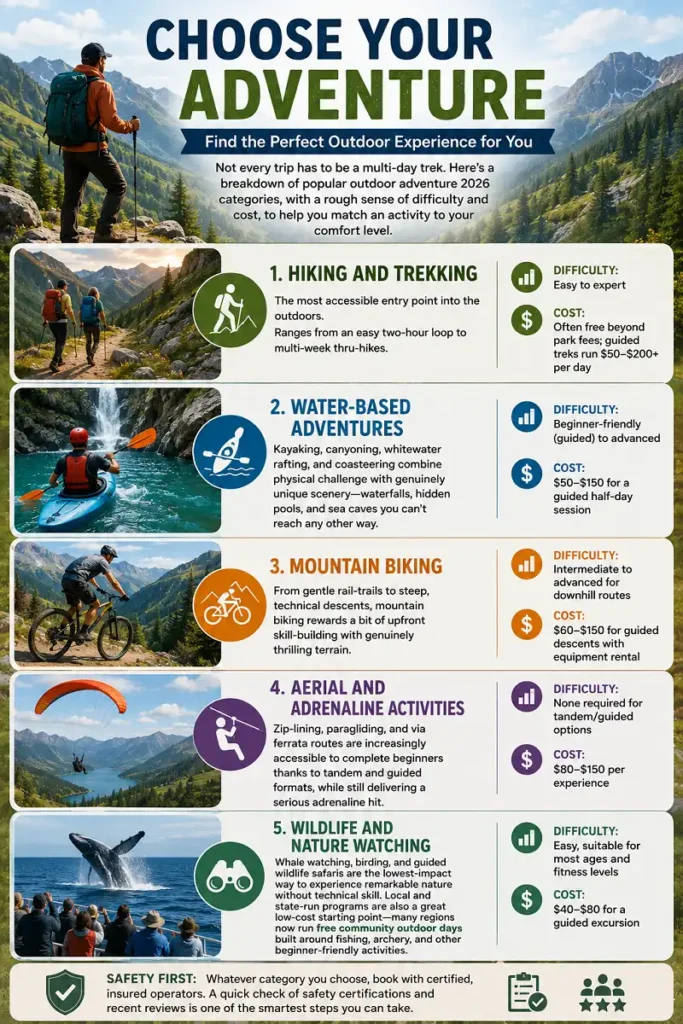
Not every trip has to be a multi-day trek. Here’s a breakdown of popular outdoor adventure 2026 categories, with a rough sense of difficulty and cost, to help you match an activity to your comfort level.
Hiking and Trekking
The most accessible entry point into the outdoors. Ranges from an easy two-hour loop to multi-week thru-hikes.
- Difficulty: Easy to expert
- Cost: Often free beyond park fees; guided treks run $50–$200+ per day
Water-Based Adventures
Kayaking, canyoning, whitewater rafting, and coasteering combine physical challenge with genuinely unique scenery waterfalls, hidden pools, and sea caves you can’t reach any other way.
- Difficulty: Beginner-friendly (guided) to advanced
- Cost: $50–$150 for a guided half-day session
Mountain Biking
From gentle rail-trails to steep, technical descents, mountain biking rewards a bit of upfront skill-building with genuinely thrilling terrain.
- Difficulty: Intermediate to advanced for downhill routes
- Cost: $60–$100 for guided descents with equipment rental
Aerial and Adrenaline Activities
Zip-lining, paragliding, and via ferrata routes are increasingly accessible to complete beginners thanks to tandem and guided formats, while still delivering a serious adrenaline hit.
- Difficulty: None required for tandem/guided options
- Cost: $80–$150 per experience
Wildlife and Nature Watching
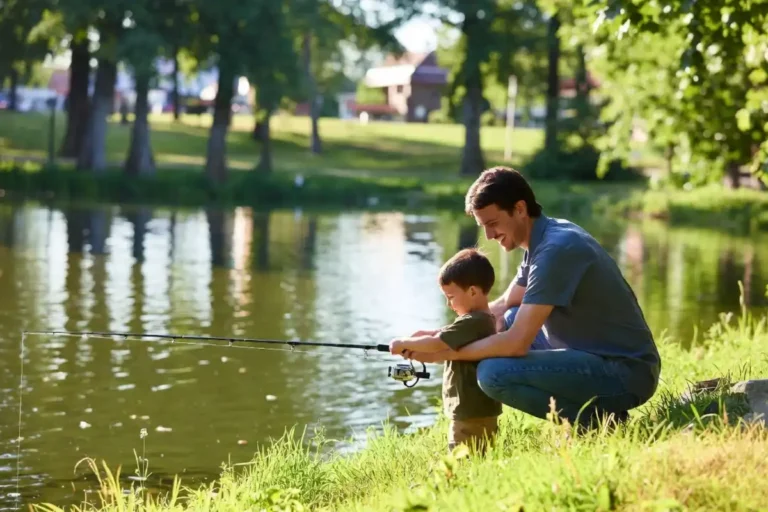
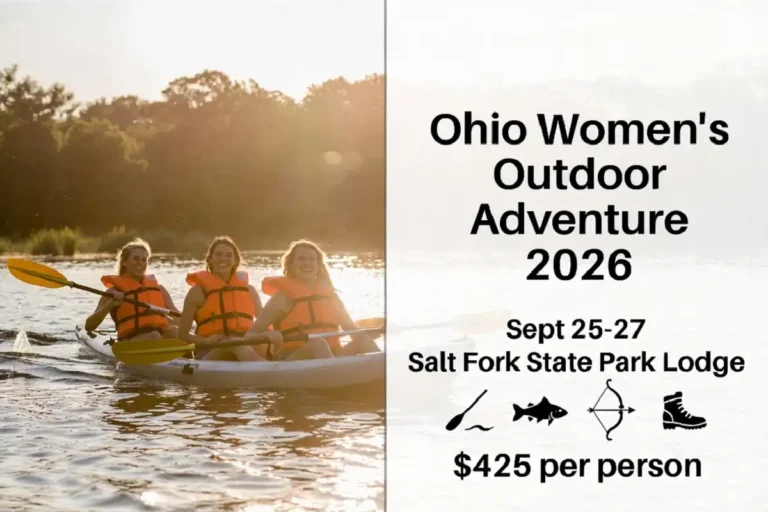
Whale watching, birding, and guided wildlife safaris are the lowest-impact way to experience remarkable nature without technical skill. Local and state-run programs are also a great low-cost starting point — many regions now run free community outdoor days built around fishing, archery, and other beginner-friendly activities.
- Difficulty: Easy, suitable for most ages and fitness levels
- Cost: $40–$80 for a guided excursion
Whatever category you choose, book with certified, insured operators. A quick check of safety certifications and recent reviews takes five minutes and can make the difference between a great outdoor adventure 2026 memory and a genuinely dangerous situation.
Step 6: Practice Leave No Trace
As trail traffic keeps climbing, the seven Leave No Trace principles matter more than ever:
- Plan ahead and prepare to avoid needing improvised, damaging solutions on the trail.
- Stick to durable surfaces and established trails to protect fragile plant life.
- Pack out everything you pack in food scraps included.
- Leave what you find, from rocks to wildflowers to historical artifacts.
- Minimize campfire impact by using a camp stove instead of building new fire rings.
- Respect wildlife by observing from a distance and never feeding animals.
- Be considerate of other visitors, yielding to uphill hikers and keeping noise down.
Treating this as a checklist rather than an afterthought is what separates a responsible outdoor adventure 2026 traveler from one who leaves a mess behind for the next person.
Step 7: Budget for the Whole Trip, Not Just the Ticket
Nature itself is free, but getting there rarely is. A realistic outdoor adventure 2026 budget factors in fuel or flights, park entrance and permit fees, gear rental or purchase, and a small emergency fund for the unexpected. One cost people consistently forget: post-trip gear maintenance. Waterproofing boots and properly cleaning a down sleeping bag after every big trip extends the life of your gear by years and saves real money over time.
Step 8: The Safety Non-Negotiables
Before you head out of cell range, leave a written trip plan with someone at home your exact route, expected return time, and a “panic time” (the point at which they should call for help if they haven’t heard from you).
Safety planning is the part of any outdoor adventure 2026 trip that’s easy to skip and impossible to regret doing well. A satellite messenger, such as a Garmin inReach, has become close to standard gear for anyone heading well beyond cell coverage. These devices allow two-way texting and SOS alerts from almost anywhere on earth. But the most important safety tool is still judgment: if a river crossing looks too high, or a storm is building fast, turn back. The trail will still be there tomorrow, and no summit or waterfall is worth an unnecessary risk.
Turn One Trip Into a Lifelong Adventure List
The best outdoor adventure 2026 trips rarely happen just once. Plenty of seasoned adventurers keep a running bucket list hikes, summits, and far-flung destinations they add to and check off year after year. It’s a genuinely useful habit, not just a fun one: writing down a specific goal, like hiking a famous long-distance trail such as the Appalachian Trail, gives your training and planning a clear target instead of a vague “I should get outside more” intention.
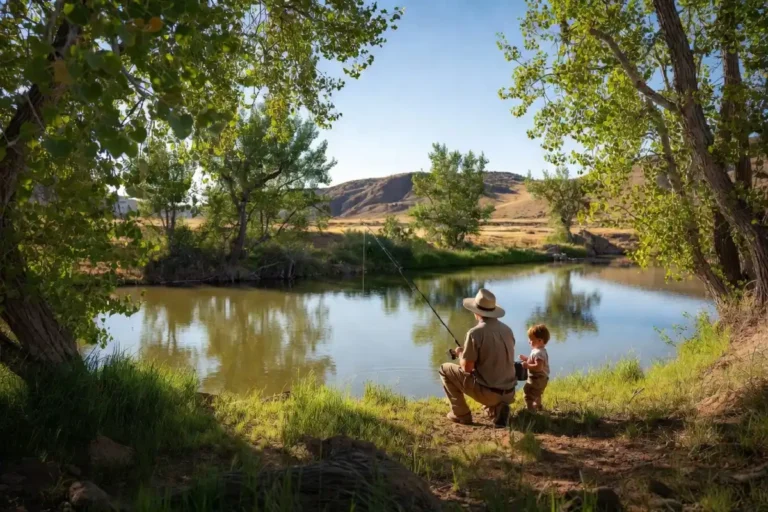
Start small. After your first outdoor adventure 2026 trip, jot down what you loved, what you’d change, and one thing you want to try next. Maybe that’s a longer backpacking route, a new region entirely, or finally trying that water-based activity you were nervous about the first time. Mentorship programs are another great way to build skills faster many state agencies now connect newcomers with experienced outdoor volunteers who can show you the ropes on your next trip. A well-planned first trip almost always leads directly to a second, and a list like this keeps the momentum going instead of letting it fade once you’re back at your desk.
FAQs

Do I need to be extremely fit to plan an outdoor adventure 2026 trip?
How far in advance should I book permits for a 2026 trip?
What's the single most important piece of safety gear?
Is renting gear a good option for beginners?
What's the best season for outdoor travel in 2026?
Can I do a meaningful outdoor trip without much experience?
The Bottom Line
A great outdoor adventure 2026 trip isn’t about the most expensive gear or the most extreme itinerary it’s about matching the right activity to your skill level, planning around this year’s permit realities, and respecting both your own limits and the land you’re exploring. Start small, plan carefully, and let one good trip lead naturally to the next.