The Camping Industry 2026: Why Demand, Rates, and Glamping Are All Climbing at Once
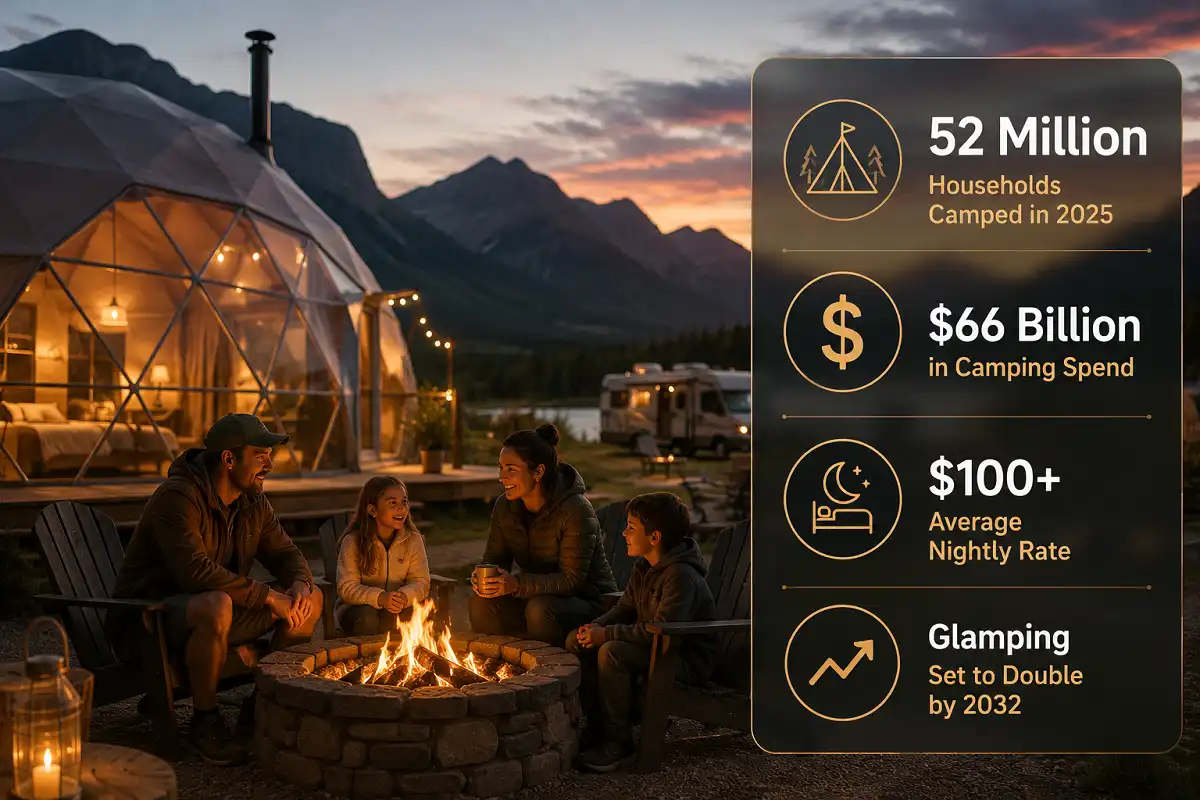
The camping industry 2026 is in its strongest stretch in years. More than 52 million U.S. households camped last year, campground spending hit $66 billion, and nightly rates have pushed past $100 for the first time nationally. Glamping now makes up close to a third of all camping stays and is expected to roughly double in size by 2032. Travelers are chasing slower, screen-free trips and shoulder-season deals, while park owners and investors are seeing strong buyer interest but a shortage of quality listings. In short: the camping industry 2026 isn’t just holding steady it’s expanding on almost every front, from family road trips to institutional-grade glamping resorts.
Why Everyone Is Suddenly Talking About the Camping Industry 2026
A few years ago, “camping” mostly meant a tent, a cooler, and a state park reservation. That picture has changed. Walk through the numbers driving the camping industry 2026 and you’ll see a category that looks less like a hobby and more like a full-fledged sector of the travel economy Camping-related community spending reached roughly $66 billion in 2025, up more than $5 billion from the year before, as 52 million households camped at least once, and that momentum has carried straight into 2026. Big hotel brands have noticed, too. Hyatt now partners with Under Canvas, and Hilton has teamed up with AutoCamp a clear signal that mainstream hospitality sees real staying power in outdoor lodging, not a passing fad.
None of this happened by accident. It’s the result of a handful of overlapping shifts: how people want to travel, what campground owners are charging, and where investors are putting their money. Understanding all three is the fastest way to make sense of where the camping industry 2026 is actually headed, and why so many people who used to think of camping as a once-a-summer trip are now booking it year-round.
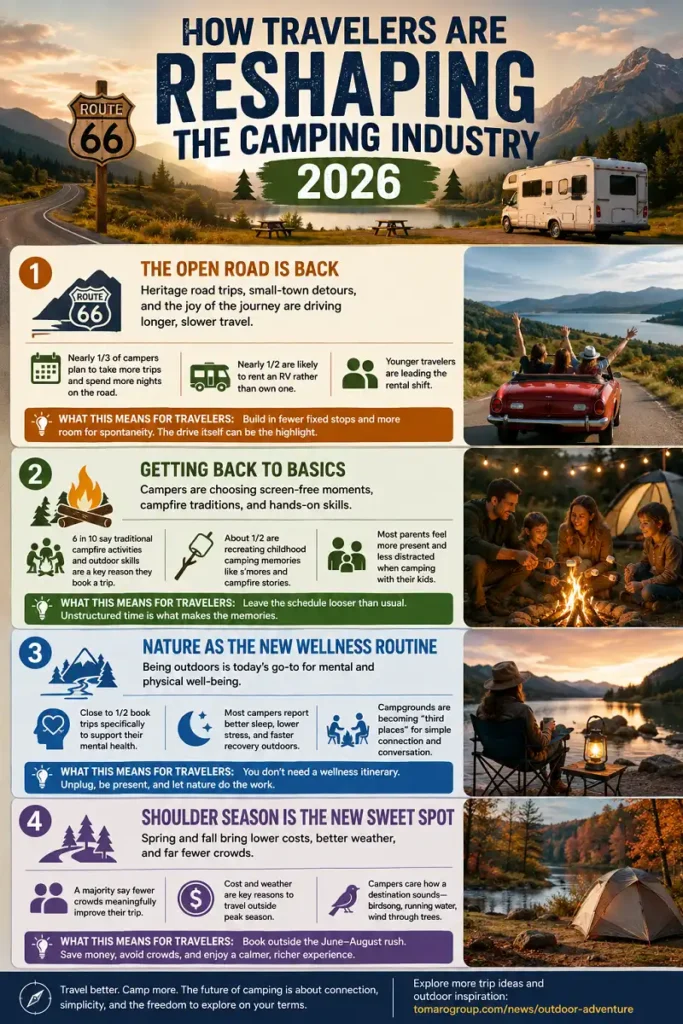
How Travelers Are Reshaping the Camping Industry 2026
The Open Road Is Back
The classic American road trip is having a real comeback. With the country’s 250th anniversary and Route 66’s centennial both landing this year, a notable share of campers say they’re planning a heritage or Americana-style trip. Roadside diners and small-town detours now appeal more than checking off major tourist attractions.
This isn’t about covering more ground faster. It’s the opposite. Nearly a third of campers plan to take more trips and spend more nights on the road this year, favoring longer, slower travel over rushed itineraries. At the same time, an “RV rental renaissance” is pulling in a new generation of road trippers — nearly half of campers say they’re likely to rent an RV rather than own one, with younger travelers leading the shift.
What this means for travelers: Build in fewer fixed stops and more room for spontaneity. A big part of what’s fueling the camping industry 2026 is the rediscovery that the drive itself can be the highlight of the trip.
Getting Back to Basics
In a world where nearly everything gets photographed and posted, a lot of campers are deliberately choosing the opposite. About half say they’re planning a trip built around recreating a childhood camping memory s’mores, campfire stories, learning to build a fire for the first time.
Roughly six in ten campers say traditional campfire activities and hands-on outdoor skills, like fire-building and basic navigation, are a key reason they book a trip at all. This “analog camping” pull is especially strong among younger travelers trading screen time for something more tactile. For families, the appeal runs even deeper: most parents report feeling more present and less distracted when camping with their kids than during a typical vacation.
What this means for travelers: Leave the schedule looser than usual. A lot of what’s shaping demand across the camping industry 2026 comes down to unstructured time, not packed itineraries.
Nature as the New Wellness Routine
Wellness travel isn’t new, but its definition is shifting. Instead of elaborate spa routines, a large majority of campers say simply being outdoors is enough to support their well-being. Close to half are booking trips specifically to support their mental health, and most report better sleep, lower stress, or faster recovery after time outside.
Campgrounds themselves are becoming informal gathering spaces what some in the industry call “third places” where conversations happen around a fire pit instead of a bar. That social, low-effort form of wellness is turning out to be one of the more durable trends in the camping industry 2026, because it doesn’t require a big budget or a special program to deliver results.
What this means for travelers: You don’t need a wellness itinerary. Sitting by water, watching the sky, or just unplugging for a weekend does most of the work.
Shoulder Season Is the New Sweet Spot
Camping used to be a summer-only habit. That’s changing fast. Lower costs, better weather in many regions, and noticeably smaller crowds are pulling more travelers into spring and fall bookings. A majority of campers now say fewer crowds meaningfully improve their trip, and cost and weather aren’t far behind as reasons to travel outside peak months.
There’s also a quieter trend tucked inside this one: campers increasingly care how a destination sounds, not just how it looks. Birdsong, running water, and wind through trees are becoming part of the pitch, and shoulder season is when that sensory experience is easiest to find.
What this means for travelers: If your schedule allows it, book outside the June-through-August rush. You’ll pay less, see fewer people, and get a noticeably calmer version of the same destination. For more seasonal trip ideas, browse the latest outdoor adventure coverage before you lock in dates.
The Business Side: What’s Happening to Campground Owners and Investors
The traveler-facing trends above are only half the story. On the ownership and investment side, the camping industry 2026 is showing a very different but equally telling set of signals.
Nightly Rates Are Climbing in the Camping Industry 2026
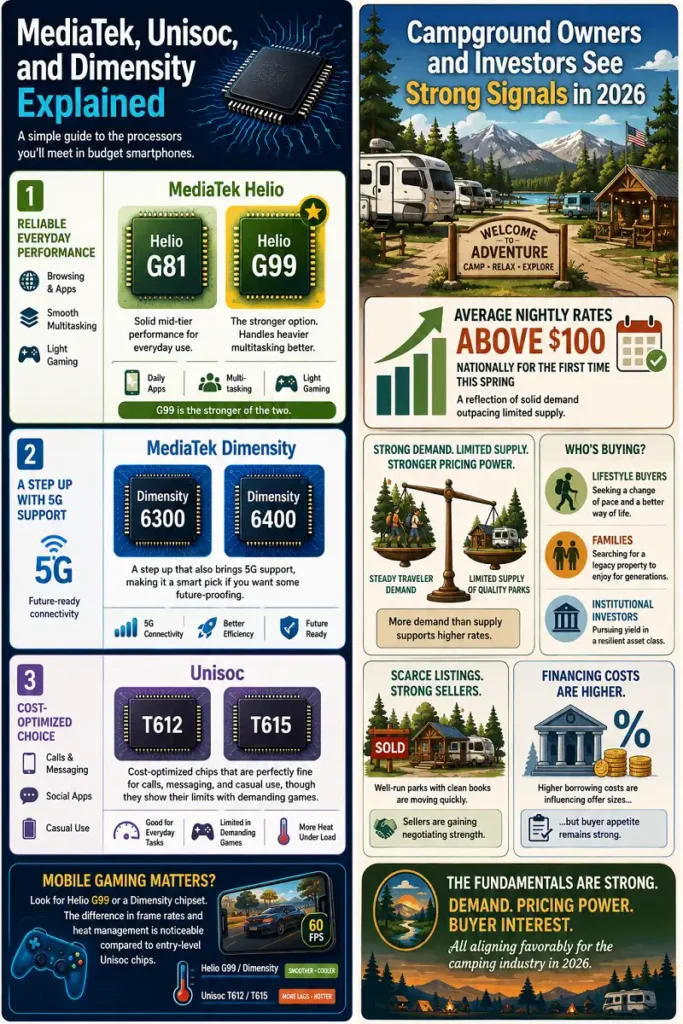
Average nightly campground rates have kept rising and pushed past the $100 mark nationally for the first time this spring. That’s not a sign of a market losing steam it’s typically a sign of a category people are willing to pay more for. When demand holds steady and rates climb at the same time, it usually means supply hasn’t caught up with how many people want to book.
Buyers Are Circling, But Good Listings Are Scarce
On the transaction side, interest in buying campgrounds and RV parks is strong and coming from multiple directions: lifestyle buyers looking for a change of pace, families wanting a legacy property, and institutional investors chasing yield. The complication is supply. Well-run parks with clean books rarely sit on the market long, which puts sellers in a stronger negotiating position than they might expect.
Financing costs are higher than they were a few years ago, and that does shape what buyers can realistically offer. But even with tighter lending conditions, appetite for outdoor hospitality assets hasn’t cooled. For anyone weighing whether to sell, list, or expand a property, the fundamentals demand, pricing power, and buyer interest are lining up favorably for the camping industry 2026.
Glamping’s Outsized Role in the Camping Industry 2026
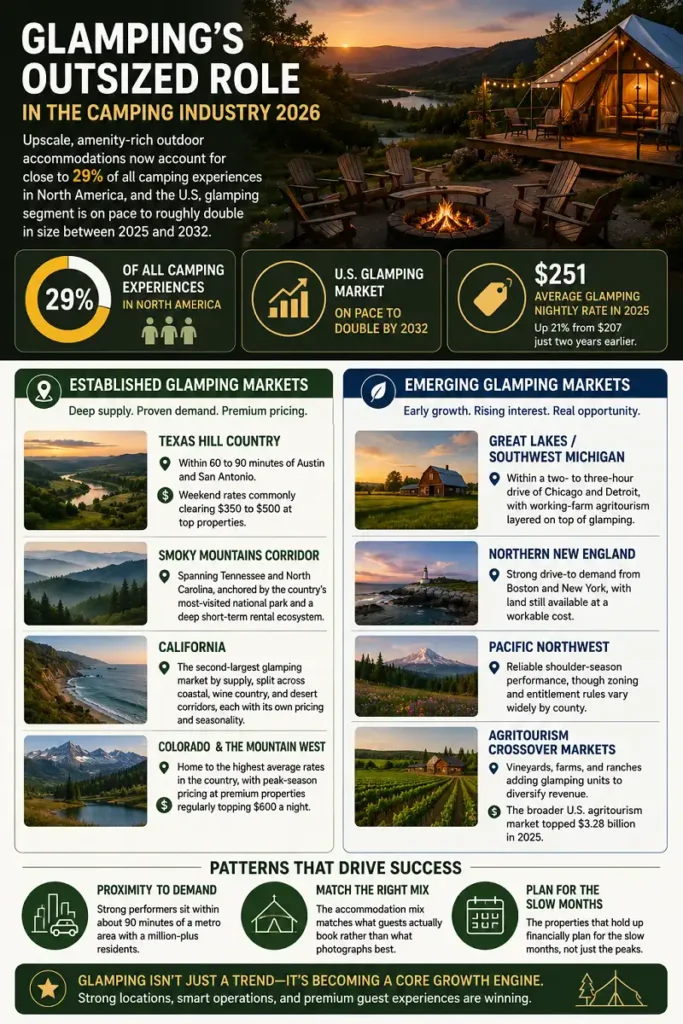
If there’s one segment pulling in a disproportionate share of attention and capital, it’s glamping. Upscale, amenity-rich outdoor accommodations now account for close to 29% of all camping experiences in North America, and the U.S. glamping segment is on pace to roughly double in size between 2025 and 2032.
The average glamping nightly rate reached $251 in 2025, up 21% from $207 just two years earlier. That kind of pricing power is exactly why major hospitality brands are getting involved instead of sitting on the sidelines.
Established Glamping Markets
A handful of regions have the deepest supply, the clearest pricing data, and the most experienced guest base:
- Texas Hill Country — Within 60 to 90 minutes of Austin and San Antonio, with weekend rates commonly clearing $350 to $500 at top properties.
- Smoky Mountains corridor — Spanning Tennessee and North Carolina, anchored by the country’s most-visited national park and a deep short-term rental ecosystem.
- California — The second-largest glamping market by supply, split across coastal, wine country, and desert corridors, each with its own pricing and seasonality.
- Colorado and the Mountain West — Home to the highest average rates in the country, with peak-season pricing at premium properties regularly topping $600 a night.
Emerging Glamping Markets
Other regions are earlier in their growth curve but drawing real institutional interest:
- Great Lakes / Southwest Michigan — Within a two- to three-hour drive of Chicago and Detroit, with working-farm agritourism layered on top of glamping.
- Northern New England — Strong drive-to demand from Boston and New York, with land still available at a workable cost.
- Pacific Northwest — Reliable shoulder-season performance, though zoning and entitlement rules vary widely by county.
- Agritourism crossover markets — Vineyards, farms, and ranches adding glamping units to diversify revenue; the broader U.S. agritourism market topped $3.28 billion in 2025.
Across nearly every one of these markets, a few patterns repeat: strong performers sit within about 90 minutes of a metro area with a million-plus residents, the accommodation mix matches what guests actually book rather than what photographs best, and the properties that hold up financially plan for the slow months, not just peak season.
What All of This Means Going Forward
Put the traveler data and the business data side by side, and a clear picture of the camping industry 2026 emerges. Demand isn’t just holding it’s broadening. Families still want the classic tent-and-campfire experience, road trippers are stretching their itineraries, wellness-minded travelers are booking based on how a place feels rather than what it offers, and a fast-growing group of guests wants a glamping-level stay with none of the setup.
For travelers, that means more choice than ever, from a $30 tent site to a $600-a-night dome with a private soaking tub, plus a genuine financial incentive to travel outside the summer crush. If you’re still mapping out where to go, a solid outdoor adventure planning guide can help narrow down a destination that fits your budget and season. For owners and investors, it means a market where fundamentals are strong, but where the winners will be the ones who match supply to what guests are actually booking rather than chasing the most photogenic trend.
FAQs

Is the camping industry 2026 actually growing, or is it just recovering from the pandemic bump?
What's driving nightly rate increases across the camping industry 2026?
Is glamping really outperforming traditional camping?
Is now a good time to buy or sell a campground?
Which regions are seeing the most new glamping development?
The Bottom Line
The camping industry 2026 isn’t a single story it’s several trends moving in the same direction at once. Travelers want simpler, slower, more present trips. Owners are seeing rising rates and steady demand. Investors are chasing a glamping segment that’s proving it can command real pricing power. None of it requires guessing where things go next. The data already points the same way: outdoors, unhurried, and increasingly upscale but still, at its core, about time spent away from a screen.