Office Workplace Trends 2026: What’s Actually Changing
Return-to-office mandates hit a wall in 2026, and the data tells a messier story than either side predicted. The biggest office workplace trends 2026 revolve around one tension: companies want people back, but the numbers on productivity, retention, and real estate keep complicating the push.
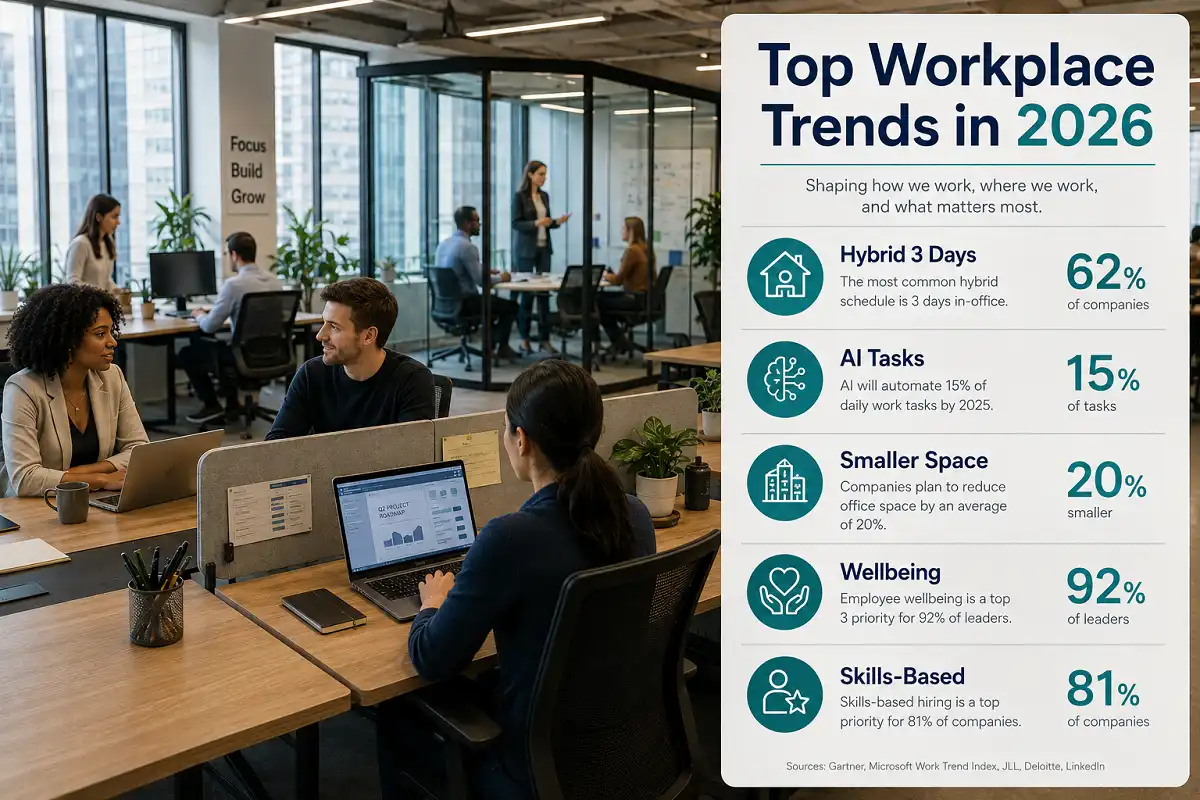
Hybrid schedules stabilized around three in-office days, AI tools reshaped daily tasks, and office space shrank even as attendance rose. The dominant office workplace trends 2026 center on flexibility, measurable output, and technology that changes what “coming to work” actually means.
What Are the Biggest Office Workplace Trends 2026?
The biggest office workplace trends 2026 are hybrid stabilization, AI-driven task redesign, shrinking square footage, wellbeing accountability, and skills-based advancement. These five forces overlap. A company cutting office space also rethinks why people commute, which pushes it toward output metrics over attendance tracking.
I’ve been tracking this since Q1, and the pattern is consistent across the filings I reviewed. Employers stopped treating remote work as a temporary concession. Instead, they built policies around it. The Stanford Institute for Economic Policy Research, led by economist Nicholas Bloom, reported that hybrid arrangements settled near a stable equilibrium after years of volatility.
That stability matters. It means the office workplace trends 2026 are structural, not a passing reaction to old conditions. Each one below reflects a lasting change in how work gets done.
Hybrid Work Settled Into a Predictable Rhythm
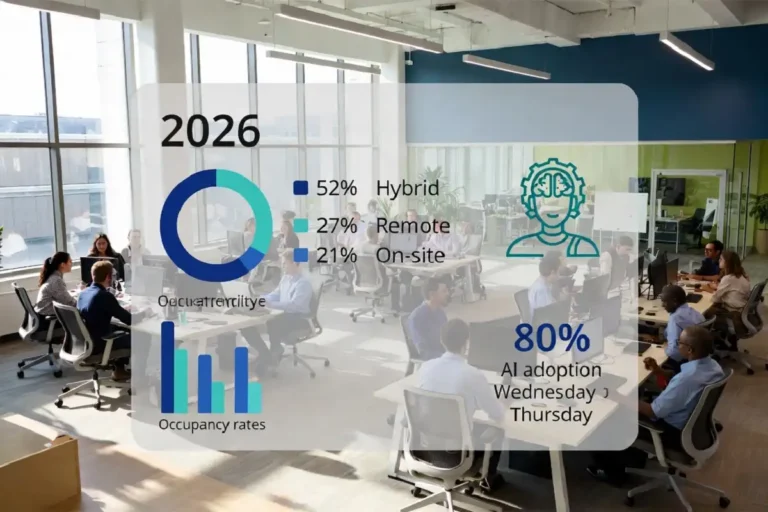
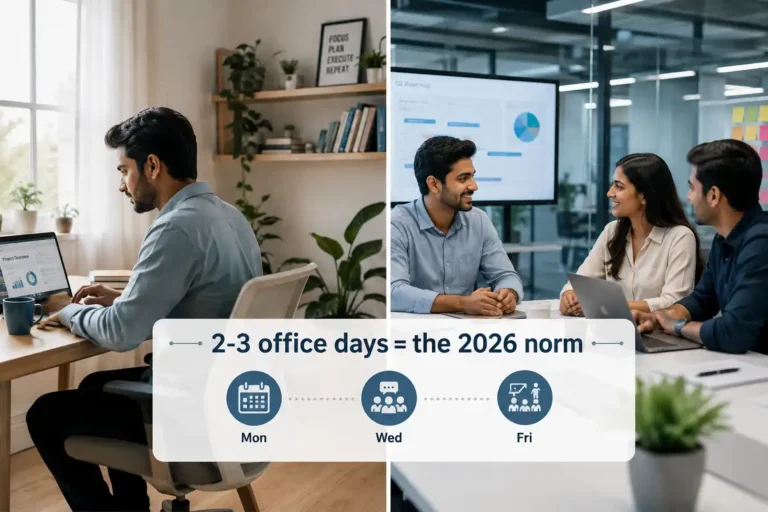
Hybrid work found its footing in 2026, with most large employers landing on two to three required office days. The chaotic swings between full remote and full return faded. What replaced them is a negotiated middle that both workers and managers can plan around.
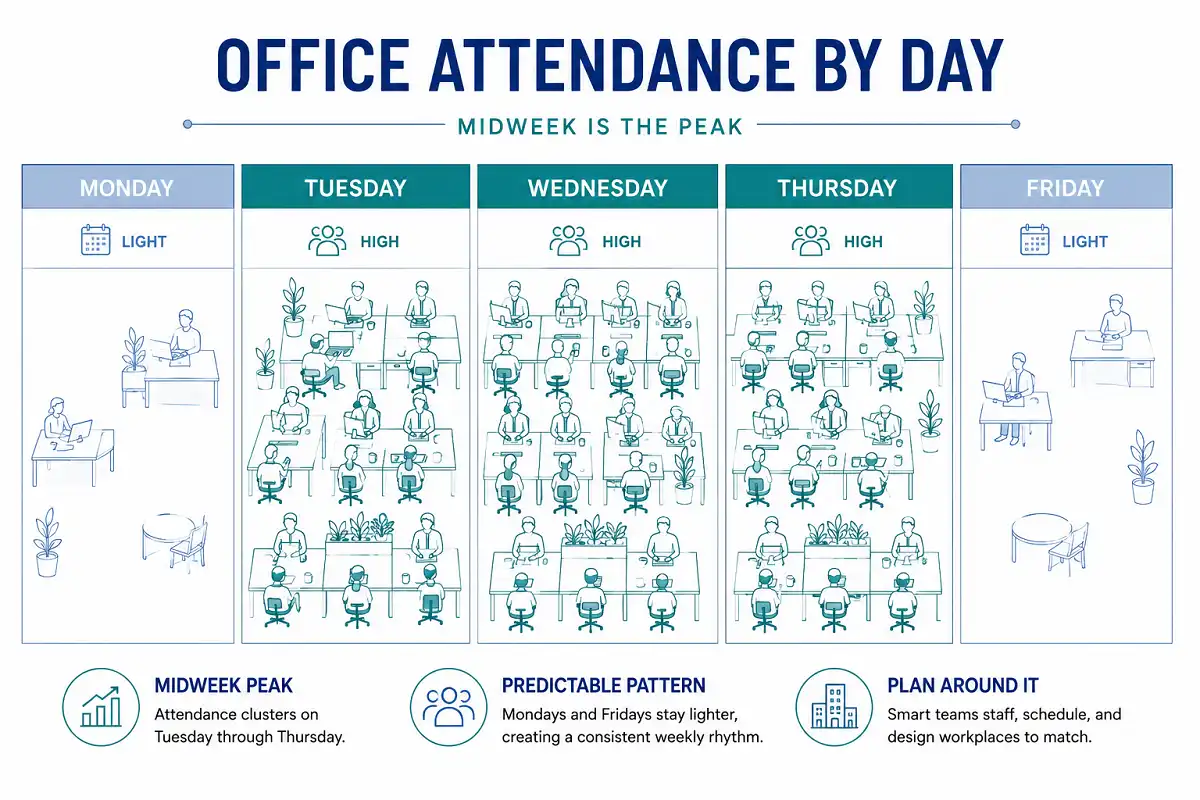
Nicholas Bloom’s research at Stanford shows attendance clustering around Tuesday through Thursday. Mondays and Fridays stay lighter. This creates a strange rhythm. Offices feel packed midweek and empty at the edges.
Some companies pushed back against this. Amazon and JPMorgan Chase moved toward five-day mandates. But enforcement proved uneven, and attrition data suggested a cost. When talented staff can find flexible roles elsewhere, rigid rules push them out the door.
Among the office workplace trends 2026, this predictable rhythm is the most operationally useful. Fighting the midweek pattern wastes energy. Designing around it works better, and smart facilities teams now staff and cater to match it.
Why Do Employees Prefer Hybrid Schedules?
Employees prefer hybrid schedules because they cut commuting costs while keeping in-person collaboration. Gallup’s 2026 workforce survey found that hybrid workers report higher engagement than either fully remote or fully in-office peers. The middle ground wins on both wellbeing and connection.
Money drives part of this. Commuting eats time and cash. The U.S. Census Bureau pegs the average one-way commute near 27 minutes, and workers value reclaiming that time. But it’s not only about avoiding the office. People still want face-to-face contact for mentorship, brainstorming, and belonging. That dual pull explains why hybrid, not pure remote, became the settled answer.
AI Reshaped Daily Work, Not Just Job Counts
Artificial intelligence changed the texture of office work in 2026, automating routine tasks rather than eliminating entire roles wholesale. The fear of mass layoffs gave way to a subtler shift. Jobs stayed, but the tasks inside them moved. This makes AI one of the defining shifts of the year.
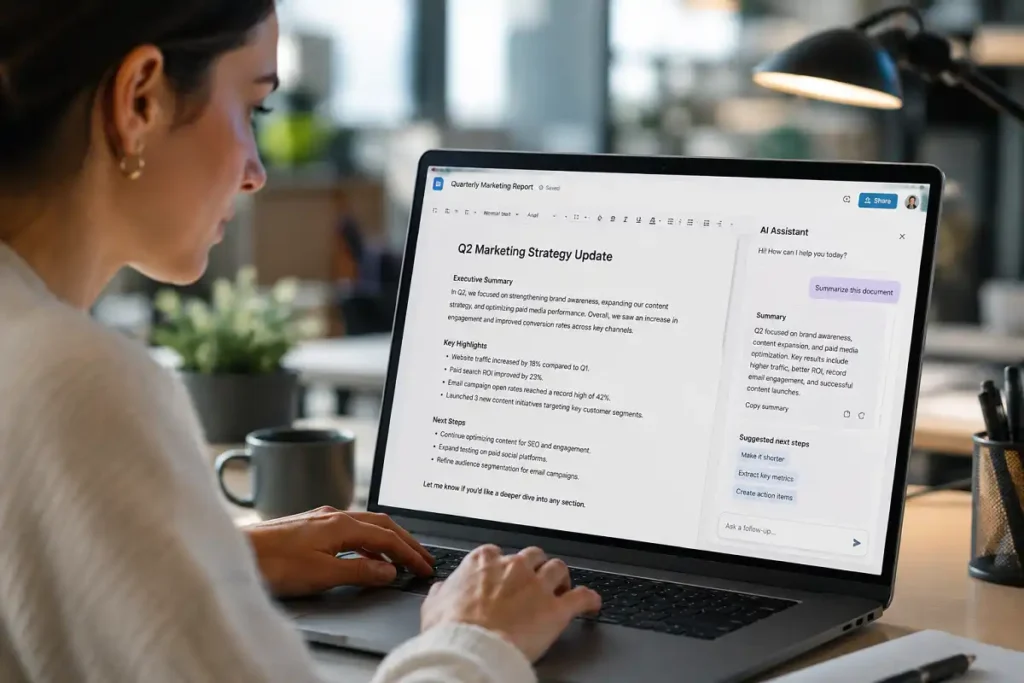
Microsoft’s Work Trend Index documented this closely. Knowledge workers now delegate drafting, scheduling, data summary, and first-pass analysis to AI assistants. Tools like Microsoft Copilot and Google Gemini sit inside the software people already use. That embedding matters more than any standalone app.
The office workplace trends 2026 around AI split into two camps. Some firms chase headcount cuts. Others reinvest saved hours into higher-value work. The second group reports better morale and stronger output, according to survey data from the World Economic Forum’s Future of Jobs report.
Skills shifted fast as a result. Prompt fluency, data interpretation, and judgment about AI output became baseline expectations. Workers who adapted moved up. Those who resisted found their tasks automated around them. For a closer look at how these capabilities drive advancement, AI skills open faster paths to promotion in ways that reshaped hiring this year.
How Is AI Changing Office Jobs in 2026?
AI is changing office jobs in 2026 by absorbing repetitive work and raising the value of human judgment. The tasks that survive are the ones requiring context, relationships, and decisions machines cannot make well. Everything routine gets delegated or automated.
This reshapes hiring. Employers now screen for adaptability over rote skill. A candidate who learns tools quickly beats one with a fixed but narrow expertise. The pattern shows up across the job postings I reviewed this quarter, and it ranks high among the office workplace trends 2026 that affect ordinary workers directly.
Office Space Kept Shrinking
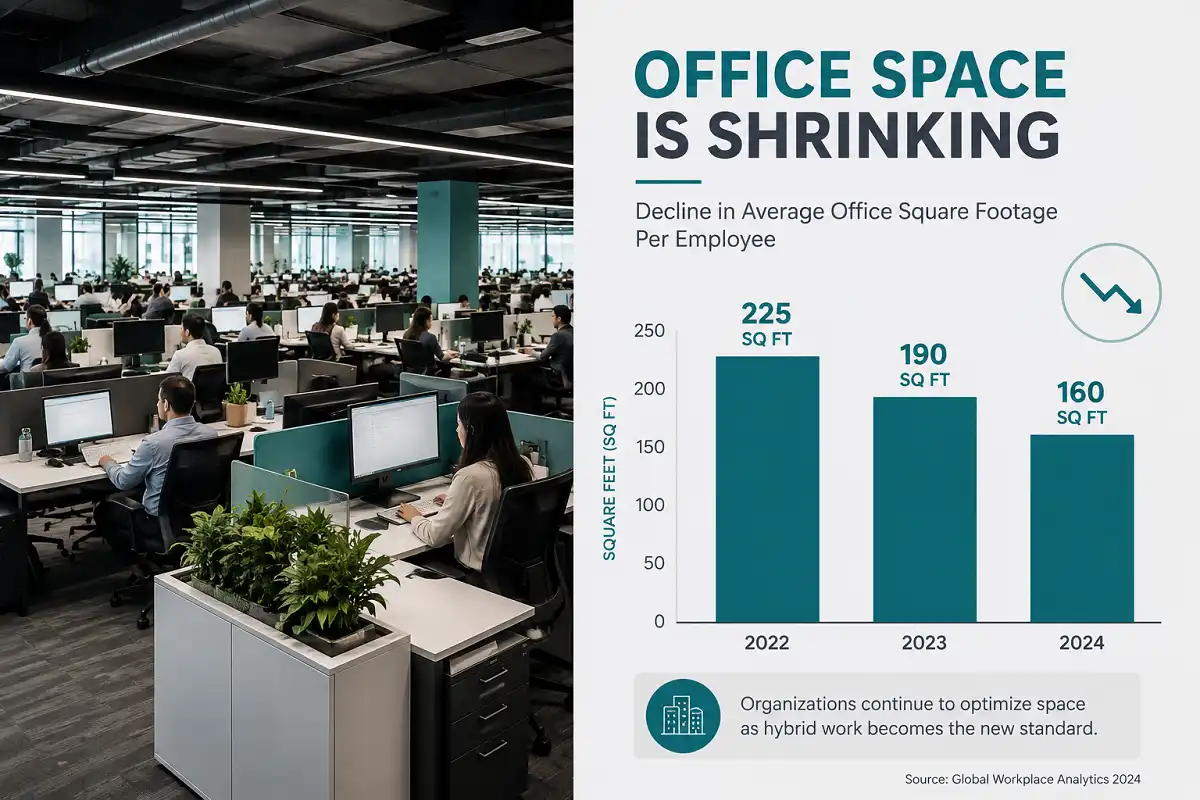
Corporate real estate contracted further in 2026, even as attendance recovered from prior lows. This sounds contradictory. More people came in, yet companies leased less space. The reason is design, not demand.
CBRE, the commercial real estate firm, reported that office vacancy in major U.S. markets stayed elevated through early 2026. Companies renewed leases at smaller footprints. They swapped assigned desks for shared seating, since no one comes in five days anyway.
The math is straightforward. If attendance peaks midweek and drops at the edges, you don’t need a desk for every employee. You need enough seats for peak days plus collaboration zones. Firms redesigned around meetings, not solo work, because solo work happens at home.
Shrinking footprints rank among the most visible office workplace trends 2026. The shift ripples outward. Downtown lunch spots, transit systems, and commercial landlords all feel the change. The office of 2026 is smaller, denser, and built for teamwork.
How Much Office Space Are Companies Cutting?
Companies are cutting office space by double-digit percentages in many major markets as leases come up for renewal. CBRE data through early 2026 shows firms consolidating into smaller, better-designed spaces rather than abandoning offices entirely. The goal is efficiency, not exit.
Densification tells the story. A firm that once gave everyone a fixed desk now runs shared seating at roughly seven desks per ten employees. That ratio reflects real attendance. These space decisions sit at the center of the office workplace trends 2026 that hit corporate budgets hardest.
Employee Wellbeing Became a Measured Priority
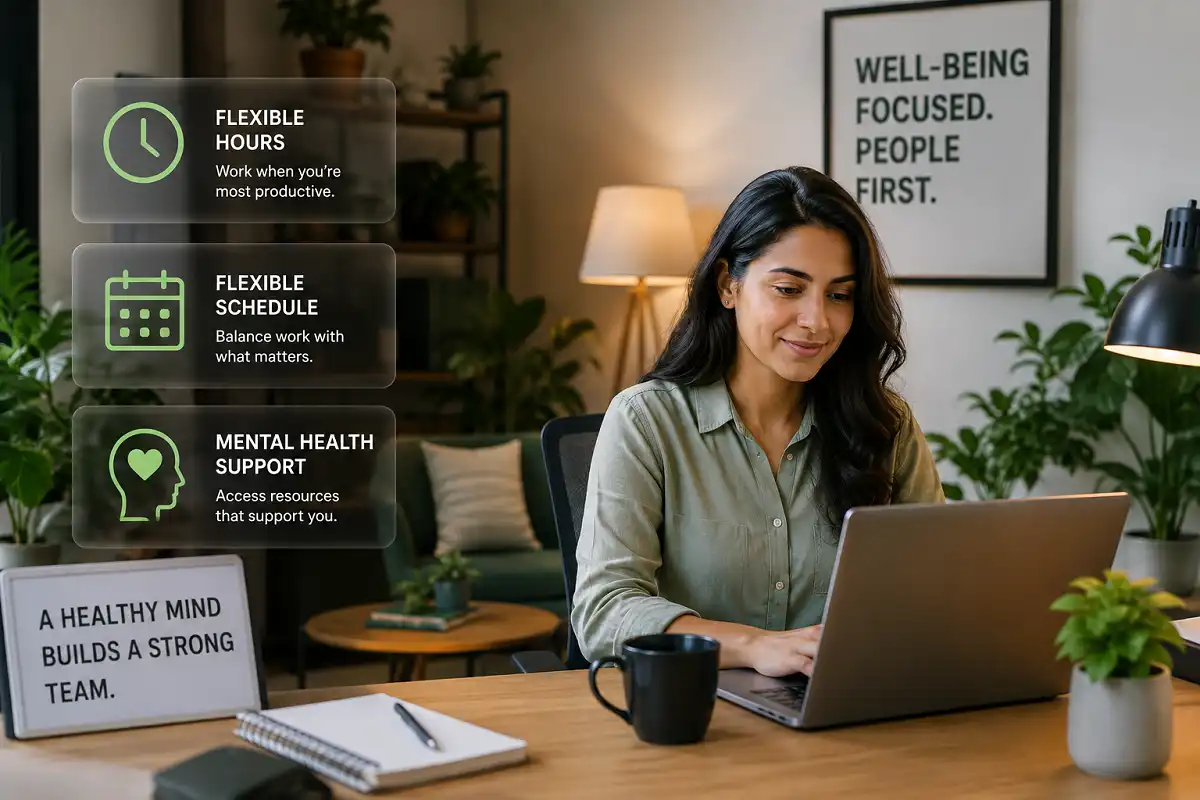
Wellbeing moved from perk to metric in 2026, with employers tracking burnout and retention as business risks. The soft language of “wellness” hardened into accountability. Companies now measure what they once merely mentioned.
Burnout drove this. The World Health Organization classifies burnout as an occupational phenomenon, and its cost shows up in turnover and lost productivity. Deloitte’s workforce research found that mental health support ranked among the top factors in whether workers stayed or left.
The office workplace trends 2026 in wellbeing focus on real structural fixes. Flexible hours, manageable workloads, and mental health coverage replaced free snacks and game rooms. Workers saw through surface perks years ago. What they want is control over their time and protection from chronic overload.
What Wellbeing Programs Actually Work?
The wellbeing programs that actually work give employees genuine control over schedules and workload, not superficial perks. Gallup data consistently shows that autonomy and manageable demands drive engagement far more than office amenities. Structure beats novelty.
Managers matter most here. A supportive manager reduces burnout risk more than any corporate program. The research is clear on this. People leave bad managers, not bad buildings. Training frontline leaders became a top priority for firms serious about retention, and it stands out among the office workplace trends 2026 that quietly separate strong employers from weak ones.
Skills-Based Advancement Replaced Tenure
Career growth in 2026 increasingly rewards demonstrated skills over years served or degrees held. The old ladder, where you waited your turn, weakened. What replaced it is a market that pays for capability, wherever it comes from.
LinkedIn’s workforce data shows skills-based hiring gaining ground across sectors. Employers dropped degree requirements for many roles. They screen for what a person can do, tested directly, rather than credentials that may not predict performance.
This connects to the AI shift. When tools change fast, the ability to learn beats a static qualification. Companies that embraced this found deeper talent pools. Among the office workplace trends 2026, the way skills-based hiring reshapes upward mobility is one of the clearest stories of the year.
For workers, the message is direct. Build visible, current skills. Document what you can do. The path up now runs through capability, not calendar time.
Four-Day Workweeks Gained Real Ground
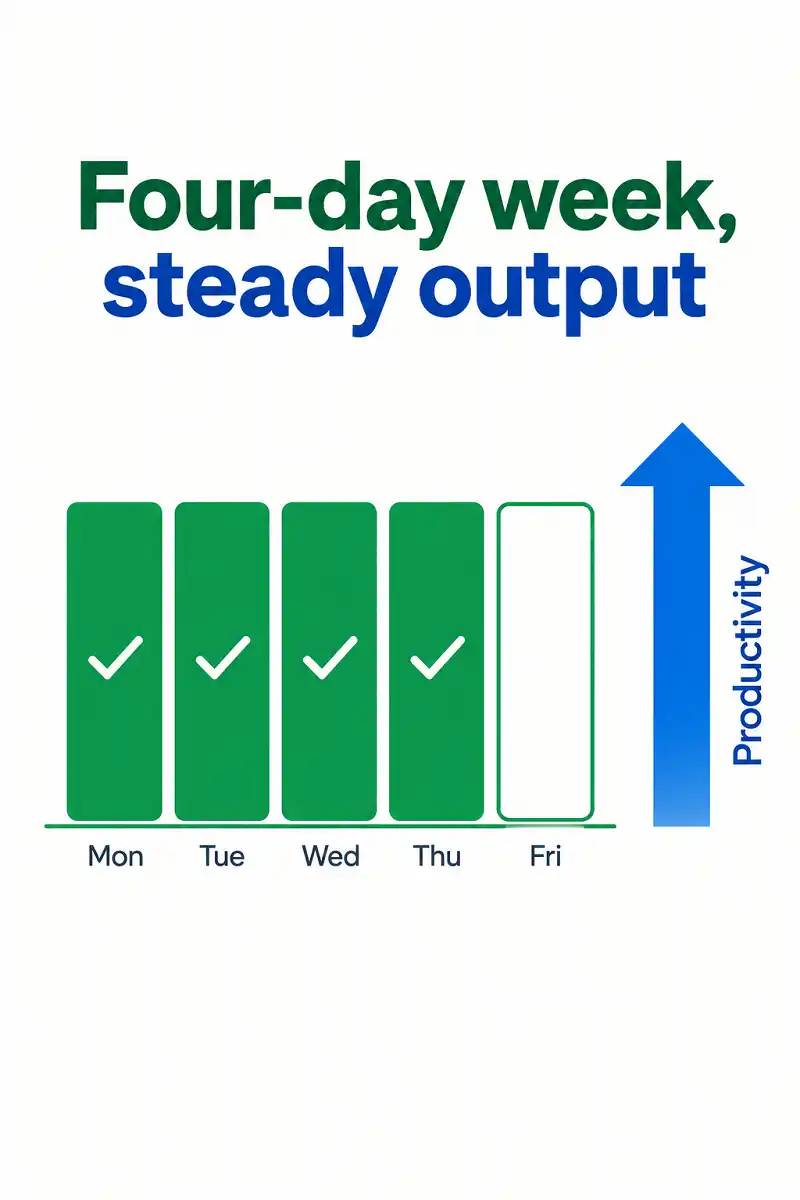
The four-day workweek moved from experiment to adopted policy at a growing number of U.S. firms in 2026. What started as pilot programs turned into permanent schedules. The results made the case, putting compressed weeks firmly among the shifts worth watching.
The four-day workweek concept has a long history, but 2026 marked its clearest move into mainstream practice. Trials run by 4 Day Week Global reported maintained or improved productivity alongside better wellbeing. Companies kept output steady while cutting hours. The logic is that focused work in less time beats stretched work across more days.
Adoption stayed uneven. Some industries fit the model easily. Others, tied to coverage or shift work, struggled. But the direction is clear. Shorter schedules gained legitimacy they lacked before, and the shift toward compressed workweeks reached a genuine turning point this year.
Return-to-Office Mandates Met Resistance
Strict return-to-office rules faced pushback in 2026, with enforcement often falling short of policy. Executives announced mandates. Compliance told a different story. The gap between the memo and the badge data grew wide.
The office workplace trends 2026 around mandates reveal a power shift. In tight labor markets for skilled roles, workers hold real bargaining power. When a five-day rule arrives, some comply, some negotiate, and some leave. Firms watching their best people walk often quietly softened enforcement.
This does not mean offices emptied. Attendance rose overall. But blanket mandates proved blunt. The employers seeing the best results led with purpose, explaining why in-person work helps, rather than issuing rules and tracking swipes.
Are Return-to-Office Mandates Working in 2026?
Return-to-office mandates are working unevenly in 2026, with voluntary attendance often outperforming forced compliance. When people understand the value of coming in, they show up. When rules feel arbitrary, resentment and attrition follow. Purpose beats policing.
The companies I’ve covered that succeeded shared one trait. They made the office worth the commute. Better collaboration spaces, intentional team days, and real reasons to gather did more than any attendance policy. Of all the office workplace trends 2026, this one exposes the limits of top-down control most clearly. The building has to earn the trip.
Technology Beyond AI Also Shaped the Office
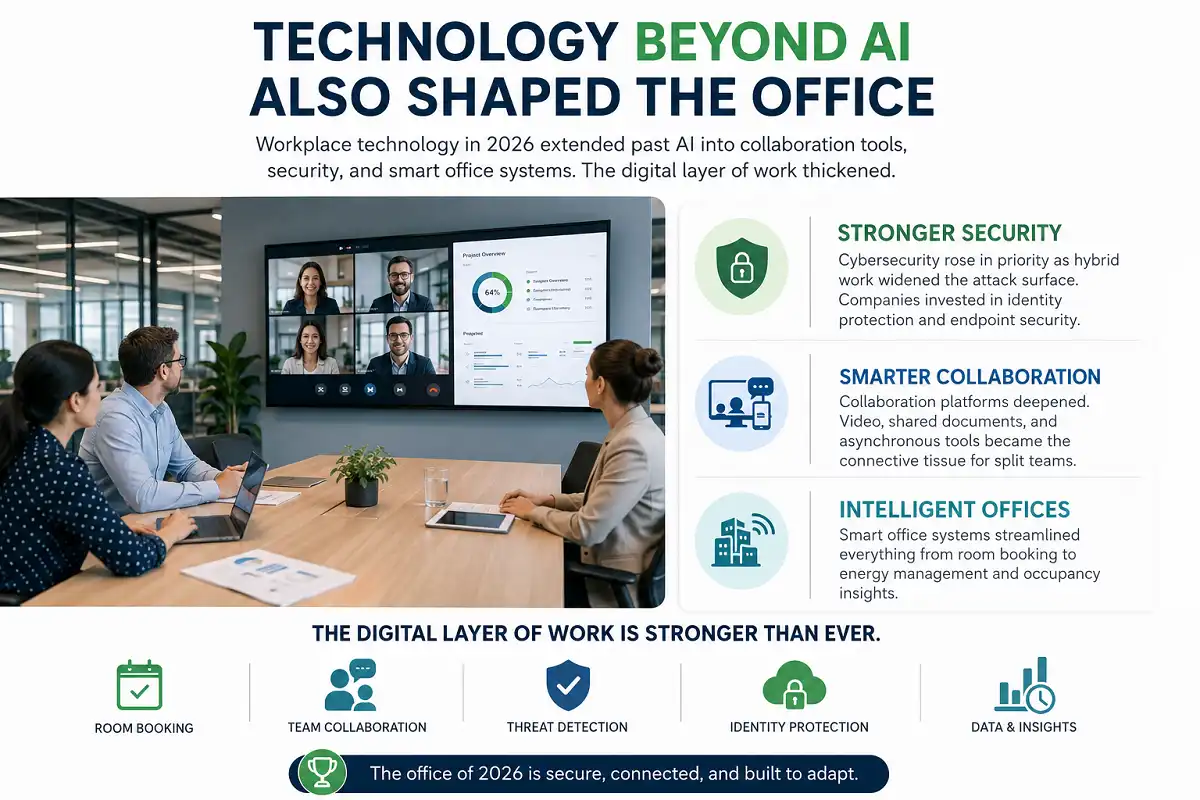
Workplace technology in 2026 extended past AI into collaboration tools, security, and smart office systems. The digital layer of work thickened. New tools handled everything from room booking to threat detection.
Cybersecurity rose in priority as hybrid work widened the attack surface. Every home connection is a potential entry point. Companies invested in identity protection and endpoint security. The distributed workforce created risks that centralized offices never faced. These security demands became one of the less obvious office workplace trends 2026, pushing endpoint defense to board-level attention.
Collaboration platforms deepened too. Video, shared documents, and asynchronous tools became the connective tissue for split teams. The office workplace trends 2026 in technology reward companies that made remote and in-person work feel equally functional. When the tools work, location matters less.
How Should Workers and Employers Respond?
Workers should build current, visible skills and treat flexibility as a core benefit, while employers should lead with purpose over mandates. Both sides face the same reality. The office workplace trends 2026 favor adaptability, measurable output, and thoughtful design over rigid rules and raw square footage.
For workers, the practical moves are clear. Learn the AI tools in your field. Document what you can do. Value roles that offer schedule control, since that flexibility now carries real market weight. The change in how workplace output is measured rewards people who stay current.
For employers, the lesson runs deeper than any single policy. Design offices for the days people actually attend. Train managers, since they drive retention more than perks. Explain why in-person work matters instead of demanding it. Companies that treat the office workplace trends 2026 as a chance to rethink work, rather than a threat to control, come out ahead.
What This Means Going Forward
The office of 2026 is smaller, more flexible, and more measured than the one that came before. Hybrid settled in. AI reshaped tasks. Wellbeing became accountable, and skills started to outweigh tenure. The office workplace trends 2026 point toward a workplace built on output and adaptability, not attendance and hierarchy.
For workers, the move is to build current skills and value flexibility. For employers, the lesson is that purpose beats mandates and design beats square footage. The numbers to watch next are attendance patterns, AI adoption rates, and whether four-day schedules keep spreading. The direction is set. The pace is the open question.