Trump-Xi Summit Deals Look Different Depending on Who You Ask
A week after the Trump-Xi summit in Beijing, Washington and China are telling two different stories about what they agreed to. The deals are real. The details are not lining up. Here is what each side claims, what got signed, and why the gaps matter for prices you pay.
The May 14-15 Trump-Xi summit produced a fragile trade truce, not a breakthrough. The U.S. and China issued separate readouts that clash on soybeans, tariffs, rare earths, and chip probes. Both sides agreed to keep talking through fall 2026.
What Happened at the Trump-Xi Summit
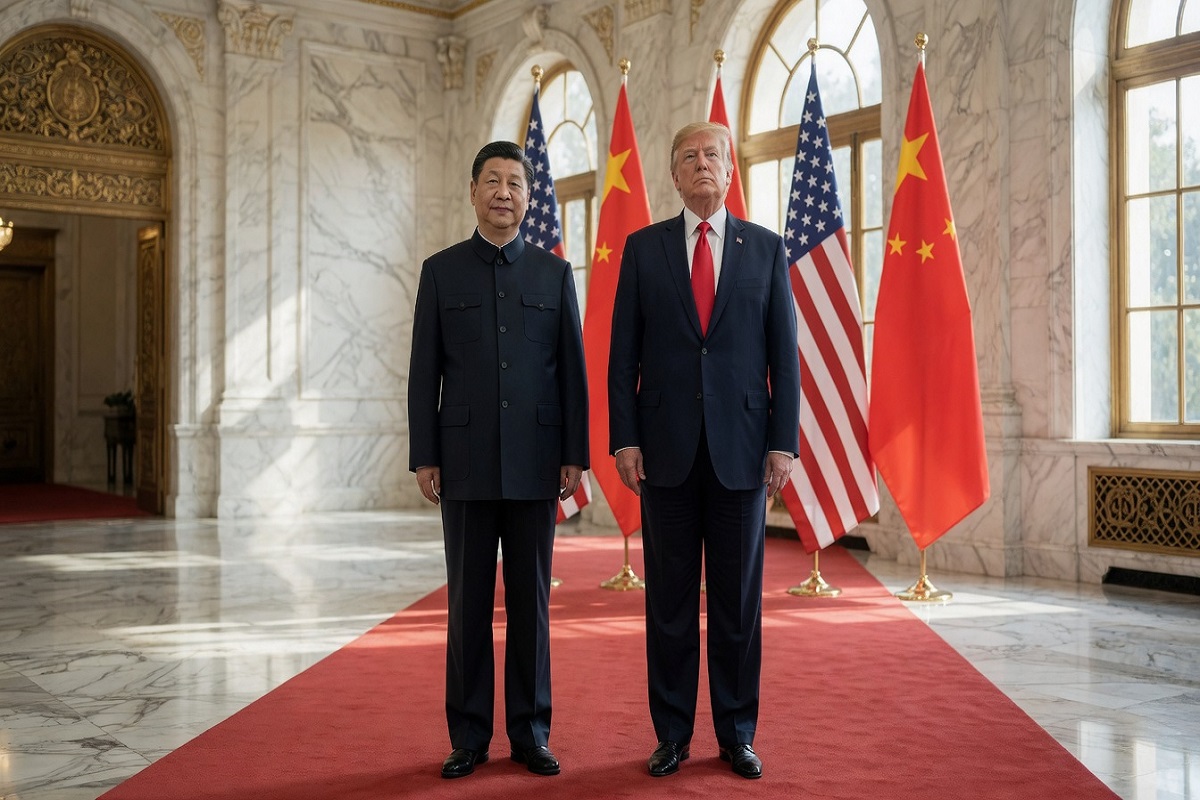
The two leaders met in Beijing on May 14 and 15, 2026. President Donald Trump and Chinese President Xi Jinping attended a welcome ceremony at the Great Hall of the People on May 14. The trip had slipped more than a month off its original calendar because of the U.S. war with Iran.
The mood going in was big. The mood coming out was not. From a U.S. perspective, the immediate outcome was meager: no grand breakthrough, but a stabilization of relations and a broad effort to keep the rivalry from spiraling further out of control.
Trump brought executives. The group was modest by his standards. Tesla’s Elon Musk, Apple’s Tim Cook, BlackRock’s Larry Fink, and Boeing CEO Kelly Ortberg were among those who joined the visit. Nvidia’s Jensen Huang was a late add. The roster fed expectations of huge contracts. The business delegation was far smaller than the more than 30 leaders who joined Trump on his trip to Saudi Arabia last year.
Why Do the Two Readouts Disagree?
The readouts disagree because each government wrote down what helped its own story and skipped the rest. A week after the visit, details began to emerge, though the two sides largely stuck to their own interpretations of the deals.
Analysts are not panicking over it. A comparison of the readouts reveals “minor inconsistencies” on issues such as agriculture, tariffs and rare earths, but those differences are not significant, according to Gabriel Wildau.
The two countries wanted different things. The U.S. wanted to cool an escalating trade war while it juggled its war against Iran, and it wanted China to resume a steady flow of rare earth minerals key to making products including cellphones and weapons. China, dealing with a sluggish domestic economy and supply chains disrupted by the Iran war, wanted jet engines, semiconductors and a shift in U.S. policy on Taiwan.
The Soybean and Farm Goods Gap
Here is where the numbers stop matching. The U.S. said China agreed to buy at least 25 million metric tons of American soybeans in each of the next three years, but the later readout did not specify an amount and instead stated China is once again allowing sales of U.S. beef and poultry. China’s Commerce Ministry also did not specify an amount or name soybeans, while noting both countries agreed to promote agricultural trade.
There is a dollar figure in play too, and it is contested. The U.S. said China agreed to purchase at least $17 billion annually of U.S. agricultural products until 2028, but China has not confirmed that figure. One expert thinks Beijing left it vague on purpose. “The Chinese most likely want to be seen as being willing to import U.S. agricultural products based on genuine demand and genuine need, rather than committing to an arbitrary volume or value of certain commodities,” Wildau said.
Stacked up, the commitments are large. The $17 billion plus the existing commitment to buy 25 million metric tons of soybeans would amount to roughly $27 billion in value per year, according to a CNN calculation. For context on how big a jump that is: last year U.S. agricultural exports to China totaled only $8.4 billion.
The push for farm exports lands at a tense moment for American growers. Anyone tracking how trade swings hit the field will recognize the stakes from this season’s reporting on a splintered 2026 planting season across the Plains.
Placement:
Rare Earths, Boeing, and the Chip Probe
This is the section where the gaps get expensive. The U.S. said China would address rare earth shortages, particularly of yttrium, scandium, neodymium and indium, while the Chinese statement did not mention rare earths at all. That silence matters because Beijing controls the supply chain for many obscure minerals that are critical components of smartphones, cars and weapons.
Boeing got a headline number, but each side framed it differently. The U.S. specified Chinese plans to buy 200 Boeing airplanes, while Beijing broadly noted the aircraft purchase agreement and said the U.S. would ensure supply of engines and other parts. A purchase that size would reverse a long drought. China’s last big Boeing order came during Trump’s November 2017 trip to Beijing, when China agreed to buy 300 planes, before relations soured and orders dried up.
Then there are the chips. China’s Ministry of Commerce on May 20 urged the United States to “honor its commitments,” warning that U.S. tariffs must not exceed levels agreed at the Beijing summit regardless of how future duties are framed or labeled. The single most consequential gap concerns the fate of antitrust investigations targeting Nvidia and Qualcomm, two companies with hundreds of billions in combined market value and enormous China revenue exposure.
What Got Built to Keep Things Stable
Both sides did agree on structure, even when they ducked the specifics. The U.S. and Chinese readouts both noted agreements to establish boards of trade and investment to facilitate bilateral discussions, with China indicating tariff reductions would be part of the plans while the U.S. did not mention duties.
China cast the framework as long-term. Beijing’s official readout described striving to build a “constructive China-U.S. relationship of strategic stability” that would guide the next three years and beyond. The official Chinese account also pointed to concrete machinery. Through the trade council, the two sides will discuss tariff reductions on specific products, and they agreed in principle to lower tariffs on products of respective concern on an equivalent scale.
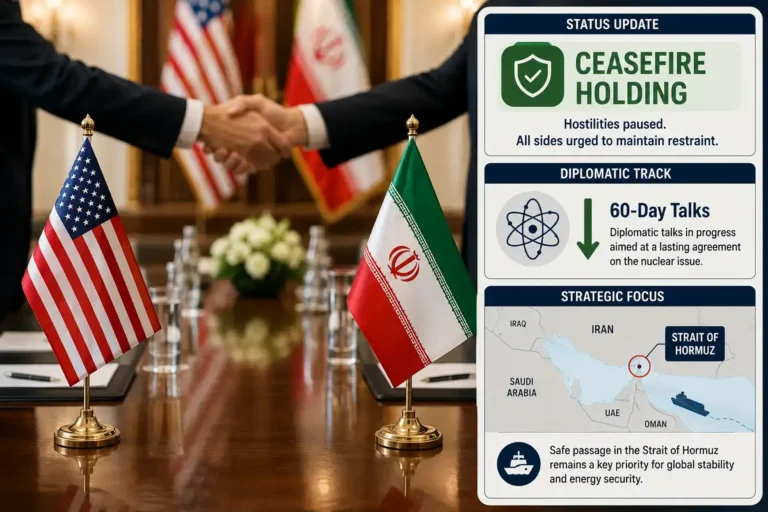
There was also a wild card on energy. Trump said the summit reaped a Chinese offer to help open the Strait of Hormuz. That ties the China talks directly to the Iran conflict squeezing global oil flows, a thread worth watching alongside how shifting grain prices are moving on news of the same farm deal.
The two leaders are not done. The two-day summit wrapped up Friday with plans for another meeting in the fall.
My Read on This
The Trump-Xi summit bought time. It did not settle the contest. Each capital walked away with a version of events it could sell at home, and the unconfirmed pieces, the $17 billion, the soybean tonnage, the chip probes, are exactly where the next fight starts. For now the trade truce holds, farm exports look set to climb, and the rare earth tap may reopen. Watch the fall meeting. That is where these “minor inconsistencies” either get papered over or blow up.
For readers tracking the money side of national leaders in the news, our breakdown of Chuck Schumer’s disclosed assets and the look at Moldova’s Maia Sandu’s ANI filing follow the same verify-the-numbers approach we used here.