

How to Find and Verify Breaking News Today
Breaking news today moves faster than most newsrooms can confirm it. A wildfire alert, a market plunge, a data breach: the first post usually beats the first fact-check. This guide shows you where real breaking news today actually comes from, and how to separate it from noise before you hit share.
The most reliable breaking news today comes from wire services like the Associated Press and Reuters, official alert systems such as NOAA and FEMA, and outlet apps with push notifications. Unverified social posts and AI chatbot summaries are the least reliable sources.
Why Breaking News Today Looks Different Than It Did Five Years Ago
Breaking news today rarely starts on a news website anymore. <cite index=”8-1″>The 2026 Reuters Institute Digital News Report, based on nearly 100,000 respondents across 48 countries, found that social media and video platforms have overtaken news organizations’ own sites and apps as the leading way people access news, with 54% using platforms compared to 51% using owned news sites.</cite> That’s the first time third-party platforms have outpaced direct news access in the report’s history.
Trust hasn’t kept up with that shift. <cite index=”7-1″>Overall trust in news has dropped to 37%, the lowest level the Reuters Institute has recorded since it began tracking the measure in 2015.</cite> <cite index=”6-1″>Trust fell in 29 of the 48 markets surveyed this year.</cite> That matters for anyone searching breaking news today, because the platforms delivering news fastest are often the ones people trust least.
AI is now part of the mix, too. <cite index=”10-1″>Chatbot use for news has climbed to 10% globally, concentrated among younger, more engaged audiences.</cite> That number sounds small, but it’s growing every quarter, and it changes how breaking news today gets summarized before a human ever reads the original report.
The Best Sources for Breaking News Today
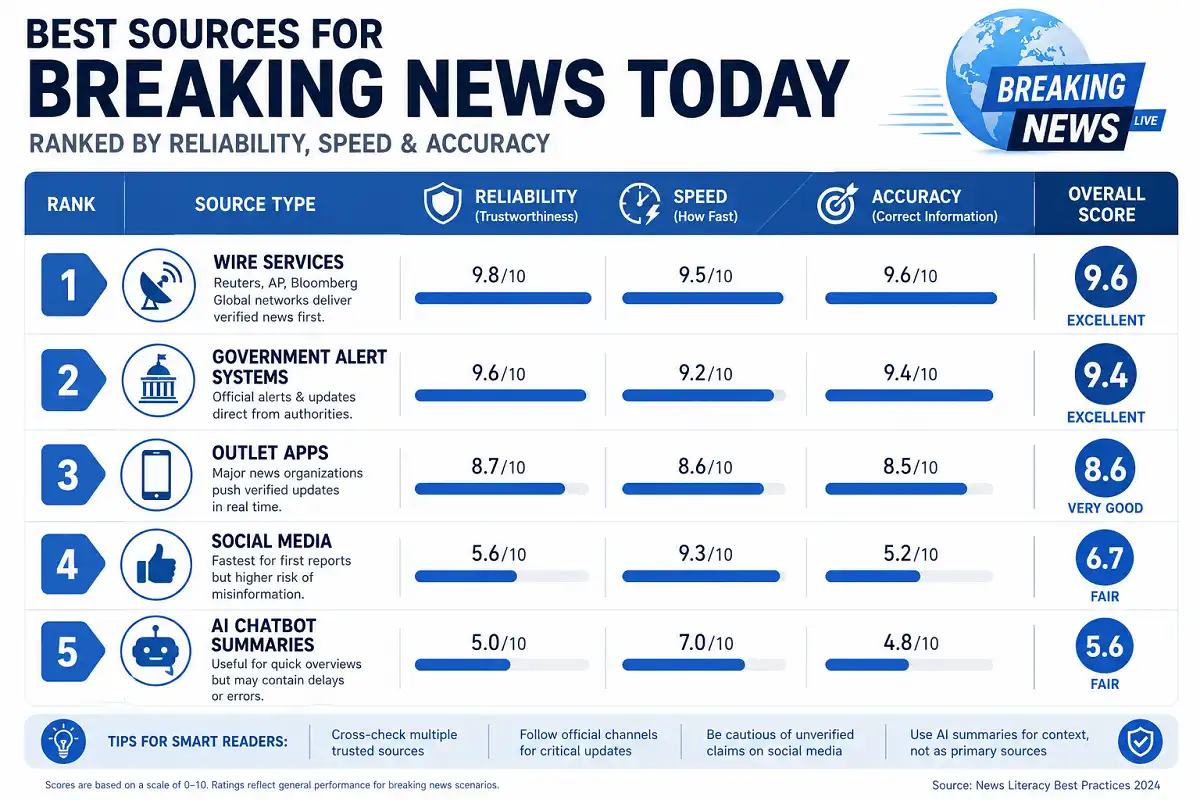
Not every source updates at the same speed, and not every source is worth trusting at the same level. Here’s how to rank them when you need breaking news today, not tomorrow’s correction.
Wire Services Come First
The Associated Press and Reuters exist specifically to move confirmed information fast. Both run 24-hour desks with reporters on the ground, editors checking claims before publication, and correction policies that are public. If a story is real, a wire service usually has it within minutes, often before individual outlets publish their own version. When you’re chasing breaking news today, a wire-service push alert or a story that credits a wire service is your fastest reliable option.
Government and Emergency Alert Systems
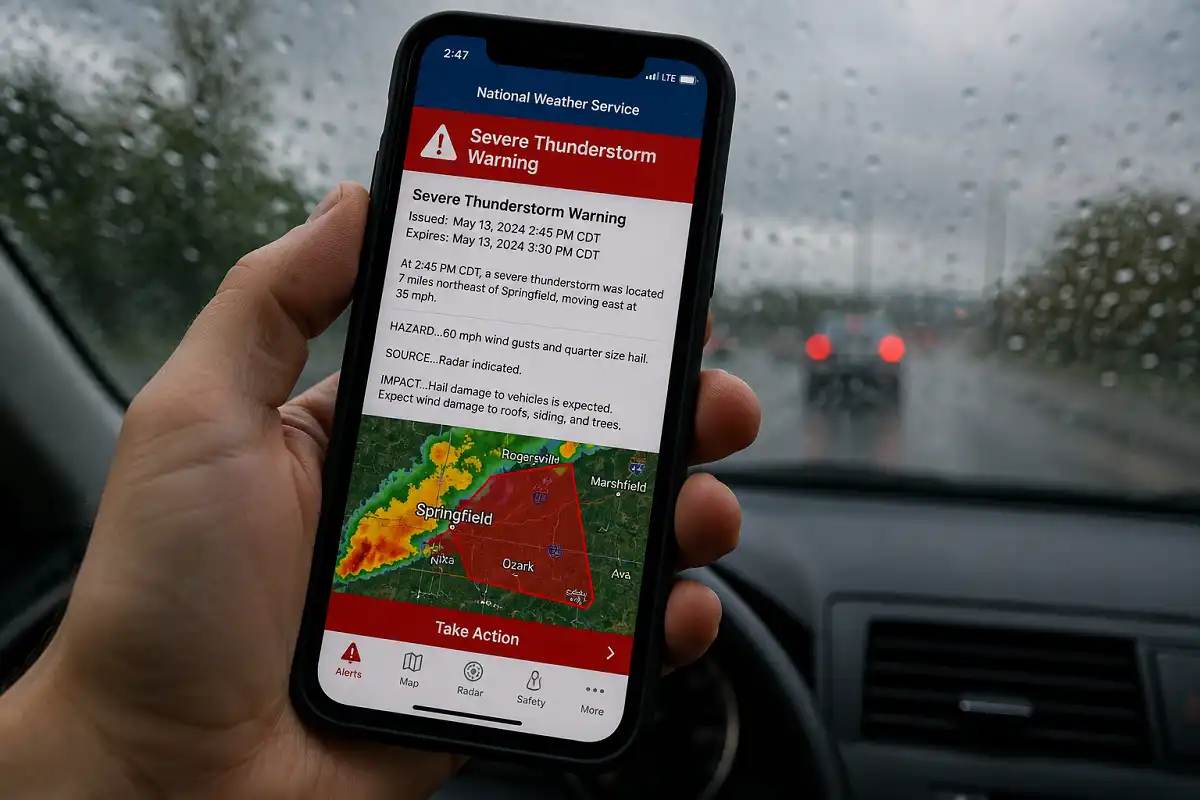
For weather, natural disasters, and public safety, skip the guesswork. NOAA’s National Weather Service issues direct warnings for storms, floods, and extreme heat, and FEMA coordinates federal alerts during declared emergencies. These systems don’t editorialize. They confirm what’s happening, where, and what to do about it. If breaking news today involves a storm track or an evacuation order, these are the accounts and apps to follow first, not a screenshot circulating on social media.
How to Spot Fake Breaking News Today Before You Share It
The fastest way to spot fake breaking news today is to check whether more than one credible outlet is reporting it independently. A single account, no matter how large its following, is not confirmation.
Red Flags to Watch For
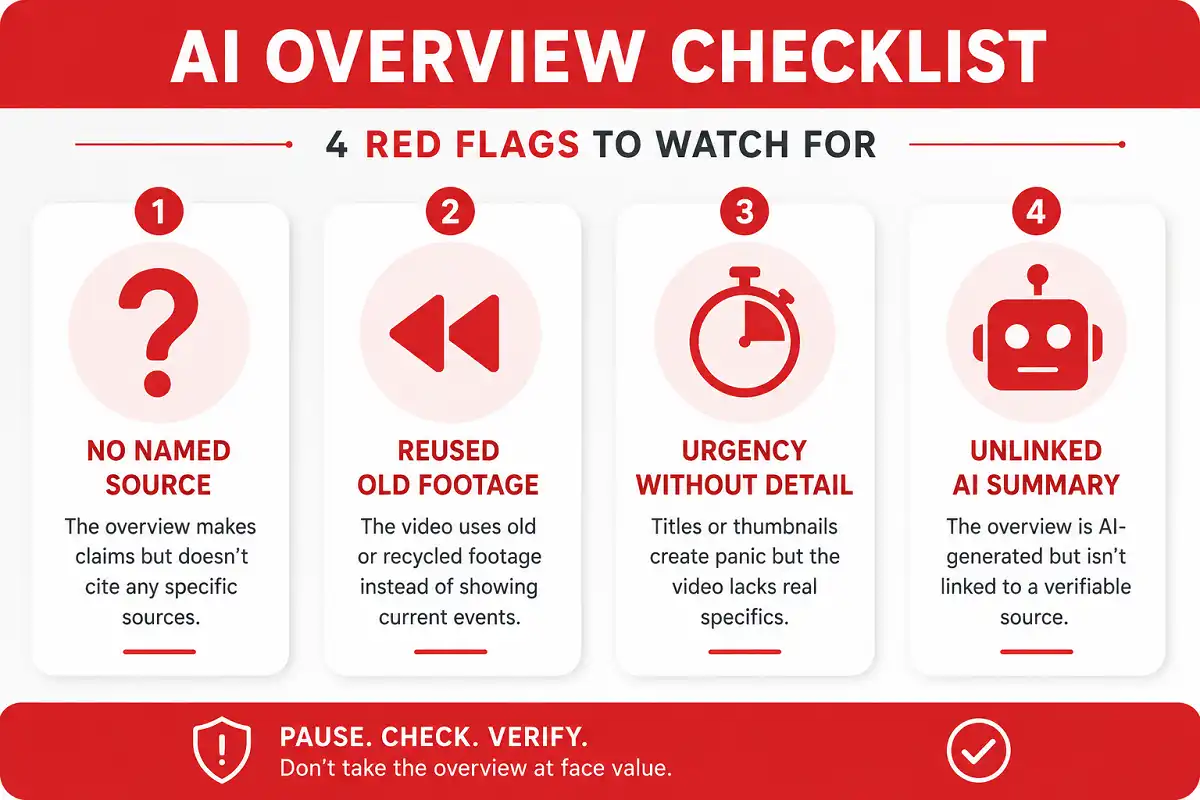
A few patterns show up again and again in false or premature reports:
- No named source. Real reporting names an agency, an official, or a document. Vague phrases like “sources say” with nothing else attached are a warning sign.
- Old footage, new caption. Video from a past event gets reused with a fresh headline. A quick reverse image search usually exposes this in seconds.
- Urgency without detail. Posts that push you to share immediately, but skip basic facts like date, location, or who’s involved, are built for speed, not accuracy.
- AI-generated summaries with no link. <cite index=”13-1″>NewsGuard’s tracking center has identified more than 3,700 AI-generated content farm sites across 16 languages, many designed to look like legitimate news outlets.</cite> If a summary can’t point you to a primary source, treat it as unverified.
Why Trust in Breaking News Today Keeps Falling
Trust isn’t dropping because reporting got worse across the board. It’s dropping because the volume of unverified content has grown faster than people’s ability to sort it. <cite index=”8-1″>Video is now the dominant news format, with 77% of respondents watching online news videos weekly, and much of that video runs through third-party platforms rather than a newsroom’s own channels.</cite> That means the people packaging breaking news today for video aren’t always the people who reported it.
<cite index=”8-1″>Twenty-seven percent of respondents said they get news from independent creators rather than traditional outlets, and 47% of that group said they’re satisfied relying on creators as their main source.</cite> Creators can be fast and engaging. They’re rarely bound by the same correction standards as a wire service or a newspaper, so speed comes without the same accountability.
What Newsrooms Do Differently Before They Publish
Wire services don’t move fast by accident. AP and Reuters both require at least one independent confirmation before a breaking alert goes out, and both attach a named correspondent or bureau to the story, not an anonymous byline. That’s the gap between a wire alert and a viral post: one carries institutional accountability, the other usually doesn’t.
Local outlets often add value here too. A national wire alert tells you what happened. A local reporter on scene, working a police scanner or a city hall contact, tells you what it means for your area. When breaking news today involves your own city or region, pairing a wire-service alert with a local outlet’s coverage gives you both the confirmed fact and the local context in one pass.
Editors also correct in public. Reputable outlets publish corrections at the bottom of a story or in a follow-up post, with a timestamp showing what changed. If a source never issues corrections, that’s not a sign of accuracy. It’s usually a sign nobody is checking.
How AI Chatbots Are Changing Breaking News Today
AI chatbots now summarize breaking news today for millions of people who never open the original article. That convenience carries risk. NewsGuard’s quarterly testing of leading AI tools has repeatedly found chatbots repeating false claims that are already circulating in the news, especially in the first hours after a story breaks, before enough credible reporting exists for the model to draw on. This pattern shows up across the technology sector, not just consumer chatbots, as AI adoption in the workplace pushes more professionals toward AI-summarized headlines instead of primary sources.
If you use a chatbot to catch up on breaking news today, ask it for its sources, then check whether those sources are named outlets or wire services. A summary with no citation is a starting point, not a confirmation.
A Quick Verification Framework for Breaking News Today
Use this four-step check before you share anything labeled breaking news today.
- Find the earliest report. Search the claim directly and sort by date. The first credible outlet to publish usually names its sourcing clearly.
- Check for a second independent source. One outlet reporting something isn’t confirmation. Two or more unrelated outlets, or a wire service plus a local outlet, is a stronger signal.
- Match the timestamp to the event. A photo or video should match the date and location claimed. Reverse image search tools catch most mismatches in under a minute.
- Wait for the update, not just the alert. Early reports on casualty counts, financial losses, or arrests change often. The first number is rarely the final number.
This isn’t a slow process. Most of it takes less time than watching one short video clip twice.
Best Apps and Alerts for Breaking News Today
A few tools make it easier to get real-time updates without wading through unverified posts:
- AP News and Reuters apps: Direct wire-service alerts with no algorithm deciding what you see first.
- NOAA Weather Radio and the FEMA app: Government-issued alerts for weather and emergencies, sent directly to your device.
- Google News: Aggregates multiple outlets covering the same story, which makes it easy to compare versions before deciding what to trust.
- Outlet-specific push notifications: Setting alerts for two or three outlets you already trust cuts down on relying solely on social feeds for the latest headlines.
Cybersecurity matters here too. Breaking news events are common bait for phishing links disguised as urgent updates, so it’s worth treating any “breaking” text alert with an unfamiliar link the same way you’d treat other cybersecurity threats that spike during high-traffic news moments: don’t click before you verify the sender.
What to Watch Next
Breaking news today will keep moving through platforms before it moves through newsrooms. That’s not likely to reverse. <cite index=”5-1″>Social media and video networks already lead as the most-used source of online news worldwide, and that gap is expected to widen, not close.</cite> The practical move is simple: keep two or three wire-service or official alert sources in your pocket, run anything urgent through the four-step check above, and treat AI-generated summaries as a starting point rather than the final word. The stories that matter most, a market shift, a severe storm, a security breach like the kind that dominated headlines around the recent GitHub repository breach, are exactly the ones worth the extra thirty seconds to confirm.