
Corporate Leadership Skills That Build Strong Teams
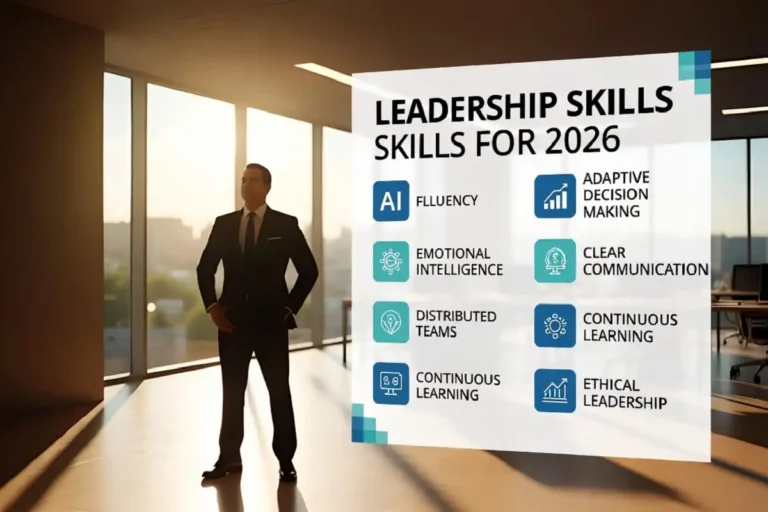
Corporate leadership skills are what separate managers who simply oversee tasks from leaders who inspire real performance. In today’s competitive business environment, organizations depend on leaders who can communicate clearly, make sound decisions, build trust, and guide teams through uncertainty. Whether you are stepping into your first leadership role or looking to sharpen what you already have, understanding and developing these skills is one of the most valuable investments you can make in your professional life.
What Corporate Leadership Skills Actually Mean
Corporate leadership skills are the practical and interpersonal abilities that allow a person to guide people, manage resources, and move an organization toward its goals. They are not a single trait but a combination of capabilities that work together.
These skills apply across industries and levels. A department head, a CEO, and a team lead all rely on the same core competencies, even if the scale differs. What matters is how consistently and consciously these abilities are practiced.
Leadership is also not a fixed state. The best leaders treat their development as an ongoing process rather than a destination they have already reached.
The Core Corporate Leadership Skills Worth Developing
Some skills come up repeatedly when high-performing leaders reflect on what made the biggest difference in their careers. These are not abstract qualities but learnable behaviors.
Emotional Intelligence in the Workplace
Emotional intelligence is the ability to understand and manage your own emotions while also recognizing and responding to the emotions of others. In a corporate setting, this translates to better conflict resolution, stronger team relationships, and more effective communication under pressure.
Leaders with high emotional intelligence tend to build more loyal teams. They notice when morale is low, respond to stress without escalating it, and create environments where people feel heard and valued.
This skill is particularly relevant in leadership development literature. According to Harvard Business Review, emotional intelligence is often a more reliable predictor of leadership success than technical expertise or IQ alone.
Strategic Thinking and Long-Term Vision
Strong corporate leaders think beyond the immediate task. They connect daily decisions to longer-term goals, anticipate challenges before they fully emerge, and position their teams to adapt as conditions change.
Strategic thinking is not reserved for senior executives. Professionals at every level who develop this ability become far more valuable to their organizations and advance more quickly as a result. If you are working on the broader picture of how professional advancement connects to strategic thinking, the guide on steps that build real business momentum is a useful companion read.
Communication Skills That Define Strong Leaders
Effective communication is the single most visible corporate leadership skill. Leaders communicate constantly, through one-on-one conversations, team meetings, written updates, presentations, and difficult feedback sessions.
The quality of that communication shapes how a team performs, how conflicts are handled, and how clearly goals are understood.

Active Listening as a Leadership Tool
Active listening means being fully present in a conversation rather than waiting for your turn to speak. Leaders who listen well make better decisions because they work with more complete information. They also build deeper trust with their teams.
Practical ways to strengthen active listening include:
- Giving full attention during one-on-one meetings without checking devices
- Asking clarifying questions before responding to problems
- Summarizing what you have heard before offering a solution
- Creating regular space for team members to raise concerns openly
Giving and Receiving Feedback Effectively
Feedback is one of the fastest tools for team development, and it goes in both directions. Strong leaders give feedback that is specific, timely, and focused on behavior rather than character. They also welcome feedback about their own performance and model the kind of openness they want to see in others.
Decision-Making and Strategic Thinking in Leadership
Decision-making is a daily reality for corporate leaders, and the quality of those decisions compounds over time. Good decision-making in a corporate context is not about always having the right answer. It is about building a reliable process for reaching well-reasoned conclusions.
That process includes gathering relevant information, consulting the right people, weighing short-term and long-term consequences, and being willing to act without perfect certainty when necessary.
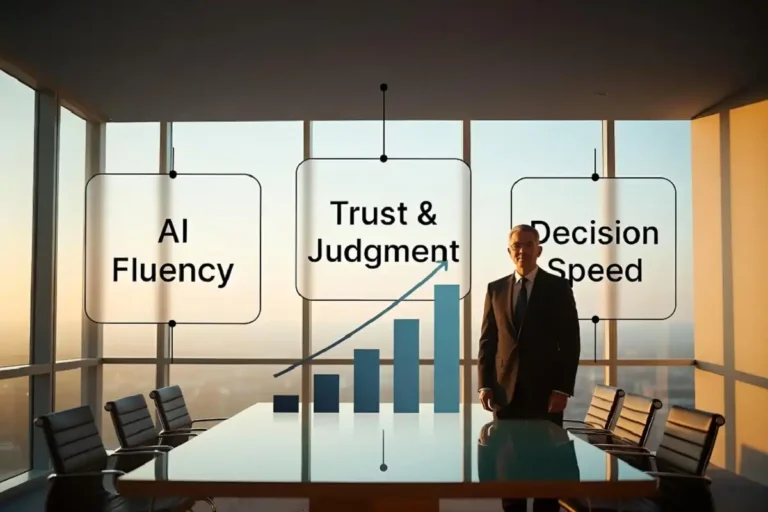
Leaders who develop sound judgment become trusted resources within their organizations. They are the people others turn to in high-pressure moments because their track record of thoughtful decisions speaks for itself.

Building and Maintaining Team Trust
Trust is the foundation of any high-functioning team, and corporate leaders are responsible for creating the conditions where it can grow. Trust is built through consistency: doing what you say you will do, being honest even when it is uncomfortable, and treating people fairly.
It is also fragile. A pattern of broken commitments, inconsistent standards, or playing favorites can erode trust quickly, and rebuilding it takes far longer than it did to damage it.
Leaders who prioritize trust create teams that are more resilient, more collaborative, and more willing to take on challenging work. People perform at a higher level when they feel secure in their relationship with leadership.
Adaptability: Leading Through Change and Uncertainty
Corporate environments are not static. Markets shift, strategies pivot, teams evolve, and external pressures emerge without warning. Leaders who struggle to adapt create bottlenecks and anxiety. Those who embrace change with confidence make it easier for everyone around them to do the same.
Adaptability as a leadership skill includes the ability to let go of approaches that are no longer working, communicate change clearly and early, and remain calm under pressure so the team can too.
Studying how individuals in demanding, high-visibility careers have navigated shifting environments and built lasting influence can offer useful perspective. Looking at how public figures like Dana Perino have adapted across different professional contexts shows how flexibility and consistent skill development underpin long-term success.
Accountability and Responsibility in Corporate Leadership
Accountable leaders take ownership of outcomes, including the ones that do not go as planned. This quality builds credibility and sets a cultural standard for the entire team.
When a leader deflects blame or avoids accountability, the team notices. It signals that protecting one’s position matters more than honest performance. When a leader owns a mistake, acknowledges what went wrong, and drives the corrective action, it signals the opposite.
Responsibility also means holding others accountable in a fair and consistent way. This requires clear expectations, regular check-ins, and the willingness to have direct conversations when performance falls short.
How Influential Leaders Build Their Personal Authority
Authority in corporate leadership is not purely about title or position. It is earned through demonstrated competence, reliable judgment, and genuine care for the people you lead.
Personal authority grows when leaders share credit openly, advocate for their teams, and show through their actions that they are invested in others’ success, not just their own advancement.
Observing how professionals in highly visible careers build authority through consistent performance over time is instructive. Careers like that of Dave Chappelle in entertainment, or Dutch Sheets in public ministry, illustrate how sustained credibility and a clear personal brand compound into lasting influence, a dynamic that applies equally well in corporate settings.
Developing Corporate Leadership Skills Over Time
Leadership development is not a one-time event. It is built through deliberate practice, honest self-reflection, and consistent exposure to new challenges. Some of the most effective ways to accelerate that development include:
- Seeking mentorship from leaders whose judgment and style you respect
- Volunteering for stretch assignments that push you beyond your current comfort zone
- Reading widely across business, psychology, and leadership disciplines
- Requesting structured feedback from peers, direct reports, and managers
- Reflecting regularly on decisions and interactions to identify patterns
According to McKinsey and Company, organizations that invest in structured leadership development consistently outperform those that rely on leadership talent emerging naturally without support or guidance.
The commitment to growing as a leader is itself a leadership quality. It signals self-awareness and a genuine investment in becoming better, which is exactly what teams and organizations need from the people who guide them.

Conclusion
Corporate leadership skills are not optional extras for those at the top. They are the foundation of every strong team, productive culture, and successful organization. Whether you lead a team of three or an entire division, the same core abilities, communication, emotional intelligence, accountability, adaptability, and strategic thinking, determine how far your influence reaches and how much your leadership is trusted.
Choose one skill from this article to focus on in the next 30 days. Be specific about how you will practice it. Leadership grows through action, not just intention. Start where you are, commit to the process, and the results will follow.